

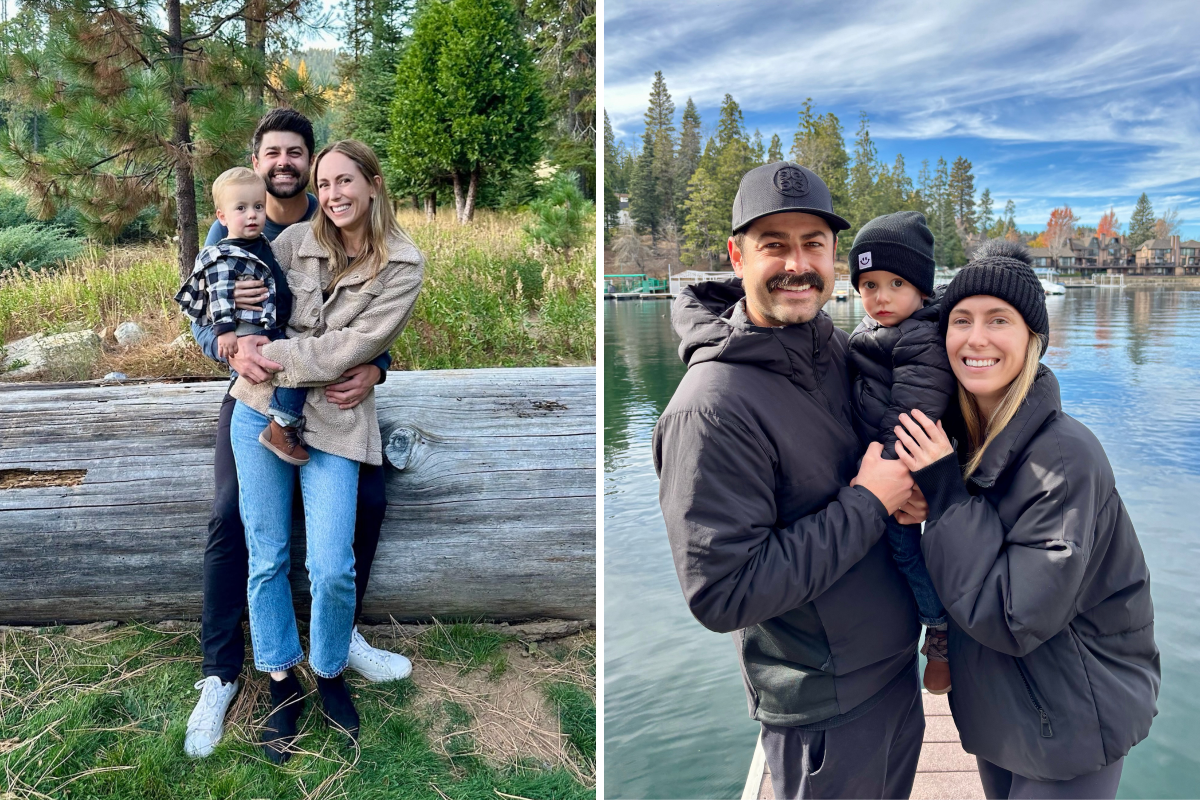
A mom who lived with severe abdominal pain for months thought it was related to digestion, and she tried everything to improve her gut—but nothing could prepare her for what a CT scan would later reveal.
Toward the end of 2024, Cori Thagard developed a persistent heartburn and a constant need to belch. She didn’t think too much of it initially, telling Newsweek that it “didn’t seem alarming at first.” Thagard, 35, had been taking some supplements in November 2024 and presumed the symptoms were a normal reaction to the changes in her gut.
As the weeks went on, rather than subsiding, the symptoms only got worse. Thagard, of Costa Mesa, California, also developed severe abdominal pain, which radiated into the side of her back. The pain was worse after eating a big meal, which is why she believed it was related to digestion.
“I also experienced nausea, felt like I wasn’t digesting food properly, got full very quickly but then felt extremely hungry, had chills, and lost weight unintentionally,” Thagard said. “At the time, I thought the symptoms were a lingering reaction to supplements I had taken. I had nausea and abdominal pain that lasted about a week after I stopped taking them.
“So, when new symptoms started in December, I assumed the supplements had stirred something up in my gut and that my body just hadn’t fully recovered yet,” she continued.
Thagard was also plagued by nausea, and as a result, she lost a lot of weight unintentionally. When the abdominal pain started, it only happened after eating a large meal. But, over time, it started happening when she ate anything, and, by early 2025, it was constant.
Something clearly wasn’t right, so Thagard went to her doctor to seek answers. Blood work showed that her iron levels were very low, so the doctor suggested taking iron pills for a much-needed boost. Thagard took them, and, while they helped improve her fatigue, the pain didn’t change.
Thagard also saw a gastroenterologist and her OBGYN to undergo a pelvic ultrasound, SIBO [Small Intestinal Bacterial Overgrowth] breath test, stool samples, endoscopy and a colonoscopy. The pelvic ultrasound revealed a large, ruptured cyst, which the OBGYN thought could be the cause of the discomfort, but that did nothing to ease the physical pain.
By February 2025, Thagard was in such excruciating pain, she spent the night curled up in the fetal position. She told Newsweek that she “could barely move” and knew it was more than the tests had suggested.
The next day, she drove to the emergency room where they did a CT scan. To Thagard’s complete surprise, results showed that she had Stage IV pancreatic cancer.
“Cancer did cross my mind. I was worried it might be ovarian cancer because I have the BRIP1 mutation, which is linked to ovarian and breast cancer. I was completely shocked to ultimately learn that it was pancreatic cancer,” Thagard said.
“I felt devastated. It felt like I was living in an actual nightmare, like the walls were caving in and I couldn’t catch my breath.”
Following the diagnosis, Thagard participated in a clinical trial at UCLA for six months before switching to another chemotherapy treatment. She has also done five rounds of radiation and does a high dose of vitamin C every week.
A recent CT scan showed that the cancerous mass on her pancreas is shrinking and Thagard has just one lesion on her liver, which is a vast improvement. She also said it is “a huge relief” that her tumor markers are within normal range.
When Thagard was at her weakest, she lost so much weight, she was down to just 92 pounds. Thankfully, she has gained much of that back and feels much healthier overall.
“At one point during treatment, I could barely walk up and down the stairs. But my energy is back now. Mentally, I still experience a lot of anxiety, but I think that’s normal given what I’m going through,” Thagard said.
“My life now revolves around treatment, appointments, and listening to my body in ways I never had to before. There’s the me before cancer and the me after my diagnosis, and I honestly miss the old me—the one who was happy, carefree, and fully present. Now I live with constant fear and anxiety, and, while I try to take things one day at a time, it’s not easy.”
Thagard has been documenting her cancer journey on TikTok (@cori_quinn) to raise awareness and remind others to trust their instincts. By discussing her symptoms and diagnosis, Thagard hopes to remind people that they know their body best and they should always advocate for themselves.
This chapter of her life is far from over, but Thagard has made great progress so far. She is so grateful to her husband who has driven her to chemotherapy and medical appointments, and stepped up to care for their son when she was too sick. It has been hard to see the mental toll this experience has had upon her family, but Thagard is so glad to have such a supportive network around her.
She said: “I’m going through one of the hardest things anyone could face, but, if I can turn even a tiny part of this into something positive by helping others, that feels like a win to me. Even if something seems small or vague, push for answers and don’t let anyone dismiss you. Early detection can make a huge difference, so speak up and advocate for yourself.”
Is there a health issue that’s worrying you? Let us know via [email protected]. We can ask experts for advice, and your story could be featured on Newsweek.
Read the full article here
