

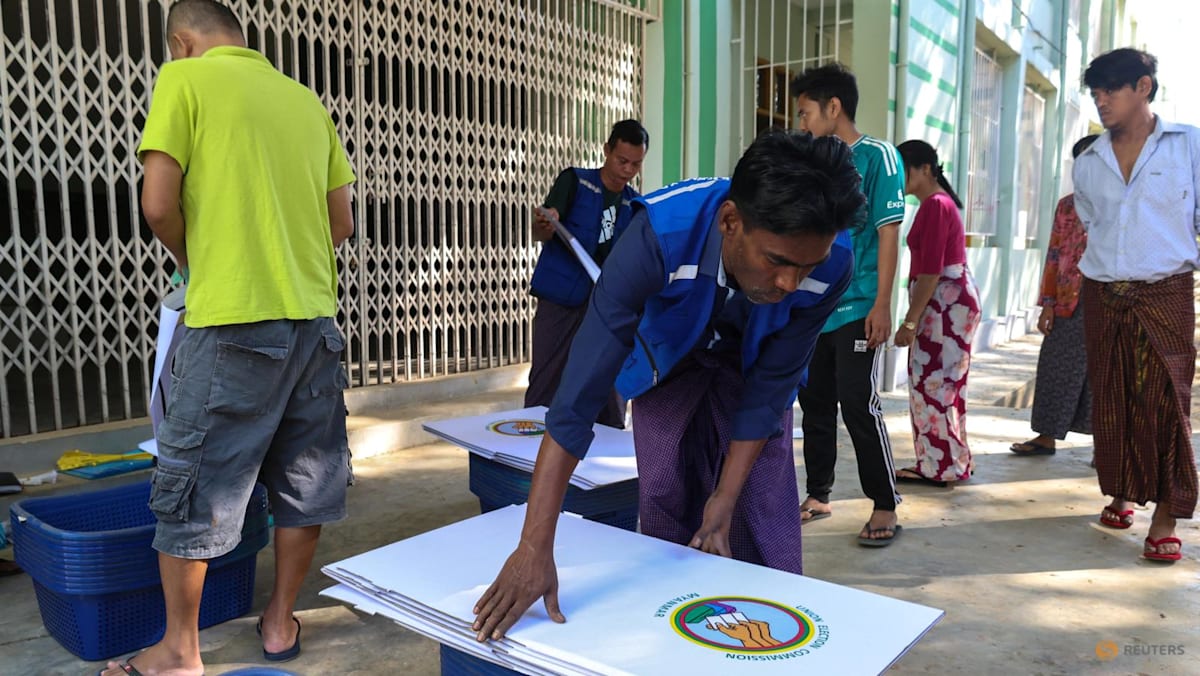
ELECTRONIC VOTING
In the northern city of Myitkyina, a 33-year-old man requesting anonymity for security reasons told AFP that “the military are just trying to legalise the power they took by force”, pledging to boycott the poll.
The military ruled Myanmar for most of its post-independence history before a 10-year interlude saw a civilian government take the reins in a burst of optimism and reform.
But after Suu Kyi’s National League for Democracy party trounced pro-military opponents in 2020 elections, Min Aung Hlaing snatched power in a coup, alleging widespread voter fraud.
Suu Kyi is serving a 27-year sentence for offences ranging from corruption to breaching COVID-19 restrictions, charges rights groups dismiss as politically motivated.
“I don’t think she would consider these elections to be meaningful in any way,” her son Kim Aris said from his home in Britain.
Most parties from the 2020 vote, including Suu Kyi’s, have since been dissolved.
The Asian Network for Free Elections says 90 per cent of the seats in the last elections went to organisations that will not appear on Sunday’s ballots.
New electronic voting machines will not allow write-in candidates or spoiled ballots.
“REPRESSION”
The junta is pursuing prosecutions against more than 200 people for violating draconian legislation forbidding “disruption” of the poll, including protest or criticism.
“These elections are clearly taking place in an environment of violence and repression,” UN rights chief Volker Turk said earlier this week.
The second round of polling will take place in two weeks’ time before the third and final round on Jan 25, but the junta has conceded elections cannot happen in almost one in five lower house constituencies.
When the military seized power it put down pro-democracy protests, and many activists quit the cities to fight as guerrillas alongside ethnic minority armies that have long held sway in Myanmar’s fringes.
“There are many ways to make peace in the country, but they haven’t chosen those – they’ve chosen to have an election instead,” said Zaw Tun, an officer in the pro-democracy People’s Defence Force in the northern region of Sagaing.
“We will continue to fight.”
Read the full article here
