

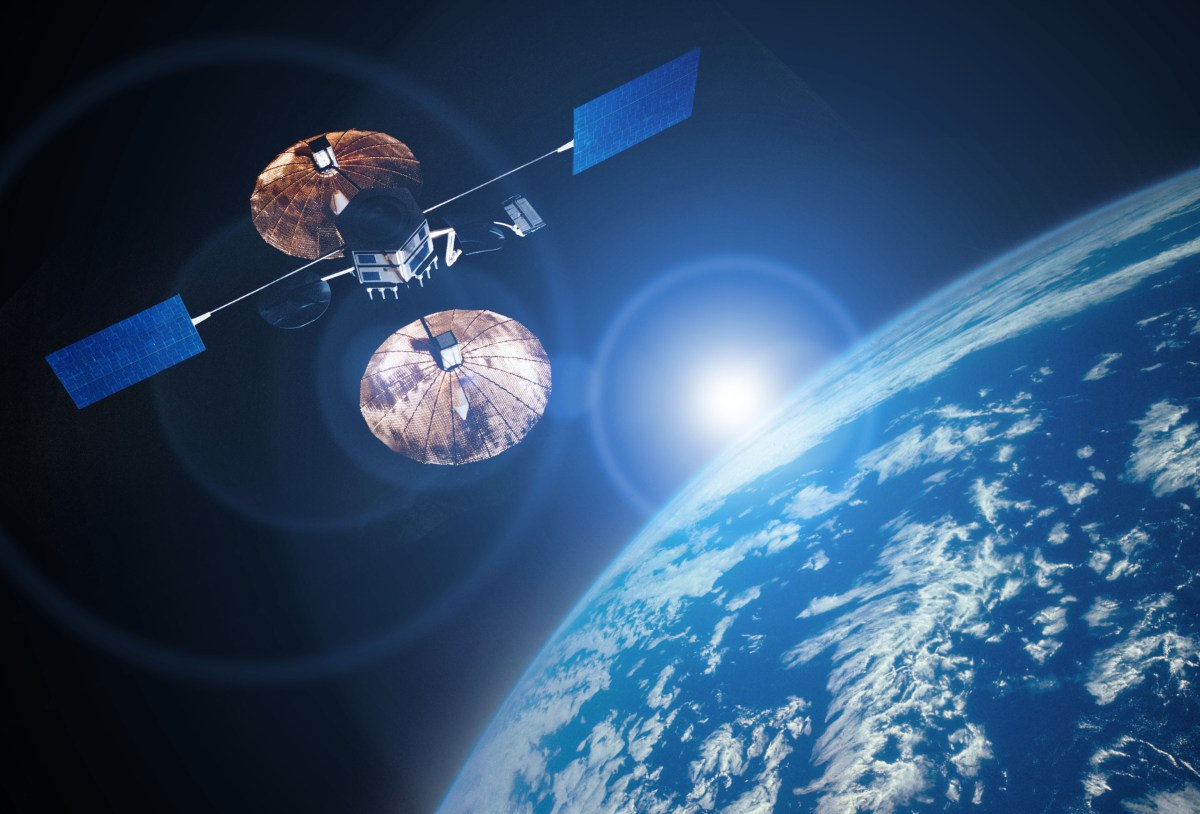
NASA’s Van Allen Probe A is expected to make its return to Earth on March 10, 2026, after almost 14 years in space gathering information on the radiation belts surrounding the planet.
The spaceship, which has been orbiting since 2012 is expected to re-enter the atmosphere today at around 7:45pm ET—with a 24-hour margin of uncertainty—according to predictions form the U.S. Space Force.
The 1,323-pound spacecraft is expected to burn up almost entirely as it travels through the atmosphere, though some components might survive re-entry. While the risk of harm to anyone on Earth is low—approximately 1 in 4,200—NASA and Space Force will continue to monitor the re-entry and provide updated predictions.
Probe A was launched into space in 2012 alongside its twin Probe B, in what was intended to be a two-year investigation of the Van Allen Belts—the permanent radiation belts encircling Earth, which act as a protective barrier from cosmic rays, and solar storms and winds.
However, the mission spanned for almost seven years, gathering unprecedented data until the two spacecraft ran out of fuel in 2019, and were no longer able to orient themselves toward the Sun.
Unlike most spacecrafts, which spend as little time as physically possible in the radiation belts to avoid damage, the Van Allen probes were built to operate inside them for years.
The NASA mission, managed and operated by the Applied Physics Lab at Johns Hopkins University , made several major discoveries about how the radiation belts operate—including the first data showing the existence of a transient third radiation belt, which can form during times of intense solar activity.
When the mission ended in 2019, analysis found that the spacecraft would re-enter Earth’s atmosphere in 2034. But those estimates were made before the current solar cycle intensified.
In 2024, scientists confirmed the Sun had reached its solar maximum, triggering intense space weather events. These conditions increased atmospheric drag on the spacecraft beyond initial estimates, resulting in an earlier-than-expected re-entry.
The insights gathered by this mission help improve forecasts of space weather, which can disrupt satellites, navigation systems, communication networks, and even power grids on Earth.
While Probe A is now heading back to Earth, its twin is not expected to re-enter the atmosphere before 2030.
Do you have a tip on a science story that Newsweek should be covering? Do you have a question about Van Allen Probe A? Let us know via [email protected].
Read the full article here
