

More than 750,000 students in comprehensive public schools will be able to access specialist gifted programs this year, as part of a major overhaul designed to ensure the needs of high-potential students are being met beyond prestigious selective options.
The shake-up comes amid intensifying competition for selective places while over the past five years, 37,000 parents rejected their local public comprehensive school in favour of Catholic and private schools.
Education Minister Prue Car first revealed the plans for universal gifted education in public schools two years ago and will at Monday’s Sydney Morning Herald Schools Summit detail how the new program called Inspire will deliver enrichment streams, extension classes and STEM programs.
“We have more selective schools than almost any other jurisdiction in the world. For a long time, this meant high potential and gifted education was focused in these, incredibly popular, selective settings,” Car is expected to tell the summit of education leaders, principals and teachers.
She will say limiting gifted education to certain schools “impacts the entire education system” while many families “felt like they aren’t able to access the best public education for their child.”
“Selective schools and opportunity classes are no longer the only pathways for gifted students to pursue excellence in our public schools. Families deserve to know that their local public school will challenge their child to meet their full potential.”
Eight non-selective schools across the state established the extension classes this year, with a further 20 set to offer a gifted class from 2027.
In Sydney’s west, Chifley College’s Dunheved Campus and Riverstone High are already offering the classes, as well as several regional schools including Kooringal High in Wagga Wagga.
Other schools included in the program this year include Elderslie High, Georges River College’s Peakhurst Campus and Port Hacking High School.
The schools were selected based on enrolment and selective school testing data that suggested an “unmet demand” for an extension class-style offering.
The previous Coalition government policy announced in 2019 was supposed to make gifted education training available at all schools to ensure 80,000 gifted students were extended even if they did not attend a selective school or opportunity class. In 2024, it was estimated only half of the 2200 public schools had any program in place.
Under the Inspire program, high potential and gifted offerings will be brought under one banner and on school websites so parents can clearly see what is on offer and comes after teachers received targeted professional development around gifted education last year.
Other changes designed to boost enrolments include relaxing strict catchment rules so parents could more easily enrol in out of area; over 2000 school websites are being refreshed; preschools are being built on public school sites while numerous single-sex high schools have been converted to co-ed, to appeal to primary school parents.
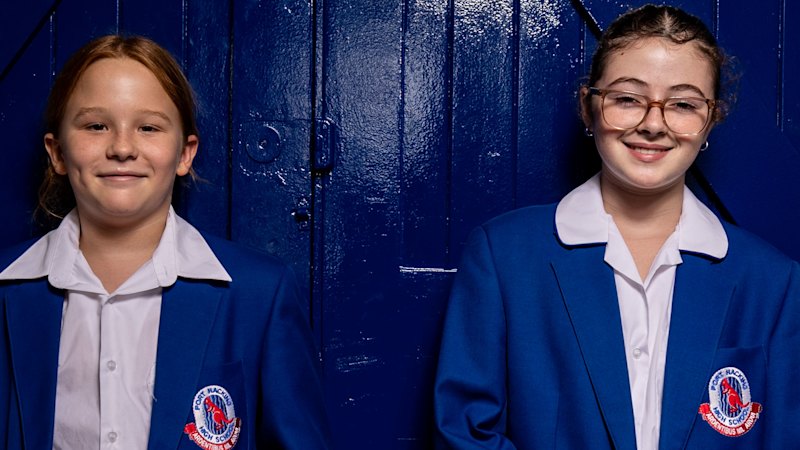
Port Hacking High in Sydney’s south selected the class of about 20 students after working with local primary schools to identify students who had high potential in both academic and creative domains, principal Rick Turansky said.
“What we find is that not all students who are gifted and displaying high potential want to either go to their specialist, selective school or a non-gov school,” he said.
“They want to go to the public comprehensive high school with their friends, which also caters for their needs.”
Five weeks into the school year, Luca Barnsley, 12, said he simply appreciated lack of repetition in the class.
“We don’t go over the same things over and over again… we cover things briefly if we already know them from a test,” he said.
Port Hacking High’s head of teaching and learning, Nathan Dwyer, said four weeks into the program, teachers were modifying what was taught in class, including compacting parts of the curriculum because the students learnt concepts so quickly.
“So we had to look at, well, how do we extend them?” Dwyer said.
Willow Middleton, 12, said in one lesson about how kilojoules were measured and Australia’s nutritional guidelines, after key concepts were covered, the class moved on to look at what other countries, such as Canada, were doing and why.
“It makes sure that we’re still challenged,” she said.
Her experience is in contrast to her final year of primary school when she was in a composite class with year 5 students.
“I like it in high school that there aren’t any conjoined classes… it gives more time to learn about what your year should be learning about,” she said.
The Education Department’s gifted policy uses Françoys Gagné’s Differentiated Model of Giftedness and Talent which says students can be gifted in the creative, intellectual, physical and social emotional domains.
This distinguishes between different tiers of giftedness, ranging from high potential to gifted students (the top 10 per cent of an age group). The top tier is “highly gifted” pupils, who are in the top one per cent of students.
University of NSW gifted education expert Professor Jae Jung said if schools did not cater to gifted students, it was typical for those students to fail to engage.
“They will tune out, they will be bored, they will drop out of school. Some estimates have it up to more than 50 per cent of gifted students are not achieving to their full potential,” he said.
“I think it is a good idea, we do have gifted students in every school. Some gifted kids prefer a comprehensive school.”
More than 30 schools are getting upgrades to provide new STEM classrooms, science labs, performing arts spaces and other to help support students.
Start the day with a summary of the day’s most important and interesting stories, analysis and insights. Sign up for our Morning Edition newsletter.
From our partners
Read the full article here
