

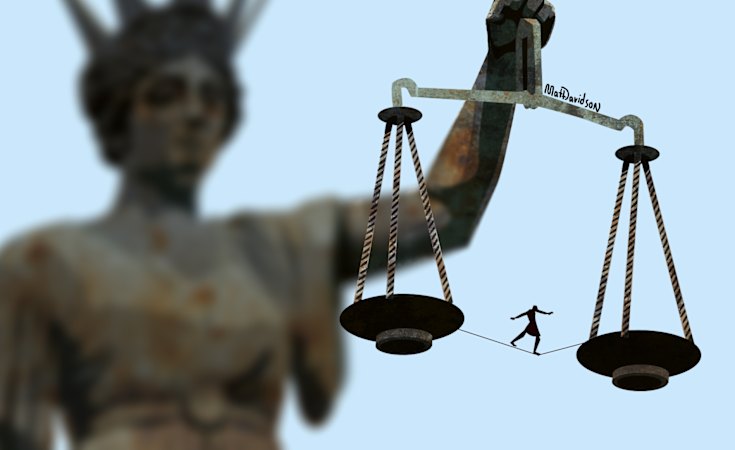
Rob Harris’s article illustrates how quickly we now reach for legislation to manage speech (“Social media posts could fall foul of new hate speech laws”, January 15). What is striking is how little attention is paid to the leadership work that should come first. Leadership starts by finding the root cause – why resentment is building, why trust has thinned. Why is moral authority being asserted through restriction rather than example? When speech is regulated before those questions are faced, the problem is narrowed to individual behaviour. Rules replace judgment. Silence replaces engagement. People are told what they cannot say without any shared understanding of how we arrived here or what would actually reduce harm. This is not a free speech debate. It is a leadership one. Hate speech laws tend to appear when leaders step away from their own discipline and ask legislation to do work that should have been done through clarity, accountability and role-modelling. Law has a role, but when it becomes the first response rather than the last, it points to what has been left undone upstream. Lynne Strong, Jamberoo
Scales of Justice outside the District Court in Brisbane.Credit: Louie Douvis
Here we go again (“Coalition prepares to resist hate speech bill”, January 15). Having insisted on tough and urgent action on hate speech in the immediate aftermath of the Bondi Beach atrocity, now it’s the usual Coalition tactic of obfuscation, point-scoring and bloody-mindedness to prevent Labor getting anything worthwhile done and a complete absence of willingness to even help iron out the wrinkles if they can see political advantage in saying no. Small wonder they’ve become the nobodies of federal politics. Adrian Connelly, Springwood
So Sussan Ley is meeting with her senior MPs and contacting Jewish leaders about the emergency bill on hate speech rather than working with the government in a bipartisan way. How hard can it be to collaborate on such an important issue? Past governments managed it. It’s quite ironic that we are so divisive about a law that is trying to stem divisiveness in our society. How about a little role modelling from our politicians? Margaret Grove, Concord
On January 5, Sussan Ley berated the Albanese government for allegedly being too slow in responding to the Bondi attack, saying that Parliament should have been recalled before Christmas. But now the Coalition is claiming the government is “rushing” the legislation (“Albanese ‘stunned’ as Coalition raises ‘extremely serious concerns’ about antisemitism bill”, January 15). Do they think the Australian people are idiots who have completely forgotten what they said less than two weeks ago? It was completely predictable this would happen as the party tears itself apart – again. Brendan Jones, Annandale
Well done to the Coalition for opposing the proposed hate speech legislation. The loophole that exempts the quoting of religious texts from the proposed legislation reveals it as a Trojan horse that could enable attacks against vulnerable Australians. The prime minister has suggested that the Old Testament is sacrosanct, but is it more worthy of a theocracy such as Iran rather than a secular democracy such as Australia. Australia has come a long way, so let’s not throw the baby out with the bathwater in a hastily drawn response to this tragedy. The PM is back-burning after the fire has swept through. The last thing we need is to weaponise the religious prerogative in contemporary Australia. Fr Peter Macleod-Miller, Albury
The rabid attacks on Albanese immediately after the Bondi shootings and the subsequent pile-on, aided and abetted by the usual suspects, is revealed as opportunistic hypocrisy of the worst type. Ley has made it more likely that divisions within our society will fester. Brian Everingham, Engadine
Dr Max Kaiser’s opinion piece has prompted me to write this letter (“As a Jew I need answers, not the stifling of free speech”, January 14). I wanted to say as an ordinary Australian who tries to respect everyone, I feel left behind and left out. I cried over of the Bondi tragedy. I cried because of what I saw in Gaza. I cried when I saw the men in black before our state parliament. But I have been too frightened to speak up and feel ashamed of that. I have not marched. I have not joined an organisation. I don’t belong to a political party. I feel there is no room for people like me in the royal commission and within the ongoing debate. I say to the politicians, the academics, the articulate and brave and the various lobby groups – ordinary Australians are watching on, feeling concerned yet marginalised. Where is the voice of ordinary Australians? Name withheld
On the subject of free speech versus freedom of religion, I feel people have a right of redress over preachers who use religious texts in sermons in a way that devalues the reputation or accepted teachings of that religion. Any competent and scripture-literate preacher can make a point in a sermon by selective quotation from scriptures. If they choose a scripture in a way that encourages or justifies hatred, it should be the preacher that suffers, not the reputation of that religion. Garry Dalrymple, Earlwood
Nowhere to hide
Jennifer Parker’s claim that AUKUS is not on the rocks may be true, but its relevance is questionable (“AUKUS is not on the rocks, despite the UK’s submarine troubles”, January 15). At present, the main advantage of submarines is stealth because they can avoid detection by sight, infrared cameras and radar. The problem is that a technique called “quantum sensing” allows scientists to use electrons and atoms to take highly accurate measurements of any change in physical environment. Nearly a year ago, it was reported that China was testing such a system, mounted on a drone, which could detect submarines with a high degree of accuracy. While it is still early days, it is highly likely that by the time we receive the first AUKUS submarine, it will already be obsolete. Peter Nash, Fairlight

Rapidly advancing technology will probably render the expensive AUKUS submarines obsolete before we even get the first one.Credit: AP
Easy housing solution
Sydney’s rental crisis will not be solved without structural reform (“Sydney house rents hit a record high $800 a week”, January 15). As a town planner with 30 years’ experience, I recommend two changes that would make an immediate difference. First, abolish separate housing categories. Permit all housing types in all residential zones and manage impacts through robust design controls – height, setbacks, privacy, sunlight and streetscape – not blunt zoning exclusions. Second, allow residential developments that have no more than 0.25 car spaces per single bedroom dwelling and 0.5 car spaces per other dwelling. Current parking standards inflate costs, reduce housing supply and promote urban car-dependence even where alternatives exist. I am confident these reforms would improve neighbour amenity, streetscape quality and, critically, housing affordability. Continuing to ration housing by type and parking is a policy choice, not a necessity. Matthew Bartinel, Lemon Tree Passage
Iranians deserve better
Kylie Moore-Gilbert’s own harrowing experience of the malevolent dictatorship running Iran is manifest in her penetrating analysis of the shocking events now occurring there (“Time’s up for brutal Iranian regime”, January 15). Ever since Ayatollah Khomeini seized power decades ago, the people of Iran have lived under totalitarian repression. As is happening now, horror abounds in the worst instances: protesters are jailed in appalling conditions, shot, even publicly hanged to deter opposition. Women are regarded as the property of men, forced to wear masks, adhere to strict dress codes and confined to domestic responsibilities, despite some being the family breadwinners. The democratic world should hope US President Donald Trump and other major leaders do intervene to help free the Iranian people by ousting Supreme Leader Ali Khamenei and his corrupt, murderous gangsters. Ron Sinclair, Windradyne
Kylie Moore-Gilbert questions whether extreme violence in Iran will yield a temporary reprieve for the regime. What is certain is that extreme violence will foment more violence and simply delay the day of reckoning. October 7 taught us that. Mark Porter, New Lambton
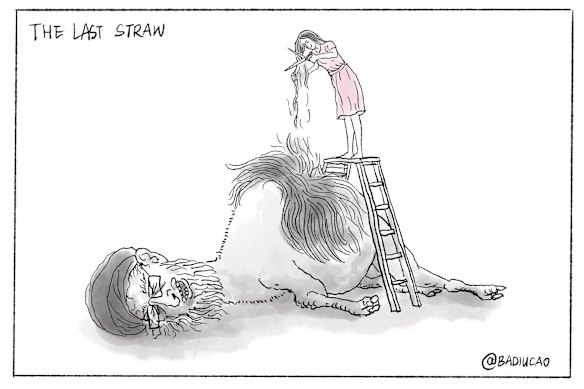
Credit: Badiucao
Given the news from Iran, it seems that not even Starlink can function if a government decides it wants to silence its citizens (“Iran horror emerges as phone lines restored”, January 15)? We rely on satellites for so many things in life now, but to future-proof myself for emergencies there are a few things I’m ensuring I have, apart from the usual list of emergency gear: good old paper road maps, cash, a reliable portable power supply that can easily be recharged using solar, a paper version of important addresses, and an updated list of things to pack. Jacqui Keats, Black Head
Boy goggles
I was disappointed to read that paid parental leave for fathers is being blamed for fee increases (“Private schools hiking fees to cover wage bill and facilities upgrades”, January 14). I feel there is an undertone of misogyny in this statement and that the budget committee should take off their “boy goggles”. Come on people, this is 2026 – men are more involved in parenting these days, and rightly so. Hearing statements like these from the heads of schools where the most privileged of children attend (in this case, boys) makes me sad and angry at the same time. I wonder if the elite girls’ schools have the same problems when setting their budgets? How shocking that a father may actually take time out of his career and care for his children and support his partner. No wonder there is an endemic problem in elite boys’ schools where misogyny is normal and the tone of the community is set from the top. Sadly, as a whole, we really haven’t progressed very far at all. Di Williams, Bardwell Valley
Curb the kids
I constantly read about how we humans have created this climate catastrophe (“Past three years were the world’s hottest on record”, January 15). I’m not disagreeing, but I do wonder why couples are still having large families. Surely having only one or two children could help contain population explosions around the world. An online search quickly shows how many couples are still having large families. China’s one-child policy doesn’t appear to have worked. Surely fewer children per family could help reduce our overuse of the planet’s finite resources by slowly reducing the population size. To my fellow letter writers, how many offspring, grandchildren and great-grandchildren have you created? Me? None. That’s my choice. Bev Matthews, Wallerawang
Legacy lost
Publishers, schools and bookshops have pulled Craig Silvey’s books from their shelves (“Silvey’s books taken off shelves after charges”, January 15) after he was arrested and charged, but prior to any conviction. Yet there are many convicted criminals around the world who have had books published, either while serving their sentence or post release. Some that come to mind are Mark “Chopper” Read, (Australia), Jean Genet (France) and Ted Kaczynski, aka Unabomber (USA). The interesting question here is whether one can separate the art from the artist. Should the legacy left by those who offend against society be removed, or is it sufficient that the offender not be able to profit from the proceeds? I really enjoyed reading Silvey’s Jasper Jones and while I was shocked by his arrest, it saddens me that access to this great Australian novel has been restricted. Irene Nemes, Rose Bay
Beach days
I regularly read to the residents of a local nursing home, and I am always on the lookout for suitable short stories. On Tuesday, I chose a selection of the Herald’s summer series My Best Beach and my audience responded enthusiastically. Animated retellings of their adventures to Gerroa, South West Rocks and Bronte Baths were capped off with knowing smiles as Richard Glover shared his multisensory beach museum with seniors who recalled the sand, sunburn and bluebottles of their younger days. Thanks for enabling a memorable hour for us all. Kim Crawford, Springwood
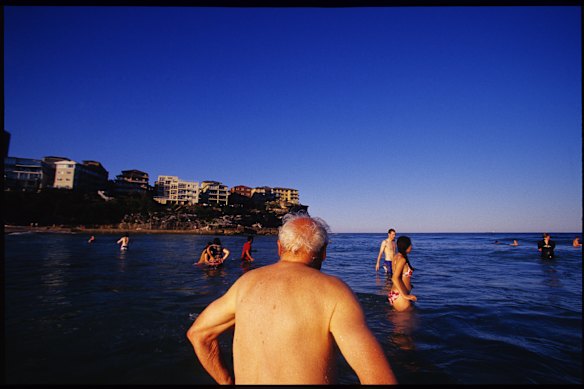
Readers are enjoying he Herald’s summer series, My Best Beach.Credit: Andrew Quilty
Rabbit food
I asked my cats how they felt about making “eating rabbit a habit” (Letters, 15 January). They indicated they were fine with that, so hop to it, pet food manufacturers. Alicia Dawson, Balmain
Adelaide delayed
If Dr Randa Abdel-Fattah has now been invited to feature in the 2027 writers’ festival (“Adelaide Festival apologises for debacle”, January 15), then surely a similar invitation should be extended to New York Times columnist Thomas Friedman, who was uninvited from the 2024 festival. That really would be “A Delayed Writers’ Festival”. Michelle Lowbeer, East Lindfield
There’s something profound about a writers’ festival becoming more insightful, game-changing and newsworthy when it doesn’t occur. Peter Fyfe, Enmore
Unfriended
Leaders supposedly have to keep enemy close and friends even closer. Donald Trump bypasses this by making sure he has no friends. He only has to consider enemies. He has thus removed a layer of bureaucracy. Luke Lake, Kingston (ACT)
Correspondent Amy Hiller (Letters, January 15) notes that coal use in power generation is declining worldwide, which is great news. But think about what’s going to happen to the world’s use of oil if Trump gets access to millions of “free” barrels from Venezuela. The sky’s the limit. Jenni Stapleton, Kiama
Fair play
The best way to stop racquet abuse is to introduce a rule that any player smashing a racquet has to play the rest of the match using that racquet (Letters, January 15). Michael Ward, Mosman
- To submit a letter to the Sydney Morning Herald, email [email protected]. Click here for tips on how to submit letters.
- The Opinion newsletter is a weekly wrap of views that will challenge, champion and inform. Sign up here.
Read the full article here
