

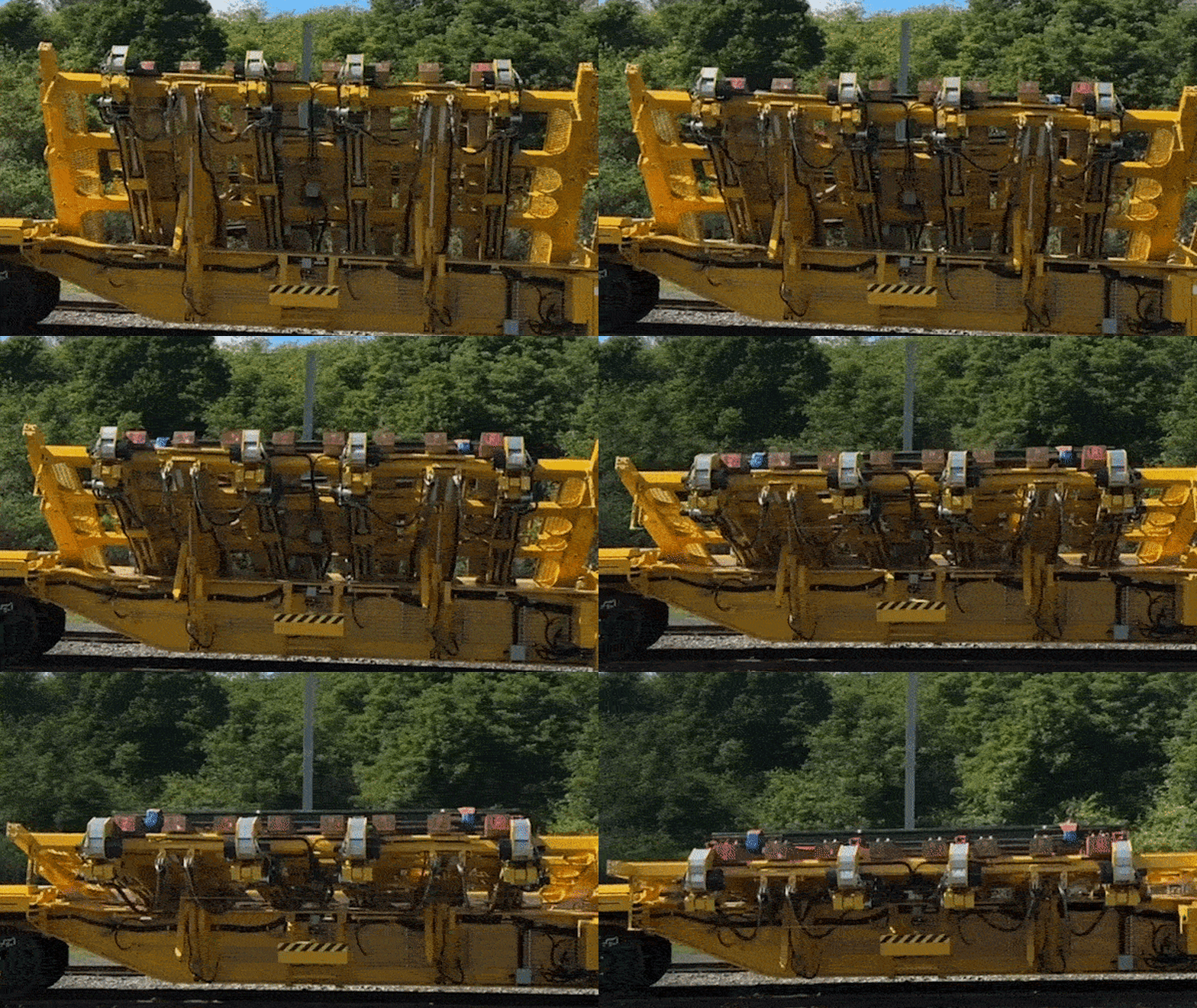
New technology will accelerate repairs and lead to fewer disruptions on the Sydney Trains network, but will not spell the end of frequent trackwork shutting down heavy rail services on the weekend.
Shutting down heavy rail services for trackwork is time-consuming and labour-intensive. Crews normally build the “turnout” – the most complex piece of rail where trains switch tracks – piece-by-piece on-site like Lego because “flat” wagons cannot move prebuilt turnouts due to their size.
But the introduction of six new $15 million “tilt wagons” allows a preassembled section of track to be driven where it is needed on the 1700-kilometre electrified rail network, and lowered for a quicker installation. When they begin operating in July, it will save between five and seven hours each time they are used.
NSW Transport Minister John Graham said on Wednesday it marked a major refresh for Sydney Trains’ engineering fleet, which until now had only two tilt wagons that had been in use for more than 20 years.
“It means your train’s going to be more reliable, means we can get through far more trackwork on those weekends when the network is shut down to be able to do those repairs.”
Sydney Trains chief executive Matt Longland said weekend rail shutdowns gave crews a 48-hour window to “get the track out, rebuild the new track, test and get it operating reliably for Monday morning”.
There are more bus replacements and rail shutdowns to come. In Transport for NSW’s planned trackwork calendar, there are 42 notices until the end of April informing passengers how their trips could be affected.
Graham said the investment would not immediately result in less frequent weekend trackwork, but it would have a more gradual improvement and passengers would spend less time on replacement buses.
“This won’t be the end of weekend trackwork. I can guarantee that what it will mean is [the] weekends we do have trackwork will be far more efficient.”
Asked why trackwork could not be done at night to reduce the inconvenience to passengers, Graham, said: “The reality is this heavy engineering and heavy infrastructure needs a longer period of time.”
The rollout of tilt wagons is part of $450 million in measures the state government is taking following a scathing review of Sydney Trains’ handling of a meltdown of the passenger rail network, caused by an overhead wiring failure at Homebush, in May last year.
The government said a separate $35 million reliability maintenance program focused on fixing defects in critical maintenance zones – including the Homebush-Strathfield corridor where multiple lines converge – was running six months ahead of schedule.
“Frankly, I think the government and Sydney Trains had hoped that after the rail dispute, reliability would improve. Anyone who looked at the report into that incident could only come to the conclusion that this is a system that is running in a very difficult way … in a way that isn’t reliable enough,” Graham said.
Start the day with a summary of the day’s most important and interesting stories, analysis and insights. Sign up for our Morning Edition newsletter.
 Cindy Yin is an urban affairs reporter at The Sydney Morning Herald.Connect via email.
From our partners
Read the full article here
