

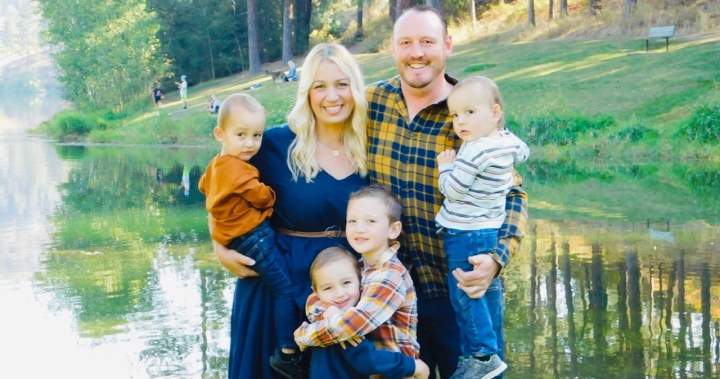
Sarah Balkenhol is deeply concerned about a new funding model and what it will mean for two of her four children on the autism spectrum.
“Regression is very common in autism,” Balkenhol said. “There will be negative consequences for many families.”
The West Kelowna, B.C., mom says under the new “needs-based model,” therapy funding for her boys will drop by thousands of dollars, nearly two-thirds of what the boys currently receive.
“It’s going to be a choice between feeding my family or accessing therapy for my kids,” Balkenhol said.
The new model, Balkenhol said, will classify her two boys, aged two and five, as having only moderate needs, resulting in the reduced funding.
She also says they will qualify for less funding because they only have an autism diagnosis and nothing else.
“Your children are not disabled enough to receive funds,” she said, as she described learning of the significant reduction in funding. “Where I struggle with that is that we’ve done hours and hours of therapy to get to the point we are today.”
Brandi Neff is another concerned West Kelowna mother.

Get breaking National news
For news impacting Canada and around the world, sign up for breaking news alerts delivered directly to you when they happen.
“The biggest concern for me is just like losing the continuity of care,” Neff said.
Neff has three children on the spectrum and is also facing a loss of thousands in therapy dollars.
“The services we are receiving are helping. They’re giving gains,” Neff said. “To remove those services means those gains are going to stop.”
The province said it’s investing an unprecedented $475 million for the new model over three years to support children in need.
That will allow thousands more children with different kinds of needs, such as Down syndrome, to access funding for the very first time.
“This is really about strengthening the entire system,” said Jodie Wickens, the minister for children and family development.
Wickens did, however, acknowledge that revamping the system will mean reduced funding for some.
“We anticipate about 20 per cent of children currently receiving funding may see a reduction in their funding,” Wickens said. “That’s about 5,000 children in B.C.”
Balkenhol said every child with needs should have access to support but not at the expense of children who have come to rely on it for their well-being.
“We cannot be taking from Peter to feed Paul,” Balkenhol said. “Just because they’re saying that more children are going to be accessing support, that shouldn’t come with the children that currently access support reducing their support.”
Balkenhol said she can’t imagine looking at a child in need of therapy and saying, “‘We need to take that away. It’s not needed.’ It is needed.”
The new model will be phased in over three years.
Read the full article here
