

STATURE AND INFLUENCE
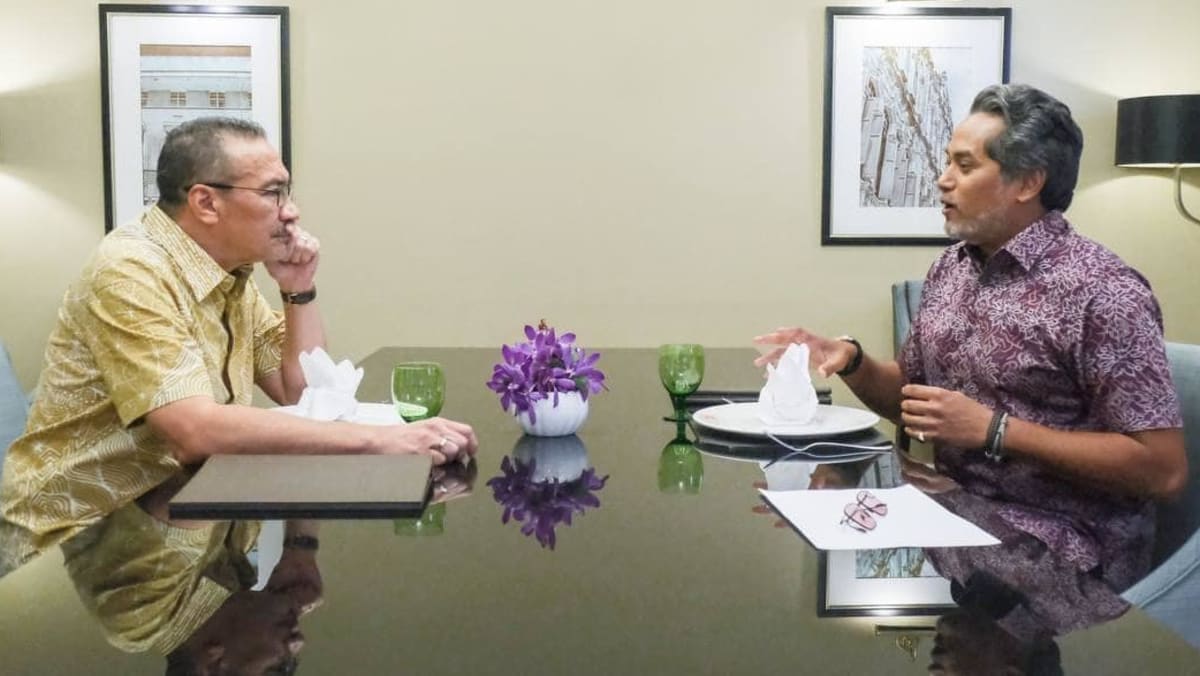
The reintegration of both figures, especially former UMNO Youth chief Khairy — popularly known as KJ — is a major boost to the party because of his appeal to youths, observers said.
Since his sacking in 2023, Khairy, 50, has maintained a high public profile as a radio deejay and co-host of the Keluar Sekejap podcast, cementing his status as a key influencer among Malaysia’s youths and urban Malays.
“Khairy commands a massive following, particularly among neutral and fence-sitting voters who may have previously turned away from the party,” said Azmi Hassan, a senior fellow at the Nusantara Academy for Strategic Research.
Hisommudin said Khairy has cultivated a distinct support base beyond traditional party structures, leveraging his podcast and mainstream media presence.
“This has enabled him to connect with urban and younger Malay voters, segments (in which) UMNO has shown relative weakness in recent electoral cycles.
“His reintegration could therefore help UMNO re-penetrate these demographics,” he said.
Former UMNO vice-president Hishammuddin, who is Sembrong Member of Parliament, is a different but equally significant asset, said analysts.
Despite keeping a relatively low profile during his suspension, Hishammuddin, 64, retains considerable influence within the party’s traditional power networks, especially among division chiefs and grassroots leaders, particularly in Johor where he is from.
The son of Malaysia’s third prime minister Hussein Onn, Hishammuddin has served in key ministerial portfolios including home affairs, education and defence.
“His stature within UMNO’s internal hierarchy could contribute to consolidating organisational discipline and strengthening electoral machinery at the divisional level,” said Hisommudin.
UMNO, which is Malaysia’s oldest political party, lost its 61-year grip on power when it was toppled by the Pakatan Harapan (PH) coalition, led at the time by former premier Mahathir Mohamad, during the 14th General Election in 2018.
The party, which was the anchor party of the governing Barisan Nasional (BN) coalition since the country’s independence, was voted out on the back of widespread public anger over the scandal at state-owned investment vehicle 1Malaysia Development Bhd (1MDB).
The 1MDB scandal subsequently led to the conviction and jailing of former prime minister Najib Razak for corruption.
UMNO won 26 seats at GE15, its worst-ever performance in a general election. It had won 54 seats in the 2018 election and 89 in the 2013 elections.
A bulk of seats previously held by UMNO were won by the Perikatan Nasional (PN) opposition coalition, in what was dubbed the “Green Wave” for its component Parti Islam Se-Malaysia (PAS), which saw significant electoral gains.
PN won 74 seats in the 222-seat parliament, establishing itself as the second-largest bloc behind PH, which won 82 seats.
PAS secured 43 parliamentary seats, a substantial gain of 25 seats, while coalition partner Parti Pribumi Bersatu Malaysia (Bersatu) secured 31 seats, representing a gain of 17 seats.
Despite its defeat, BN is a key partner in Prime Minister Anwar Ibrahim’s unity government – an alliance formed to resolve the hung parliament following the GE15.
CNA has reached out to UMNO vice-president Mohamed Khaled Nordin, who is the chairman of the Rumah Bangsa committee, for details on the initiative.
Read the full article here
