

In 2020, the EU launched its Methane Strategy, the first comprehensive plan to limit methane emissions across the energy, agriculture, and waste sectors. The strategy led to the adoption of the EU Methane Regulation (EUMR) in 2024.
This forces fossil fuel companies operating in the EU, as well as gas importers, to monitor, report and detect methane leaks across their operations and supply chains. This reduces energy waste and ensures more gas reaches consumers rather than escaping into the atmosphere.
But internal briefing documents and meeting records obtained exclusively by Euronews suggest that these vital standards may soon change. The possibility of revision has emerged, following a series of opaque US-EU meetings that could affect European sustainability and energy independence goals.
In 2025, EU officials met repeatedly with major liquefied natural gas (LNG) producers, industry groups, and US government representatives. A March 2025 internal briefing for one of these meetings showed that DG ENER, the Commission’s energy policy department, is open to amending the EUMR after the first methane intensity reporting in 2028. Furthermore, it would work directly with LNG producers to discuss how the rules and regulations are implemented.
A Freedom of Information request from investigative climate NGO ARIA, shared with Euronews, revealed notes containing talking points for at least two DG ENER officials before meetings with US gas industry giants, including the US Chamber of Commerce. The meeting was not disclosed.
The briefing suggested flexibility on the Commission’s part. Part of it read: “Based on this reporting, the Commission is tasked to draw up a report. This will be a very important report. The Commission will look at many important aspects of methane intensity: impact on the security of energy supply, competitiveness of the Union’s economy, and potential global and regional market distortions.” DG ENER added, “If the Commission finds strong concerns about any of these aspects, it may also table a proposal to amend the Regulation.”
A follow-up email from senior Commission official Cristiana Lobillo Borrero to Energy Commissioner Ditte Juul-Joergensen includes a “summary of the meeting”, describing it as a “successful first meeting with US companies on the Methane Regulation.”
US companies called the methane regulations complex and said they hinder compliance, especially tracing molecules in the US gas system. They asked about country-level equivalence.
Pressure from the US
Methane is a powerful greenhouse gas responsible for about a third of current global warming. The EU’s 2020 strategy aims to sharply reduce emissions from the fossil fuel sector. It uses stricter monitoring, leak detection, and reporting. The regulation also applies to imported gas. It requires companies bringing fossil fuels into the EU to provide detailed data on methane emissions across their supply chains.
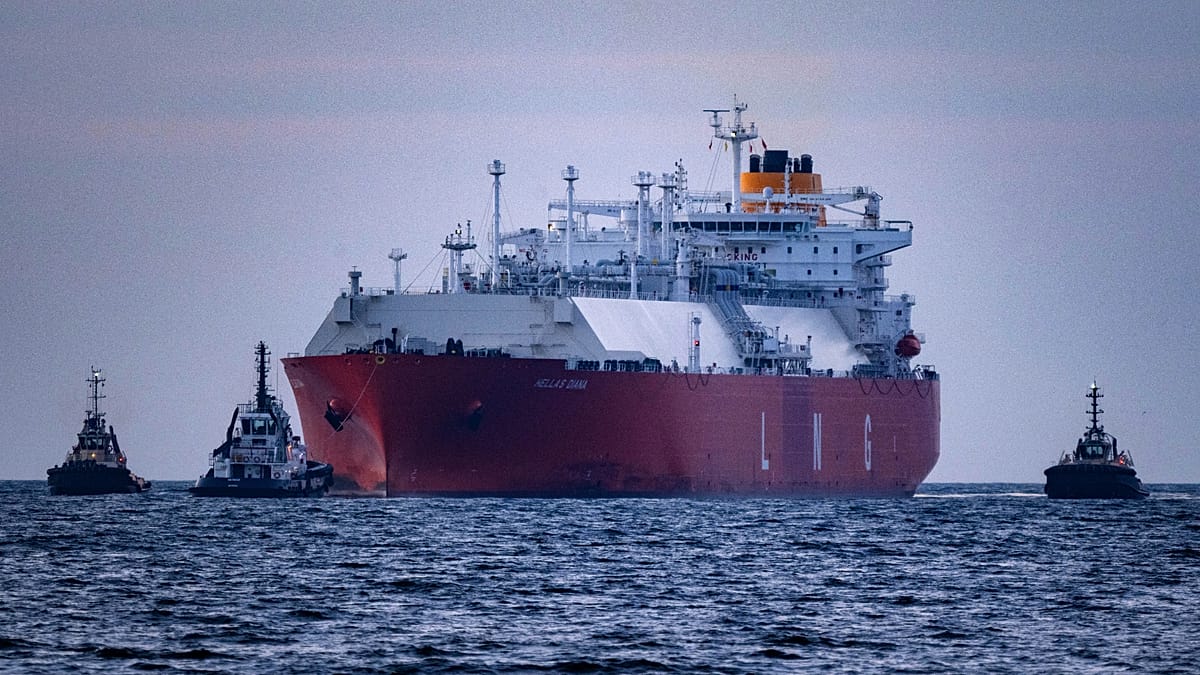
These requirements hamper US LNG exports, which surged after the EU replaced Russian gas following Ukraine’s invasion. US officials say the rules may block exports unless US regulations are deemed equivalent.
In October 2024, the US Department of Energy and EPA requested that the EU start an “equivalence determination” to allow US gas to meet EU methane rules. Meanwhile, the Trump administration delayed or weakened related US methane regulations.
Lack of transparency
The process has lacked transparency. The Commission did not meet transparency standards with LNG lobbyists, despite rules requiring all senior official meetings with interest groups to be registered with date, participants, and a summary.
Commission officials and US LNG lobby groups met in early 2025. The meeting was deemed “successful,” but it was omitted from the transparency register. Officials denied another document request, citing harm to negotiations.
Internal documents show a “kickoff call” on methane regulation in March 2025 between DG ENER, LNG producers, ExxonMobil, Venture Global, Excelerate Energy, the US Chamber of Commerce, and senior Commission officials Cristina Lobillo Borrero and Lukasz Kolinski.
Despite the presence of registered lobbyists, this March meeting was not disclosed in the EU’s transparency register. When contacted by Euronews, the European Commission offered no comment.
Briefing notes suggest the Commission reassured industry that methane regulations could be adapted through secondary legislation. Officials showed a willingness to begin a dialogue with US stakeholders to ensure the new rules work for American suppliers.
The progress of the negotiations is unknown. ARIA’s requests for access to documents related to the talks have been rejected because disclosure could undermine ongoing discussions.
Documents show that in September 2025, the Commission promoted Europe as a long-term market for US LNG at a Washington event. Notes say EU energy chief Ditte Juul-Jørgensen called Europe a “premium market” and highlighted infrastructure, import routes, and regulatory stability.
In constant talks
Despite growing calls for energy independence amid the US-Iran war threatening global gas supplies, the EU still relies on American gas. In August 2025, Brussels and Washington agreed to expand US energy exports to Europe, projecting annual imports of around $250 billion, including LNG. The deal awaits ratification by the European Parliament.
This arrangement may increase Europe’s dependence on one supplier. A January 2026 analysis found the US could supply about 40% of EU gas and LNG by 2030, risking contradiction with the EU’s REPowerEU strategy to diversify sources and cut fossil fuel demand.
“Weakening the EUMR would be very bad. It’s an important piece of legislation; it limits methane leakage, a gas that is 80 times more impactful than CO2”, Esther Bollendorff, Senior EU gas policy coordinator at the Climate Action Network, told Euronews.
Read the full article here
