

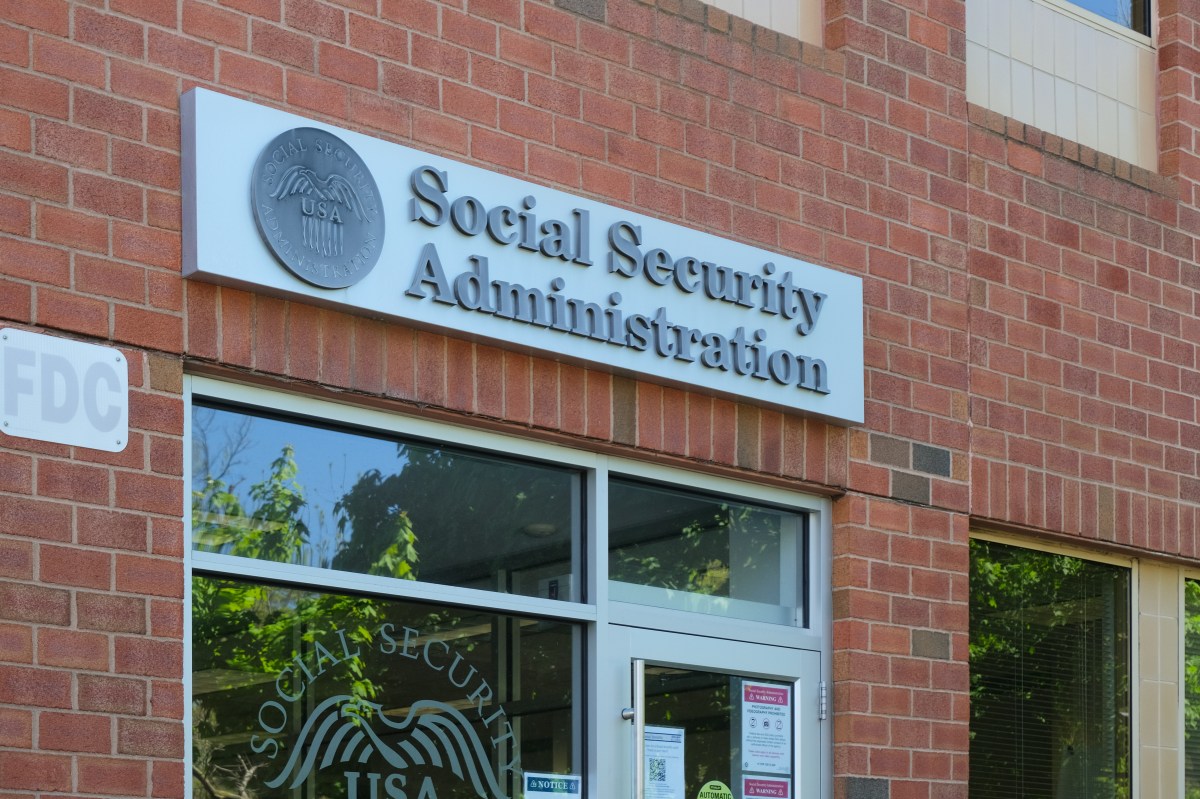
A total overhaul of the Social Security Administration’s workflow could lead to major service disruptions for beneficiaries in just a few months.
All field offices will undergo a major transformation to manage benefits nationally rather than as the regional hubs they operated previously.
Why It Matters
The SSA oversees retirement and disability benefits for roughly 75 million people, but updates to the SSA’s system could lead to delayed benefits, prolonged errors, or even benefit denials if the changes are not implemented smoothly.
What To Know
In around two months, the SSA will revert to a more national system for the 1,200 local field offices. Previously, they operated on a more regional scale to serve the Social Security beneficiaries in closest proximity.
“Disability claims already take 12-18 months. During transition, expect delays to spike as staff learn unfamiliar rules. Rural offices are closing. Elderly people and those without tech access get locked out. Processing errors will likely increase,” Michael Ryan, a finance expert and the founder of MichaelRyanMoney.com, told Newsweek.
“SSA is betting automation and AI phone systems can absorb the work gap. That works fine if you’re tech-savvy and your case is straightforward. It fails catastrophically if you’re not, or if your claim is complex.”
The SSA has faced many other changes under the Trump administration, including a cut of roughly 12 percent of its workforce. The agency lost 7,000 jobs overall, leading to the closure of regional offices and updates to the phone customer service system.
Starting on March 7, the new National Appointment Scheduling Calendar (NASC) and National Workload Management (NWLM) will be implemented for all field operations.
The change has sparked alarm among many beneficiaries and analysts, who say the update could severely disrupt services in the short term.
“Field offices are, and will always remain, our front line,” the SSA said previously.
However, the new system “will empower field office staff to focus on what they do best, resolving customers’ needs in-person with care, accuracy, and efficiency, while directing more complex cases and time-intensive tasks to specialized teams in a centralized environment,” according to the SSA.
What People Are Saying
Michael Ryan, a finance expert and the founder of MichaelRyanMoney.com, told Newsweek: “The agency had 49 weeks of productivity gains through May 2025. This overhaul kills that momentum. If the new system stumbles, even temporarily, you’re looking at a benefits system that’s slower and less accessible than it is now. With fewer people available to help fix it. And since SSA manages 75 million beneficiaries with reduced staffing, there’s no buffer.”
Alex Beene, a financial literacy instructor for the University of Tennessee at Martin, told Newsweek: “The changes coming to Social Security may seem stark, but in reality, the vast majority of beneficiaries are already on-board with these alterations. The primarily digital and virtual approaches to how information is disseminated and how checks are distributed has already been embraced by most recipients. In an effort to make processes more efficient and save funding, the modernization is needed. However, obviously there will still be concerns over preserving some in-person opportunities.”
Kevin Thompson, the CEO of 9i Capital Group and the host of the 9innings podcast, told Newsweek: “The people currently taking social security do not need new apps to download, login requirements, or chatbot interactions. They need human beings to service them, and any changes will just bring pain for our Senior population.
“For younger generations, this will likely be a net positive since they’re already deeply embedded in technology. Long term, I think this is a clear win, but there will be ‘significant short-term disruption.’
What Happens Next
While the SSA has touted the new changes as a way to usher in higher efficiency, Ryan said there are risks associated with the transition.
“This is modernization forced by budget cuts, not chosen for efficiency. The bet is high-risk,” Ryan said. “If it works, great. If it doesn’t, people on disability and Social Security face longer waits and fewer ways to get help.”
Read the full article here
