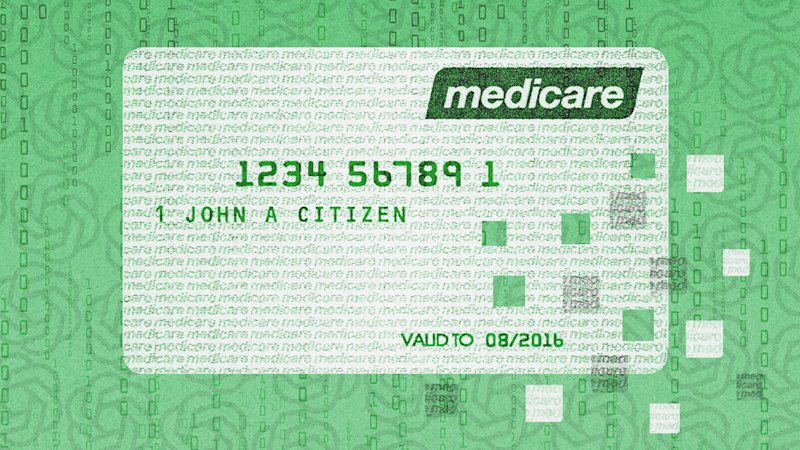
There’s a massive legal grey area around the weaponisation of AI (“AI hack on Medicare prompts new laws”, September 25). A malicious actor operating from overseas could get access to sensitive information and hack into private servers, then get away with it by blaming the chatbot and exploiting Australia’s ambiguous laws and outdated defences. Our laws need an urgent update to ensure accountability and strengthen our defences – before our national security and privacy are irrevocably compromised. William Sun, Epping
Your editorial correctly addresses the threat of unrestricted AI, but fails to question why a government asset was not secured in the first place (“Medicare breach exposes our vulnerability”, September 25). Those responsible for this lapse must be held accountable as much as the AI overlords should. As a retired system administrator, I run my own server from home (both mail and web), and my firewall is constantly fending off attacks. If I can do that with the meagre resources available to an aged pensioner, then there is no reason why a fully funded government department cannot. Dave Horsfall, North Gosford
What a joke is the notion of opting out when it comes to protecting intellectual property. Would we accept that our houses can be legally burgled unless we put up a sign saying we opt out of being robbed? What’s the difference? Ben Quilty’s impassioned article (“Nice work on the Medicare hack, Albo, but you’re still letting AI steal my art”, September 25) deftly skewers the Albanese government’s latest craven capitulation to big tech, which wants the unfettered right to hoover up our nation’s artistic and intellectual property. Why do the tech companies prefer opt-out to opt-in? Easy. Because opt-in works and opt-out doesn’t. Alan Phillips, Mosman
Artificial intelligence has the potential to become the Uriah Heep of the modern age, writ large: insinuating itself into every corner of society until dependence becomes domination. Just as Heep forged signatures, appropriated authority and sought control of the Wickfield family and its affairs, AI may gradually acquire influence over domains once governed by human judgment, leaving us to discover too late how much authority we have surrendered. Heep’s danger comes not from brute force but from gradual, opportunistic encroachment. John Duncan-Watt, Matcham
Fraud stirs
There is a time and place for holding a prime minister to account, but as Calum Jaspan demonstrates, there is a difference between a tough question and a loaded insult delivered while an Australian prime minister is representing his country on the world stage (“Advocacy for me, but not thee?”, September 25). Latika Bourke asking Anthony Albanese whether he felt “like a bit of a fraud” accepting an international award was disrespectful and inappropriate. It was not a question designed to elicit information; it contained its own accusation. Bourke could have questioned Albanese about his government’s domestic record without resorting to that language. Instead, at an international event recognising Australia’s engagement with the world, an Australian journalist chose to publicly diminish the Australian prime minister with a deliberately provocative accusation. Albanese was not there representing the Labor Party; he was representing Australia. That distinction matters. Holding power to account is fundamental to journalism, but so are professionalism, judgment and context. There was nothing wrong with asking Albanese a difficult question, but there was plenty wrong with the language Bourke used and the occasion she chose to use it. And The Nightly subsequently turning its journalist and her “fraud” accusation into the story only reinforced the impression that this was less about seeking an answer than creating publicity and a headline. Denise McHugh, Tamworth

Media and mirroring
Pauline Hanson claims that she “answers to the people, not the media”. Yet by refusing to allow the ABC, The Guardian and The Age to cover her press conferences she is denying many people the answers and information that they seek (“Trump and Hanson’s media bans … two different stories”, September 25). Media organisations are right to seek clarification of One Nation’s policies and details, and to ask questions when discrepancies and obfuscation are evident. In this age of misinformation and disinformation, as deep fake videos and recordings flood social media, mainstream media that employs real journalists is more important than ever. All politicians and their parties should expect be put under the microscope. It’s how “the people” get answers that they can rely on. If only our own media companies would follow the lead of the US media and show solidarity by all boycotting Hanson for her petulant attempt to avoid scrutiny. This would show we will not accept the sort of media bullying and politicisation that Trump has employed in the US. Alan Marel, North Curl Curl
Your correspondent wonders how so many Americans have been taken in by Trump (Letters, September 25). I ask the same question of Australians and Pauline Hanson. Trump and Hanson raise more questions than they give answers. Both are contemptuous of and frightened by democratic process and the free press. This is demonstrated by actively denying access to parts of that press. We might think we’re smarter than America. We have watched what a dumb demagogue can do to a society and we are following suit. This would indicate we are at least as stupid as Americans, if not more so. Chris McKimm, Karangi
Climate inaction
Coalition leader Angus Taylor’s reasoning that Australia has done its share on climate action so can ease off betrays a worrying incomprehension. If the boat is sinking, you don’t stop bailing just because others aren’t working as hard. It is in every country’s interest to do whatever it can to cut emissions. Unfortunately, it is not always in the personal interest of every politician and billionaire. Derek Bolton, Birchgrove
Demographic Ponzi scheme
Millie Muroi’s analysis exposes the fallacy at the heart of our response to an ageing population: the belief that we can solve demographic ageing simply by producing more people (“We don’t need more babies – and not just because we have migrants”, September 25). As a deliberately child-free adult I recognise that, as a voter, I am outnumbered. There is an obvious political incentive to encourage parenthood. John Howard’s “baby bonus” demonstrated how politically attractive policies supporting families and prospective parents can be. Parental leave, childcare subsidies, family payments and subsidised education all reinforce this approach. Any government proposing to reduce such incentives risks electoral suicide. But where does this logic ultimately lead? My calling it a “demographic Ponzi scheme” sounds provocative, but the metaphor is apt: each generation is expected to be larger than the preceding one to sustain the economic and social arrangements created by previous generations. Yet those children eventually become elderly themselves, requiring hospitals, aged care, healthcare workers and infrastructure. The proposed solution therefore creates the next demographic problem, requiring still more population growth. It is a perpetual and ever-expanding loop. It is coldly utilitarian to suggest that we should have more children primarily to produce the workers and carers needed to look after an ageing population. Those workers themselves will eventually age. Rather than pursuing endless population growth, we should adapt to demographic ageing through productivity, technology and structural reform. Sustaining an ageing society with a baby boost is simply not feasible. Joseph Ting, Brisbane (Qld)
Home truths
We should be mortified that one in two younger adults still lives in the parental home (“Gen Z Australians are living with their parents in record numbers”, September 25). They can’t even pay private rent, let alone a mortgage. I have had it with property investors who moan and groan about Labor’s modest change to capital gains tax rules. The market is falling, which of course leads to a loss of potential profit, but property investors take risks and deal with the consequences. I am flabbergasted that a whole generation of younger Australians has to stay in the family home indefinitely. The major parties must do more to help. The Coalition only helps the already wealthy. They disgust me. Labor is a little better, but more must be done. John Rome, Mt Lawley

Super salaries
Universities pay their vice chancellors more than $1 million a year. Patients pay specialist doctors ridiculous sums of money. Of greater concern, industry superannuation funds, which are supposedly non-profits, pay their executive teams astronomical suns of money (Letters, September 23). The CEOs and the CIOs of a lot of these funds all get more than $1 million a year, many times our prime minister’s pay. They may say their pay is only a fraction of the trillions of dollars in super investments, but really? Paul Lau, Dolls Point
Know the score
I’m all for new approaches when needed, and the program Time for Music sounds good (“New approach music to their ears”, September 25). But know this – our public schools provide this already, have for years. Music is an important part of the curriculum, but more importantly part of our school communities. Been to a school concert or assembly lately? A Mother’s or Father’s Day breakfast? Music is alive and well in our schools, with teaching, performance opportunities and music joy part of a school’s everyday work. This week I attended one of four Festival of Instrumental Music concerts, entertained by 500 recorders, 300 members of a mass string ensemble and don’t get me started on the Sydney percussion ensemble, highly talented public school musicians playing marimbas like you’ve never seen. These concerts, and there are many more like it, showcase the wonderful work teachers, tutors and industry experts do and have done for many years to nurture the musical talents of kids. More funding? Yes, thanks, but please recognise the enormous amount of work already done by committed and talented teachers every day. Lisa Williams, Dulwich Hill
So Education Minister Prue Car is going to beef up music in public primary schools? Great! There have been so many reviews over the decades that have lamented the dire state of music education in our public schools. On more than one occasion, ministers have accepted that music education is in crisis, which at best has only resulted in further committees being formed and recommendations made. Then governments change and reports gather dust. I do hope this works. There is so much evidence that proper music education from an early age is a fillip to kids’ performance in so many areas of the curriculum. But excuse my cynicism when I say I’ll believe it when it happens. Are all these extra music specialists going to be plucked from thin air? Graham Meale, Boambee East
Over-rated inflation lever
I have never understood why the Reserve Bank’s only lever to curb inflation is interest rates. As readers describe so well, this blunt tool is very damaging to families and children (Letters, September 25). Other mechanisms include temporary increases in GST (increasing government revenue and potentially reducing government debt) or increases in superannuation rates (contributing to citizens’ long-term wellbeing). We could also adopt the American model of 20-year fixed mortgages, which might force our governments to look at other alternatives to damaging lives. Susan Tregeagle, Yarralumla
Your correspondent suggests we should be clever enough to create a system with a few more smarter levers than the interest rate cudgel? We are. It’s called the government (now Labor) and the treasurer (now Jim Chalmers), who could use fiscal policy. Another factor to consider is understanding Economics 101, whereby inflation and employment have an inverse relationship. In my lifetime, under a Labor government there has always been high inflation and low employment (high unemployment) along with high interest rates. It’s a consequence of Labor’s policies. Jenny Greenwood, Hunters Hill
Iran’s future
Dr Kylie Moore-Gilbert is entitled to criticise Reza Pahlavi, son of Iran’s last shah, but exile is not a moral disqualification, as Charles de Gaulle and Jose Ramos-Horta have shown (“I’ll get death threats for saying it – but this prince is no messiah”, September 17). Dr Moore-Gilbert’s column leaves evidence of support unaddressed. Protesters calling for regime change in Iran have been recorded chanting for Mr Pahlavi. Police counted 250,000 people rallying against the Iranian state in Munich and 350,000 in Toronto after Mr Pahlavi’s call for a global day of action on February 14. Inauthentic online activity does not erase those crowds. Misconduct by some supporters warrants scrutiny but does not establish a “cult of personality”. The claim that Mr Pahlavi seeks power through foreign military intervention should be considered in the context of the imbalance between unarmed protesters and regime forces, including the IRGC. A transitional role does not amount to restoration of the monarchy. Mr Pahlavi’s framework provides for a referendum on the form of state, a constituent assembly, a constitutional referendum, elections and handover to elected institutions. Ultimately, meeting Mr Pahlavi is not a coronation or choosing Iran’s next leader. Iran’s future belongs to the Iranian people. Saeid Zand, Iranian-Australian Public Affairs Committee

Credit where it’s new
While Australians are now embracing EVs as if it’s a new love, getting them charged on a long trip is a completely different story. Australia has continued to be the laggard in the world for destination chargers. The issue is that the private companies that dominate this space all rely on apps as their business model. None of these apps have any form of compatibility; they are often unreliable; and there are dozens of these companies. This forces all EV owners to have a multitude of such apps on their phones, and often theirs won’t be the right one. The solution is obvious, perfectly logical and exactly what every other nation in the world does. Make EV charging stations accept credit cards like filling a petrol car at a servo. Every item we buy these days can be bought with a credit card, including the power to your house, but for some inexplicable reason we are not allowed to buy the power for our car using a credit card (“Chinese carmaker’s new EV battery will charge in under five minutes”, September 25). Tony Lewis, Mount Victoria
‘Woke’ up, America!
As reader Terry Hansen of Wisconsin argues, America must embrace climate action, if not for the rest of humanity then for the country itself (Letters, September 24). Consider the US east coast and focus on Norfolk in Chesapeake Bay, home to the world’s largest naval base. For a number of geological reasons, the land on which it is built is subsiding. This has been exacerbated by the extraction of groundwater, a process that enables compaction of the sedimentary rocks. Roads to the base are all too often flooded. The Gulf Stream, part of the Atlantic Meridional Overturning Circulation, keeps sea levels along that coast lower than those of the wider Atlantic Ocean, and as this current predictably weakens, there is potential for an additional one metre of sea level rise. Add more intense, climate change-induced hurricanes and storm surges to put icing on the cake of disaster. This is but one of the many climate change catastrophes facing America, events predicted with confidence by leading scientists yet dismissed as “woke” by the president and his sycophants. Peter Lane, Margaret River (WA)
What about ‘we’? It isn’t fair
Rob Ritchie writes that the causes of domestic violence and elder abuse are a consequence of the heavy focus on individual rights and identities (Letters, September 25). He’s spot on! The society of a generation ago recognised that unless it pulled together, it would be pulled apart. We’re now observing the pulling apart phase, the destruction of society in favour of a “me, me, me” mentality that focuses on individuals. David Gordon, Cranebrook
- To submit a letter to the Sydney Morning Herald, email [email protected]. Click here for tips on how to submit letters.
- The Opinion newsletter is a weekly wrap of views that will challenge, champion and inform. Sign up here.
Read the full article here