

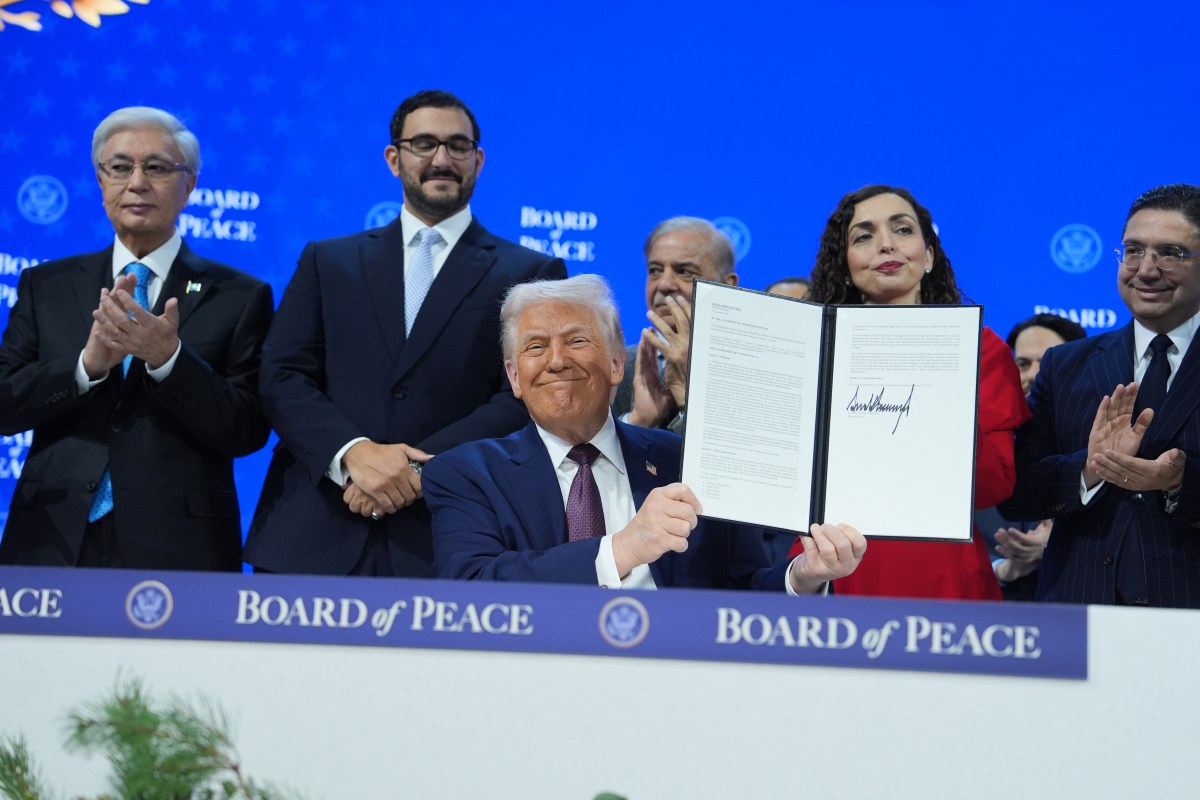
Donald Trump inaugurated his “Board of Peace” Thursday as a bold solution to lead efforts at maintaining a ceasefire in Israel’s war with Hamas.
The U.S. President said “everyone wants to be a part” of the body that could eventually rival the United Nations, despite many of America’s key allies such as Britain and France opting not to participate mainly because of the involvement of Vladimir Putin.
He has pitched the plan as a way to end wars faster, cut through bureaucracy, and replace what he calls the “war machine” with dealmaking. The existing system, he says, has failed—producing long wars, stalled peace processes, and strategic drift.
At an unveiling event in Davos, Trump claimed: “It’s going to be the most prestigious board ever formed.” He insisted it would work with the U.N., despite a leaked document suggesting it could replace its functions.
However, the Board of Peace is far more likely to fail than deliver lasting peace. Here’s why:
1. Already too many institutions
The State Department, Pentagon, and intelligence community already manage diplomacy and conflict resolution. A new board operating alongside—or above—these institutions would either duplicate their work or undermine it. In practice, it would almost certainly do both.
2. No enforcement mechanism
The Board of Peace would also suffer from a fatal enforcement gap. Like the U.N., it could broker agreements but would then lack the means to compel compliance.
It would not command troops, control sanctions policy on its own, or bind future administrations. Without enforcement power, peace would depend entirely on goodwill—something that is not in abundance during a war. Violations would be met with statements rather than meaningful consequences.
3. Legitimacy gap
Peace agreements endure only when the parties involved believe the process is credible. A presidentially appointed board, lacking clear legal authority or congressional oversight, would struggle to command trust abroad.
Allies would wonder whether its promises would survive the next election. Adversaries would test its resolve. The result would be deals that look decisive on paper but unravel the moment political pressure shifts.
4. Trump’s diplomacy
Trump’s own diplomatic record is a fourth flaw. His instinct is to bypass institutions in favor of leader-to-leader relationships, betting that personal rapport can cut deals.
Sometimes this produces dramatic summits with photo opportunities and headlines. But securing lasting peace requires more substance. Without buy-in from militaries, civil societies, and regional actors, agreements reached at the top rarely hold at the ground level.
Read the full article here
