

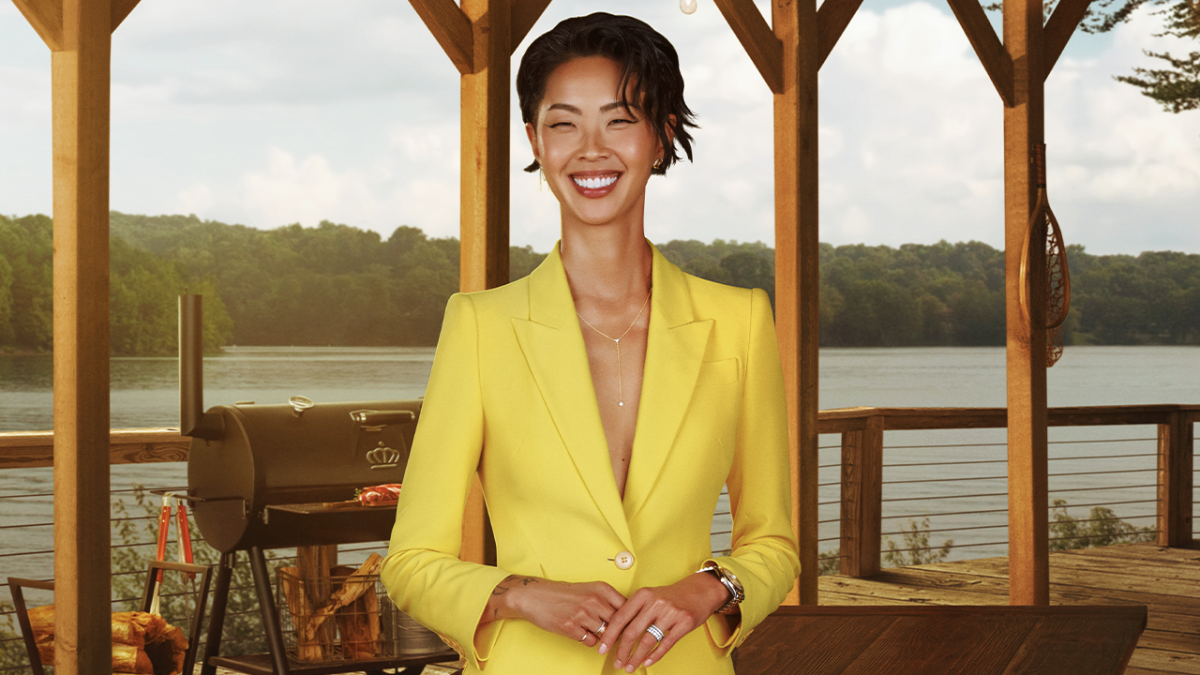
“[Top Chef] is not about creating drama for drama’s sake. It’s to showcase amazing chefs doing exactly what they know how to do.”
Kristen Kish has had quite a year. Between competing on Traitors and hosting Top Chef, the chef and author says the secret to the latter’s success is simple: “It has stayed the course.”
SUBSCRIBE TO PARTING SHOT PODCAST WITH H. ALAN SCOTT ON APPLE PODCASTS, SPOTIFY, OR WHEREVER YOU GET PODCASTS.
Editor’s Note: This conversation has been edited and condensed for publication.
What a year it has been for you, with the continued success of Top Chef and Traitors. How do you feel?
How do I feel right this second? I’m slightly stressed because right before jumping on to talk to you, there’s some work happening and a lot of banging, so I was running around trying to find a quiet corner. Hopefully, it should be okay. Otherwise, stress-free and glad to be here.
Isn’t that always the thing? Right when you’re about to do something, someone decides to hammer something.
Fingers crossed it’s okay.
I’m sure it will be. I have so many things I want to talk to you about, but I have to start with Top Chef. This season feels more exciting in a lot of new ways. What do you think makes it continue to be such a popular competition reality show?
I think it hasn’t fallen into the bucket of reality television. It still draws chefs who take their careers very seriously and can see the opportunity within Top Chef. It’s trusted within the industry. It has remained steady and intentional in what the goal has always been. We’re making a television show, but it’s not about creating drama for drama’s sake. It’s to showcase amazing chefs doing exactly what they know how to do, which is cook, and introducing the audience to incredible chefs that you can eventually go and taste at their own restaurants. It has stayed the course.
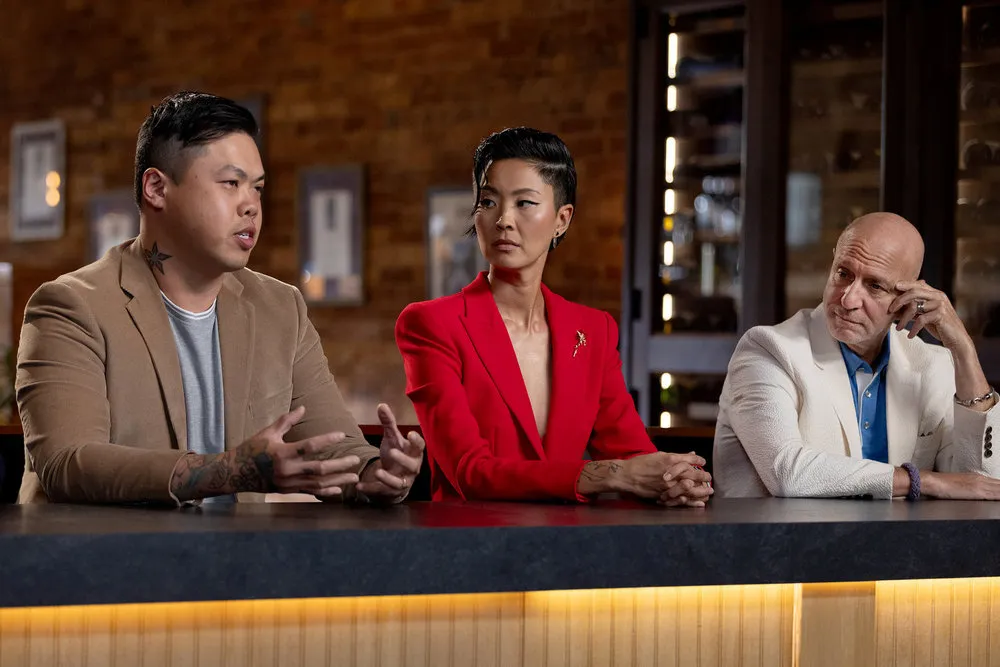
You look at other long-running competition reality shows like Project Runway, Survivor and Amazing Race, and there’s always talk about the show not being what it used to be. Top Chef has never really had that. It’s stayed the course but also maintained relevancy, aging as the audience has aged with the show. Don’t you think?
I 100 percent agree. And a lot of credit goes to the chefs you put on there. The 15-ish chefs you choose every season really define the season, along with the city. Depending on who’s competing and their points of view, what’s relevant are these people cooking. These are the people out there at some of your favorite restaurants, truly making a mark on the industry. These are the people we need to be introduced to, because it is not all the same kind of people cooking at a certain level of cuisine anymore. What is interesting about food is that you have so many different perspectives and points of view, and you have the ability to try so many amazing flavors that sometimes you don’t even have to get on an airplane. They’re right in your backyard or at a community restaurant close to you.
One of the things Top Chef does in a really organic, authentic way is celebrate diversity through food. When these chefs come in, it isn’t a forced celebration of their identity or the food they’re making. It’s just authentic. This is exciting food that happens to be a diverse representation of a community, don’t you think?
It is mirroring what’s happening in the industry as it has evolved. Credit to our fans, they’re craving a different way of viewing food and craving people that look differently or think of food differently than themselves. It is an educational show in a lot of ways. There is always drama when you’re putting professional people competing at a high level, all wanting to win. The thing we’re sometimes working uphill against is that as reality television has exploded, it’s very much driven by interpersonal drama, fake murders, all of that kind of feeling. But our fans have remained steady because they appreciate the excellence of something that just so happens to be on television. I think there’s no higher drama than watching amazing people who have trained and studied for decades for this moment on Top Chef. Those stakes are higher than some other television shows, to me.
I totally agree. If you want drama, try to cook something you don’t know how to cook. Top Chef is like watching the Olympics of chefs. These people have put in so many years and come at it from very different levels, and that is exciting because you’re celebrating excellence in an authentic, dramatic way.
Exactly. And all these people, once these cameras shut down, are going to be catapulted back out into the world. Some are going to go back to life as it was, and some are going to generate opportunities in ways they would have never dreamt possible. It is a dream-making show for one’s career.
A great case in point being you. The food industry is a very apparent example of the trauma COVID-19 had on small businesses. The excitement around Top Chef fuels the excitement to get people back out to restaurants and trying new things. Have you seen that from people?
Top Chef generates a lot of talent that goes on to do amazing things. And in the same way, how many people in your life have said, “I can’t wait to go to so-and-so’s restaurant from Top Chef,” or “I just went to her restaurant, it’s fabulous, I can’t wait to go back”? It fuels so much conversation. Especially post-COVID, getting people excited to go out. You see something on TV, you have no idea what it smells like or tastes like, all you know is how we speak about it, but you’re like, “I have to go try that.” Restaurants already have a hard time with margins and prices and inflation and all the things we’re working against. At the end of the day, communities and neighborhoods are not the same without them. We have to have them. And when we talk about what happened six years ago, it was all the chefs that just stepped right up and said, “We’re gonna feed our community.” I love to see the fans and everyone coming back out to support the chefs and feeding us, literally and figuratively.
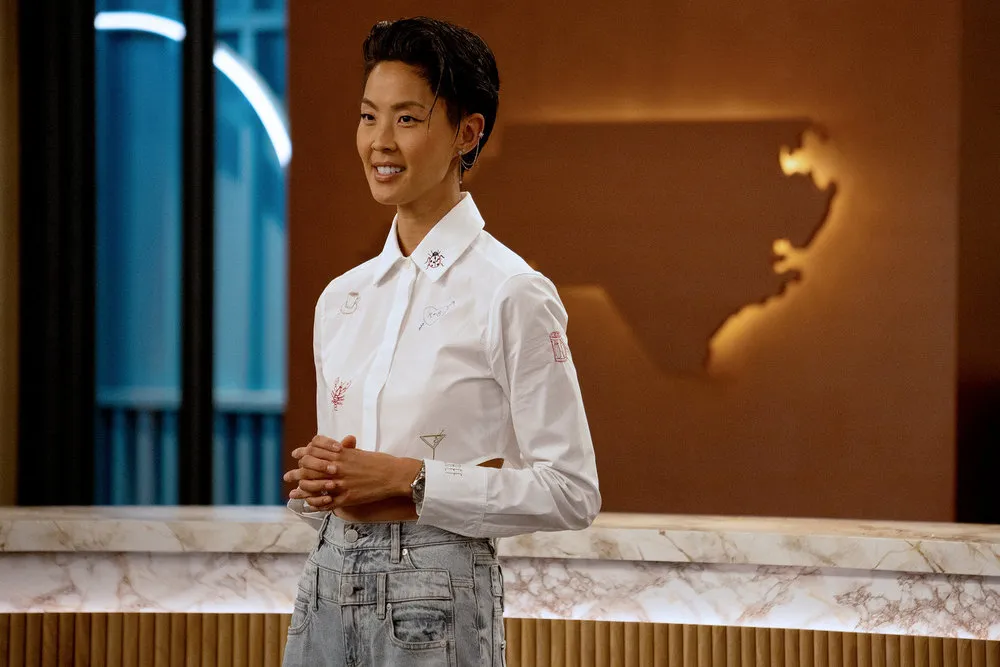
This past year your book, Accidentally on Purpose, highlighted that food has lots of lanes and everyone’s invited. Food is a wonderful vessel to get to know something or someone you may be unfamiliar with. The book highlighted, in a really vulnerable way, your own search for identity and how you came into being the person you are. Was it intentional to open up more about your story, and how does learning more about you change the way we watch you run the show?
Most things I do in my life are very intentional. I think about the impact something is going to have in the immediate future and long term. Putting more of my story out there and coloring in all the lines of who I am, it’s not to say, “Look at me, look at all the things I do.” It was a moment of connection. I can’t tell you how many people from so many different areas of life have said they could see themselves in my book. The thing we all have in common is that we are all humans. We all love, we all fear, we have egos, we have things that challenge us. We all go through these things just a little bit differently. The universal language in all of that, beyond the food part, is just the universal feeling of the markers and moments we all have. I can tell you about one of the worst things that’s ever happened to me, how it made me feel and the challenges it brought up, and you’re going to tell me something similar, and the way we actually feel is going to be quite the same. One of the questions I got asked a lot was, what do you hope other people get out of the book? I don’t care. That is for you to find out and discover. That has nothing to do with how I wrote the book.
You can easily relate that back to food. When I try something new, I tie it back to previous things in my past, the Midwestern Americana food I grew up on. It isn’t up to you to dictate what I’m supposed to take from your book or your story. It’s like when you serve a dish, you just take it. It might make me think of something completely different from my own past. It’s my own story, and I’m just experiencing it through whatever you’ve served me.
And that’s what we’re all trying to do. Human nature is to always tie something new to something familiar. It helps regulate our emotions and anchors us to something that feels safe, whether that’s a good thing or a bad thing. It’s something I think about as I try new foods and look at food through a different lens now. I used to want to serve you a dish you’d never had before, like, “Oh my God, I’m going to blow your mind.” And there are plenty of chefs that know how to do that really well. I’m not one of those anymore. Now it’s all about trying to make one flavor or one thing feel slightly familiar to make you want to keep eating. From there, whatever happens, happens.
A lot of people know you now from Traitors this past year. For fans who’ve followed you for years, I think it was a really cool mainstream introduction into who you are. For most chefs, it feels like they want to stay in the kitchen and let the food do the talking. But this past year you’ve done a lot of talking, front and center. Was it ever a decision to put yourself out there more, and what is it like balancing wanting to be in the kitchen with being out there?
It was never part of the plan. When I went on Top Chef season 10, I never wanted to be on television. I was battling deep insecurity and fear of judgment. I went on Top Chef, and if that was my introduction to television, it was perfect because it was about a skill set. It wasn’t about my personality being the best. It wasn’t a popularity contest. It was food and a skill, which made me feel like I had purpose. Everything I’ve done since then, all the projects I say yes to, are because I’ve found purpose in doing them. I’m not just going on TV to go on TV. I can tie each one to a reason why. If you look at all the shows I’ve done, they’re all a little bit different, all rooted in food, but no one’s asking me to be a different version of myself. Every project I’ve tied myself to has been because someone says, “We see you in this role, now go run with it.” The sandbox is really big to play in, and it allows me to think less about how to do the job and live more in the moment while also doing the job.
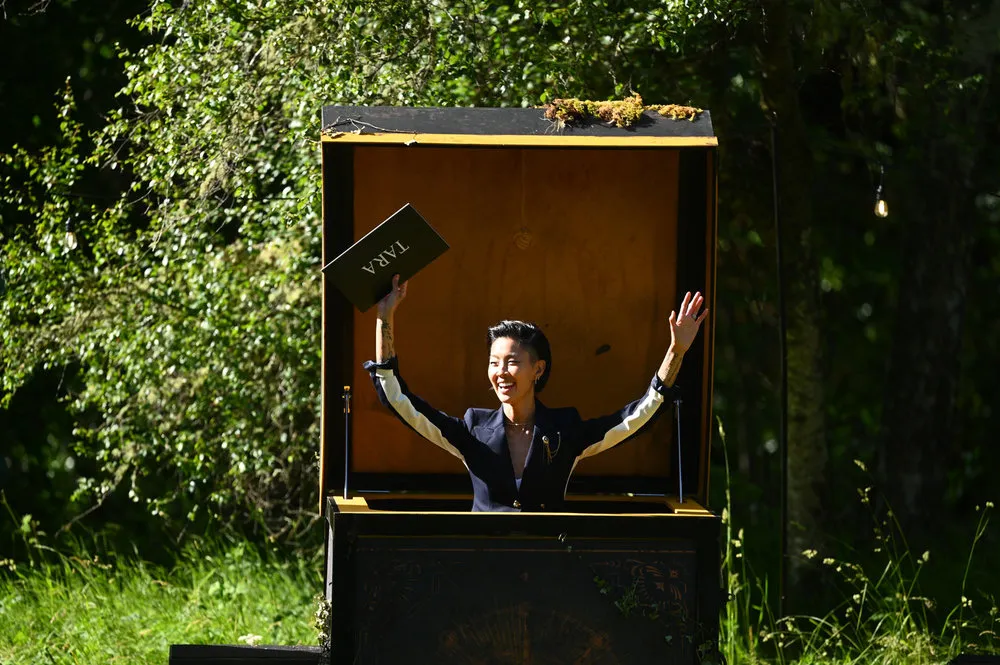
Your run on Traitors is sort of emblematic of your own career. The season started off, and I was wondering where you were, and then as it went on you became the badass we always knew you were, more and more prominent right up until the end. In a weird way it mirrors the course of your career, wanting to stay behind the camera, then being in the competition, then becoming the host. What do you make of your season ofTraitors?
I’m still wondering where I was on some days. I was there, I took part, but I understand what I said doesn’t always add to the general outcome of the story. Some people walked away with parts of their personalities highlighted that maybe they didn’t want highlighted. The thing that stuck with me was buttering bread with a bread knife, and that’s okay. I came out unscathed. By the time you see me in episode nine, when I come at Eric [Nam], I had had enough. I was playing the game, having a good time, and then at that point him and I had developed such a great friendship that my real being just couldn’t play the game anymore. Would it have been smarter to just shut up and keep going? One hundred percent. But I was tired, I was hungry, I missed my wife, I was fed up with all the noise. And so I just lost it. I was like, “Why the f*** are you not talking to me? I’m done.” I kind of gave up playing the game in that moment because real life kicked in. It’s a hard game to stay mentally in. Trying to strategize and figure out how to work people is exhausting. I had reached my limit.
When you reached your limit, for people who’ve watched you for years, it was like, “There’s the badass we always knew.” I was so bummed when they got you out, but that moment became kind of iconic. You were just fed up, right?
Oh my God, yes. I think me coming after Eric and the bread-buttering are the two things that really defined my personality within the game. As I watched it back, I wished I had just been more forward with my train of thought. But for me, the name of the game was to last another day. If being quiet and not causing drama got me another day, that’s exactly what I was going to do, because you can only win if you make it to the end. What a crazy experience.
What a crazy experience that, along with this incredible season of Top Chef and the book, has set you up with such a huge platform for the future. What does that look like to you? What is next?
I don’t know. And I’m okay not knowing. A lot of my life I had everything planned out—by this age, I’m going to do this, the vision board of goals. And every time I missed a goal, I got really depressed, like, “Kristen, why aren’t you better at accomplishing the things you set out to accomplish?” I put that way of thinking away in my early 30s. Now I don’t know what’s going to happen, and I’m open to any and all. I’m accepting the different opportunities that come to me, and I might say no to them, but I’m willing and available in a very open way. That feels a little more freeing than always trying to control the direction of my life. More TV, more books, more naps, more food. We’ll see. Hopefully all of the above.
Read the full article here
