

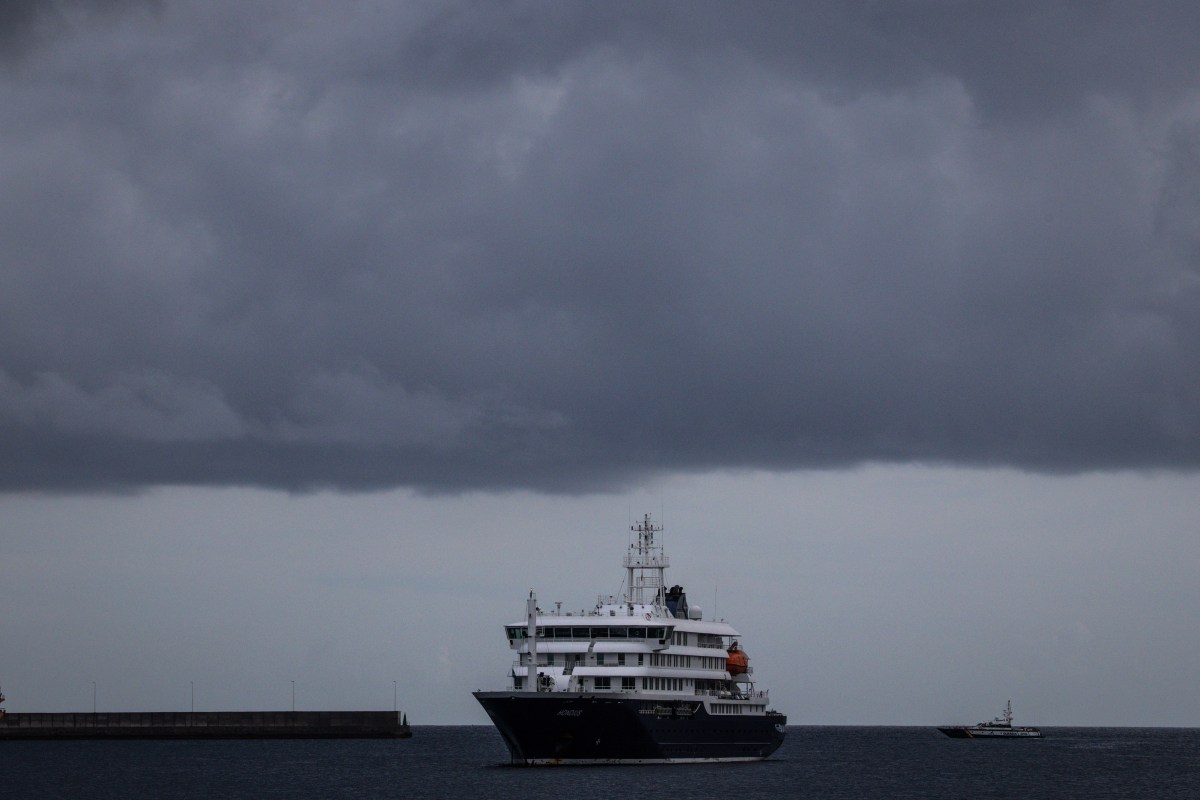
One of the 17 American passengers evacuated from the MV Hondius has tested positive for the Andes-variant of hantavirus, health officials have said.
The passenger, who is currently on a repatriation flight headed for Omaha, Nebraska, tested mildly PCR positive for the virus and is being held in a biocontainment unit along with another passenger who has mild symptoms, the Department of Health and Human Services (HHS) said in a statement.
They were evacuated from the cruise ship that had anchored in the Canary Islands after a hantavirus outbreak left three people dead, and five others who had earlier left the ship infected.
The World Health Organization (WHO), Spanish Health Ministry, and cruise company Oceanwide Expeditions had earlier said none of the more than 140 people who were then on the Hondius had shown symptoms of the virus.
But since leaving the ship, a French passenger also developed symptoms of the virus while on a flight home to France, French Prime Minister Sebastien Lecornu said.
The American aircraft is due to land early Monday. The passengers will first be taken to the University of Nebraska Medical Center, which has a federally funded quarantine facility.
HHS said the aircraft would transport passengers to the ASPR Regional Emerging Special Pathogen Treatment Center (RESPTC) at the University of Nebraska Medical Center.
The medical school also has a special unit for treating people with highly infectious diseases that was used for COVID-19 patients early in the pandemic and previously for Ebola patients.
The passenger with mild symptoms will be transported to a second RESPTC, HHS said. “Upon arrival at each facility, each individual will undergo clinical assessment and receive appropriate care and support based on their condition,” the statement read
Kayla Thomas, a spokesperson for the University of Nebraska Medical Center, said in a statement provided to Newsweek: “One passenger will be transported to the Nebraska Biocontainment Unit upon arrival, while other passengers will go to the National Quarantine Unit for assessment and monitoring. The passenger who is going to the Biocontainment Unit tested positive for the virus but does not have symptoms.”
Hantavirus usually spreads when people inhale contaminated residue of rodent droppings, and the disease is not easily transmitted between people. But the Andes virus detected in the cruise ship outbreak may be able to spread between people in rare cases. Symptoms usually show between one and eight weeks after exposure.
WHO Director-General Tedros Adhanom Ghebreyesus has reiterated that the general public should not be worried about the outbreak.
“We have been repeating the same answer many times,” he said. “This is not another COVID. And the risk to the public is low. So they shouldn’t be scared, and they shouldn’t panic.”
This is a breaking news story. Updates to follow.
Read the full article here
