

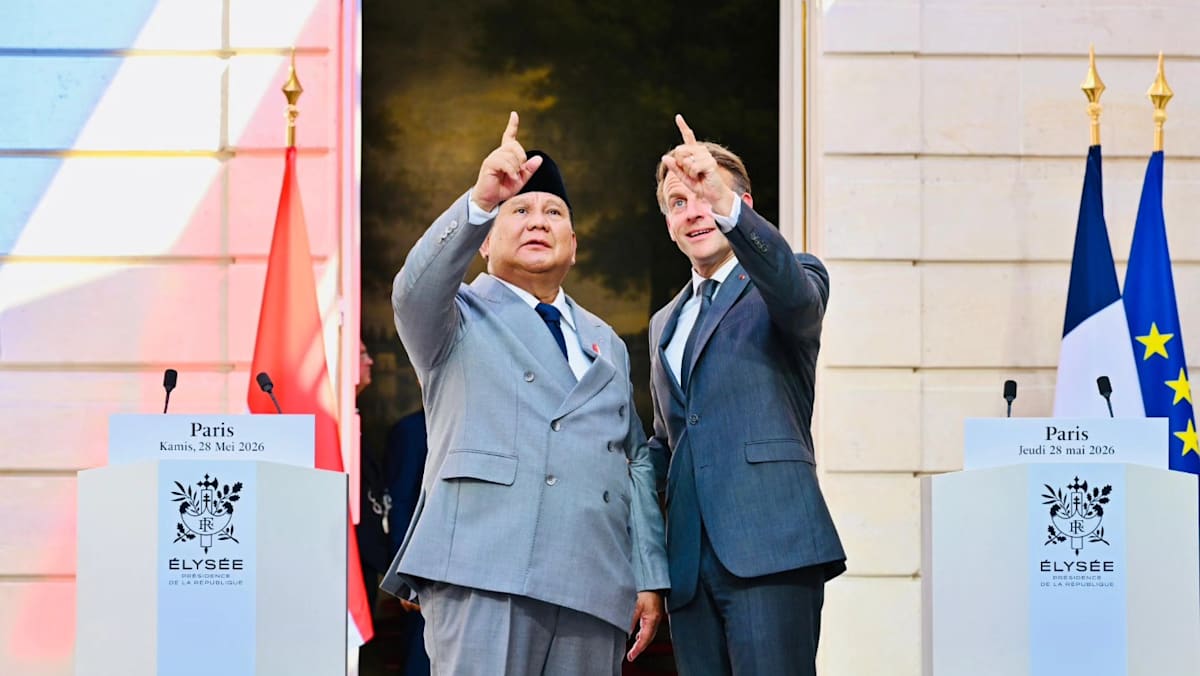
He also rejected suggestions that the president’s foreign engagements were largely ceremonial.
“It is completely wrong to say these trips are simply about appearances,” said Teddy.
“We cannot wait until a crisis emerges before asking for help. We need to build strong relationships first.
“If an emergency arises in the future, we can seek assistance, and the same applies in reverse. That requires personal relationships and emotional closeness between leaders. That is diplomacy.”
He added that any travel expenses exceeding the budget allocated by the state were paid personally by Prabowo.
He also linked the president’s overseas diplomacy to a series of positive outcomes, including Indonesia’s accession to BRICS, trade negotiations with the European Union, investment commitments, defence cooperation, Hajj arrangements, support for Palestine and assistance for Indonesians overseas.
Citing data from the investment ministry, Teddy revealed Indonesia had attracted around 2.43 quadrillion rupiah in investment over the past 18 months.
“Last month President Prabowo visited Japan and South Korea. Upon returning, there was immediately around 575 trillion rupiah in investment,” he added.
DIPLOMATIC DIRECTION AND PRIORITIES UNDER PRABOWO
Beyond debates over the cost and frequency of his trips, Prabowo’s pattern of overseas visits has also raised questions about the direction and priorities of Indonesia’s diplomacy, say experts.
The debate has emerged as several countries have repeatedly appeared on the president’s foreign travel agenda.
According to analysts, the pattern reflects specific diplomatic priorities that have become a focus of the Prabowo administration.
Prabowo’s extensive travel, Akbar Kurnia Putra, an international law expert at Jambi University argued, reflects a deliberate diplomatic strategy built around personal engagement and Indonesia’s desire to maintain relationships with multiple centres of power simultaneously.
Public concerns about the contrast between domestic spending cuts and overseas travel are understandable, Akbar said, particularly when budget reductions affect sectors such as education, healthcare and infrastructure.
But judging the trips solely through the lens of cost risks overlooking their broader strategic purpose.
According to Akbar, Prabowo appears to be pursuing what he describes as a “free and active plus” foreign policy.
The approach builds on Indonesia’s longstanding non-aligned tradition while placing greater emphasis on direct engagement between national leaders.
In an increasingly fragmented geopolitical environment, Akbar said, the physical presence of a head of state carries political significance that cannot easily be replicated through virtual meetings or lower-level diplomatic channels.
“Physical presence is the highest signal of commitment and cannot be delegated,” he told CNA.
“Only a head of state can negotiate on equal terms and make binding political commitments.”
Prabowo’s background as a former defence minister may also help explain the emphasis on leader-to-leader diplomacy.
Major defence procurements, technology transfers and security partnerships often depend on relationships cultivated directly between national leaders, Akbar said.
Viewed through that lens, repeated visits to countries such as France, Russia and the UAE are not random. They reflect Indonesia’s attempt to preserve strategic flexibility while avoiding dependence on any single geopolitical bloc.
“Indonesia does not want to choose sides,” he said.
The strategy allows Jakarta to pursue multiple objectives at once: technology and defence cooperation from Europe, investment from Gulf states, and partnerships in energy and food security from Eurasian partners.
For Akbar, it represents an ambitious attempt to position Indonesia as “an autonomous and influential middle power amid intensifying geopolitical rivalry”.
Read the full article here
