

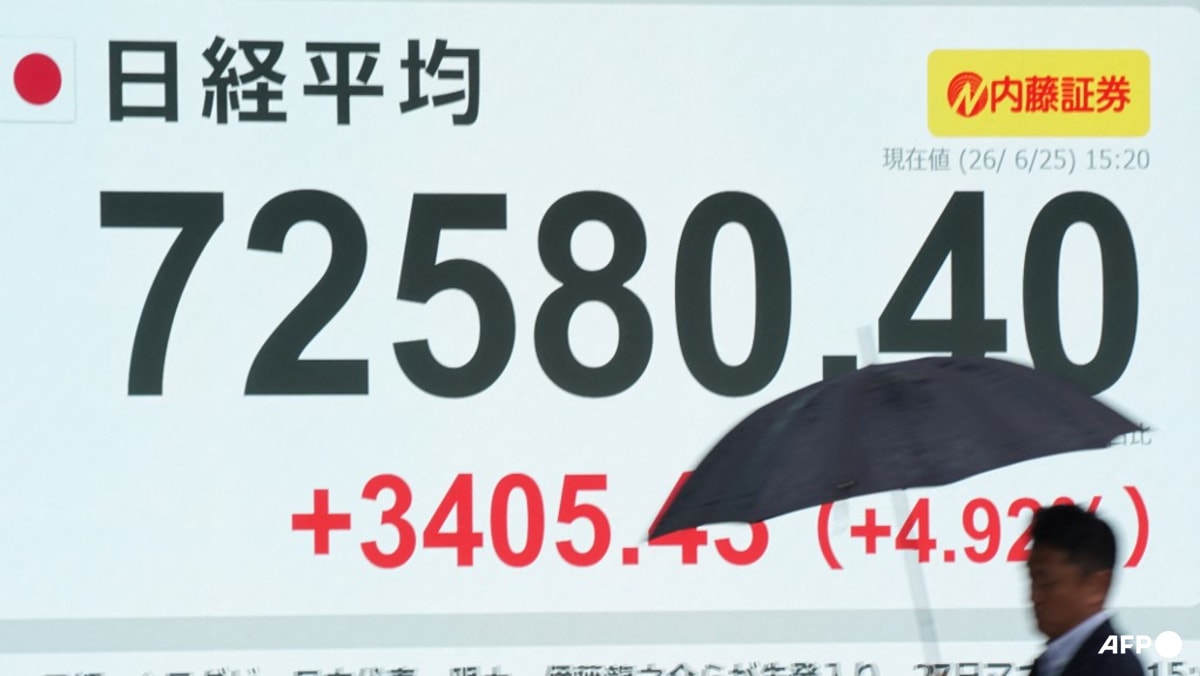
However, the likelihood of a hike before the end of the year remains.
“Not long ago, the Fed had an easing bias which was primarily fuelled by concerns over the labour market,” wrote Rodrigo Catril at National Australia Bank.
“Recent improvement in payrolls alongside higher inflation shifted the Fed bias towards neutral, with the new Fed Chair emphasising the need for the Fed ‘to re-commit to deliver price stability’.
“The US labour market today is not strong enough to instigate rate hikes but importantly is no longer a handbrake or impediment to hikes, leaving the Fed solely focused on the other side of its mandate.
“In other words, getting inflation down after five years of overshoot and six months of more recent core reacceleration.”
The gains in Asia followed a mixed day on Wall Street, where the Nasdaq sank 0.8 per cent but the Dow jumped more than 1 per cent on the last day before a long Independence Day weekend.
Analysts said the retreat in tech plays was unsurprising considering the eye-watering gains they have made over the past two years, while traders were rotating from the sector into other industries where bargains can be found.
The dollar held the losses seen in the wake of the jobs data as investors lowered their rate expectations, while non-yielding gold — which benefits from lower interest rates – climbed towards US$4,200 for the first time in two weeks.
Oil prices edged up but held recent losses fuelled by increased traffic through the Strait of Hormuz and on hopes for progress in US-Iran talks.
Read the full article here
