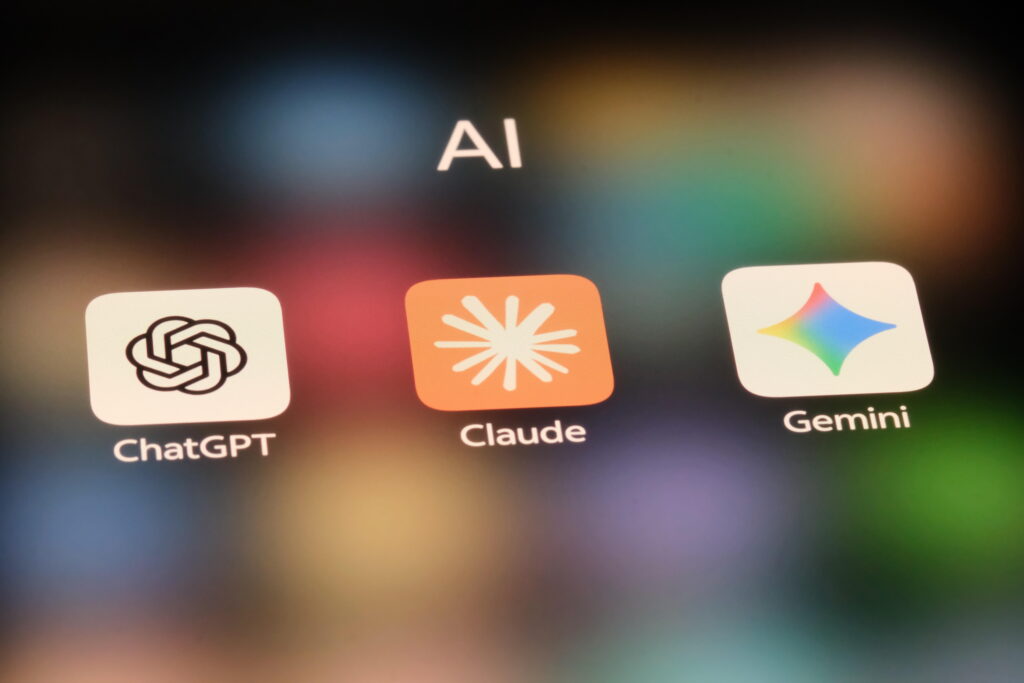
ChatGPT and Gemini are some of the most popular chatbots you can use today and each is very capable in their own ways. ChatGPT has been around longer and it is still the most popular option, but Google has slowly been catching up slowly since Gemini was released.
Both chatbots excel at working with text and deep research, but there may be some times you want to use one over the other. We consider ChatGPT to be the most versatile chatbot around, where Google generally provides more value, especially when you go for its paid subscription plan.
When it comes to multimodality — where a chatbot can understand more than just text, but audio images and video — there’s a clear winner, especially when it comes to image recognition. Below are a series of tests to see just how well each chatbot understands the world around you.
(Disclosure: Ziff Davis, CNET’s parent company, in 2025 filed a lawsuit against OpenAI, alleging it infringed Ziff Davis copyrights in training and operating its AI systems.)
ChatGPT vs. Gemini features
Both chatbots are incredibly popular but ChatGPT still has a larger user base thanks to its first-move advantage. That said, Gemini is essentially preinstalled on all Android phones, so it may only take time before Google’s option becomes the predominant chatbot.
Both chatbots can essentially do the same things on the surface, but when it comes to creating images, we’d tip the hat to Gemini, thanks to its almost-too-good Nano Banana image generator. ChatGPT is no slouch, but it’s hard to stand up to what Google has on offer here.
The free versions of both chatbots are very capable, but it’s when you actually start paying for the premium versions that you’ll see the differences between the two. While we still say that Claude is the best overall chatbot, it’s a close race between ChatGPT and Gemini.
If you opt to pay for Gemini, you’ll essentially get a lot more than access to its most advanced models, especially when you compare what you get with ChatGPT. Google’s AI plans offer additional cloud storage to use across your Google account, starting at 400GB for its cheapest plan. If you choose the standard, $20 a month plan, you’ll get even more: expanded access to AI models, more storage, Google Spark and even a YouTube Premium Lite plan that will show you fewer ads. If you’re firmly in the Google ecosystem, there’s almost too much value not to go with Gemini’s premium plan.
ChatGPT’s premium plans provide you with higher usage access and better models. For its comparable $20 plan, this means access to its latest GPT-6.
Test 1: Scribbled notes
For an easy starter test, I quickly scribbled in the notes app on my Boox Note Air 5C with the pen. It looked like a mess, which is what I was going for. I copied the words from a random page from The Hound of the Baskervilles by Arthur Conan Doyle:
“’A moderate walk along this moor-path brings us to Merripit House,’ said he. ‘Perhaps you will spare an hour that I may have the pleasure of introducing you to my sister.’ My first thought was that I should be by Sir Henry’s side. But then I remembered the pile of papers and bills–” (I ran out of room to complete the sentence, so I left it at that.)
ChatGPT
ChatGPT missed this one. The first line, “a moderate walk along this moor-poor path brings us to Merripit House,” was almost completely wrong, with the chatbot transcribing it as, “A moment will always this moment — [Henry’s?] to Merritt House.”
Its analysis said the handwriting contained notes about a memory involving Henry, Sir Henry and the writer’s sister. It also pointed out that some of the words were hard to determine, so it marked words with uncertain words in brackets.
Gemini
Gemini nailed it. It translated my sloppy text word for word, identified the source and even offered specific handwriting characteristics from the image, like “open loop formations on the letters like y, g, and f.”
The fact that Gemini was able to correctly identify the source may also have affected the accuracy of the translation. Nonetheless, compared to ChatGPT, it’s a night-and-day difference.
Test 2: Chess

To get an idea of how both chatbots interpret an ongoing chess match, I snapped a photo from a game on the Esports World Cup YouTube channel and asked both Gemini and ChatGPT what the next best move was for black.
Gemini
While I’m not a chess expert by any means, Gemini’s answer was long and elaborate.
Its final answer was Bxf4.
ChatGPT
ChatGPT’s approach to responding was initially different. It was showing its thinking process, and one of the lines said it “installed chess libraries and searched for a local Stockfish engine,” which is an open-source chess engine used to calculate moves. However, it took over 4 minutes to get to the response.
Its final answer was c5 to d4.
It did offer a secondary best move: Bxf4, the same as Google’s suggestion.
I reached out to the US Chess Federation to humor me and get some insight about what they thought of the test, but did not receive a reply.
To look for another party’s interpretation of each chatbot’s response, I decided to ask… Claude. I uploaded the same image and included the original prompt as well as both responses from Gemini and ChatGPT. Claude’s conclusion, without going into detail, was that Gemini read the board incorrectly and ChatGPT was the more appropriate answer.
Test 3: Sick plant

The third test was of a photo of a Venus flytrap I own. I asked the chatbots to identify what type of Venus flytrap it is (it’s a towering giant) and why one of the traps was turning black. I knew this would be a particularly tricky one, given that most Venus flytraps look similar.
Gemini
Gemini didn’t identify the correct name of the flytrap, but I didn’t really expect it to. As far as the blackening trap, it listed a variety of ways why it could be happening, including the correct one: The trap attempted to consume an insect that was too large.
ChatGPT
ChatGPT gave a similar, but more detailed reply. It said it wasn’t confident in assigning a particular cultivar for the specific trap itself, but it did give more information about how the one trap could be blackening, as well as a section of “what I’d do” that provided some helpful tips.
Overall, both chatbots provided decent answers, but ChatGPT’s more detailed response won this round.
Test 4: Movie art

This was a fun one: I took a photo of three pieces of art that depicted the mouths of the Sanderson sisters from the movie Hocus Pocus. The hand-painted pieces are from an artist and not official movie merchandise.
ChatGPT
ChatGPT was unable to identify the movie, though it was able to accurately describe the image I uploaded: “Three diamond-shaped paintings that look like custom artwork.” It asked for additional details, like the year the film was made, to identify it.
Gemini
Gemini was easily able to identify what I showed it. “This artwork features the iconic smiles of the Sanderson Sisters from Disney’s Hocus Pocus (1993).”
From there, it went into detail about what character was in what position and the actresses who played the characters.
Gemini seems to be the winner
While I preferred ChatGPT’s response for the Venus flytrap test, Gemini’s consistency and ability to correctly identify sources in both the notes and the movie art tests makes me favor it overall. Since I couldn’t get a real answer from an expert about the chess test, I’ll leave that one out of the final tally.
Either way, if you’re looking for the best AI chatbot that can most accurately “see” and describe the world around you, Gemini takes the cake — for the most part.
Read the full article here