

Referring to the “next three years and beyond” timeframe indicated by Xi, Li said it is significant because it appears designed to cover the rest of Trump’s term till January 2029 while extending into the early stage of the next US administration.
“Beijing is not only managing Trump personally; it is trying to create a durable reference point that outlasts this particular summit cycle,” he said.
Analysts said the latest formulation marks a notable adjustment in Beijing’s language.
“It’s new language and I think it reflects China’s desire to put more institutional guardrails around US-China relations, both competition and cooperation,” Joe Mazur, a geopolitics analyst at Beijing-based consultancy Trivium China, was quoted as saying in a Reuters report.
James Chen, an assistant professor of diplomacy and international relations at Tamkang University, said the concept reflects Xi’s attempt to frame bilateral ties “not as mere rivalry, but as competition within a stabilised context”.
China, he said, is seeking to set boundaries for long-term competition and reduce the risks of destructive rivalry, particularly over Taiwan.
MANAGING RIVALRY WITHIN LIMITS
A similar tone ran through Xi’s opening remarks, which framed US-China ties through a broader lens of global order, historical choice and crisis management, analysts said.
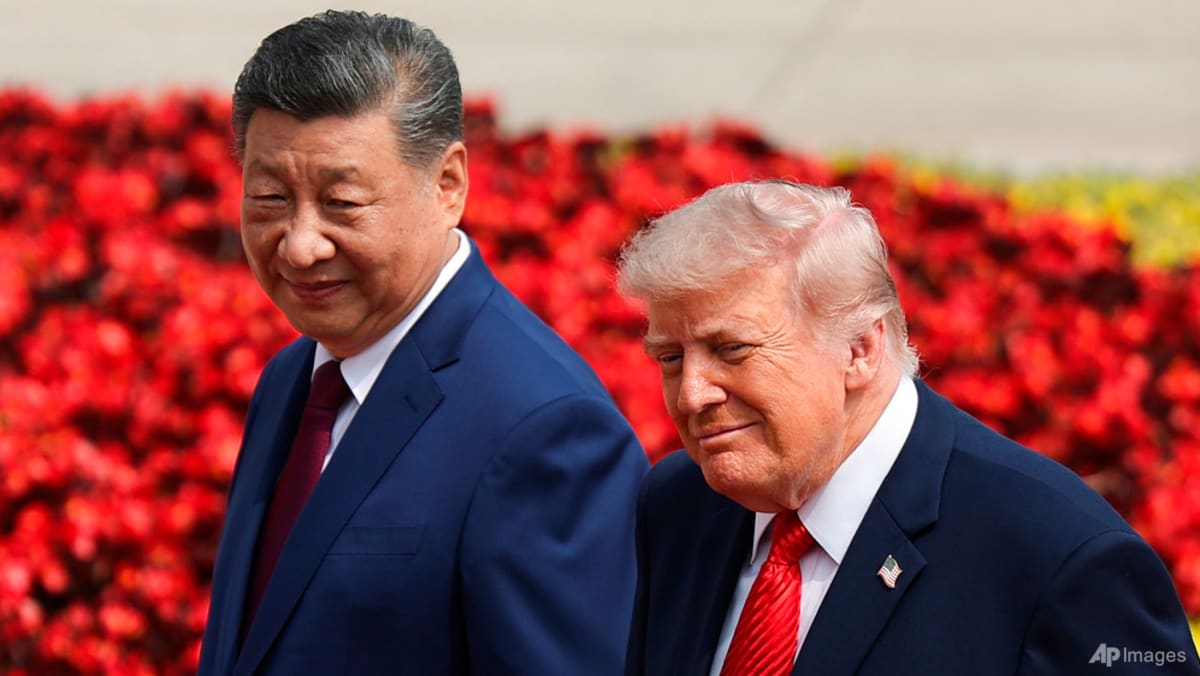
That big-picture framing stood in contrast to Trump’s more personalised approach, as the two leaders struck markedly different notes at the start of their talks in Beijing.
Xi cast the relationship as one with global consequences, while Trump leaned on personal praise and ceremony, analysts said.
Ian Seow, a senior analyst in the China Programme at the S Rajaratnam School of International Studies, said Xi’s remarks were notable for situating the bilateral relationship in a wider global context.
“He underscored the importance of US-China relations for global stability,” he asid.
That approach, he added, could reflect China’s attempt to project itself as a responsible major power in managing ties with Washington.
Read the full article here
