

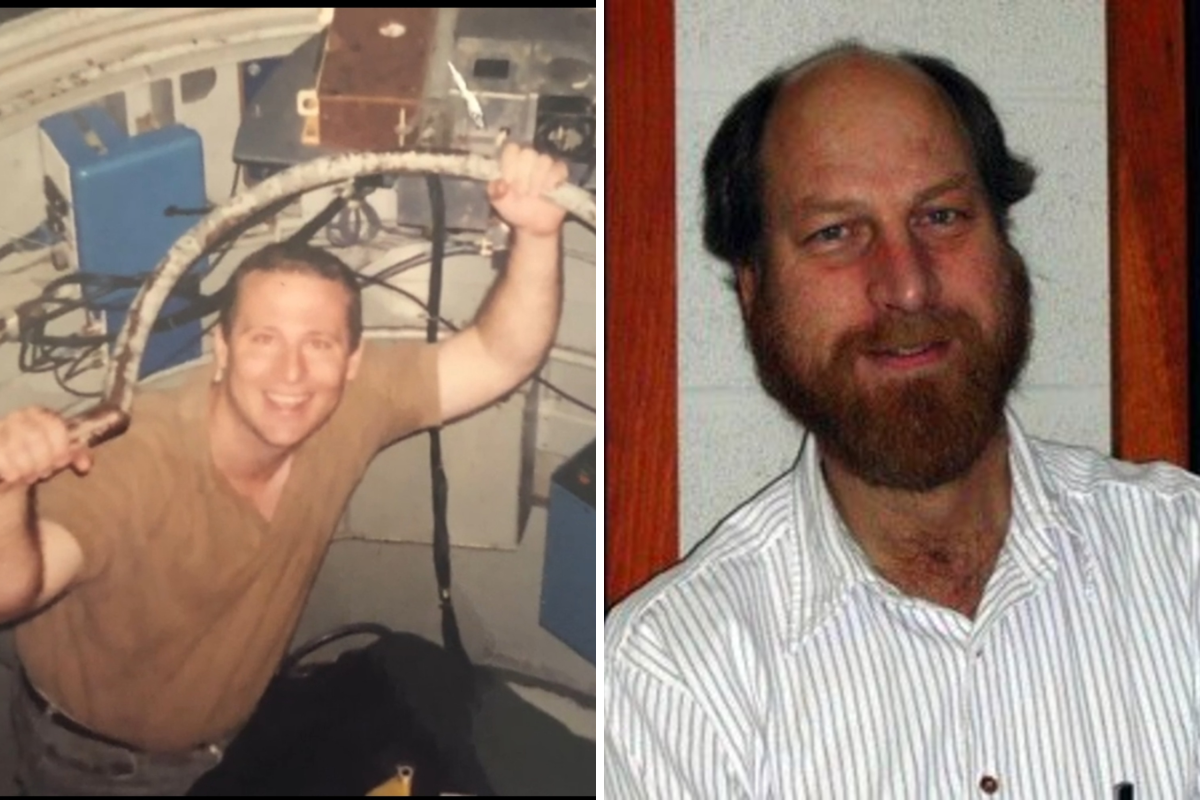
As the Trump administration investigates a wave of missing and dead scientists that has drawn widespread attention and online speculation, a former colleague of two of the scientists at the center of the inquiry is pushing back against claims of a broader conspiracy.
Dr. Joe Masiero, lead scientist for the Near-Earth Object Surveyor at the Infrared Processing and Analysis Center (IPAC) at the California Institute of Technology, told Newsweek he does not believe the cases are connected by any coordinated or sinister plot.
“Sometimes, life is weird like that,” Masiero told Newsweek exclusively. “It’s really unfortunate to see a tragedy played out over and over again.”
Masiero stressed that his statements were not an official position of Caltech, NASA or the NEO Surveyor mission. His remarks come amid heightened scrutiny following confirmation that the White House is reviewing a series of deaths and disappearances involving the scientists, which President Donald Trump has described publicly as “serious.” While administration officials have said the review is ongoing, no evidence has been publicly presented indicating that the cases are linked.
Masiero, who worked as a research scientist at NASA’s Jet Propulsion Laboratory (JPL), has direct professional connections to two of the scientists whose deaths are now part of the broader national conversation: Michael Hicks and Carl Grillmair.
Michael David Hicks
Hicks, 59, a veteran NASA JPL scientist involved in asteroid and comet research, died in July 2023. His obituary described him as an astronomer, artist and father but did not immediately disclose a cause of death.
Masiero worked alongside Hicks at JPL for roughly a decade. He said Hicks was deeply committed to mentoring students, leaving a lasting imprint on those with whom he worked.
“He put a lot of work into mentoring the next generation,” Masiero said. “He was such a good soul who really wanted to help students and gave them the best opportunities possible.”
The two interacted frequently during their years at JPL, and Masiero recalled Hicks as a colleague whose presence was valued beyond his scientific contributions.
“He was a pleasure to be around,” Masiero said. “A lot of fun to talk to.”
Carl Grillmair
Grillmair, 67, an astronomer at the California Institute of Technology, died on February 16, the result of a fatal shooting outside his rural Southern California home, according to law enforcement.
Masiero worked closely with Grillmair for five to six years at IPAC. He was “detail-oriented,” Masiero said, and a “constant presence” during their years working together. Although Grillmair rarely spoke about life outside the office, Masiero recalled one topic that stood out, in which Grillmair expressed excitement about returning to Canada to visit his family for Canadian Thanksgiving each October.
The loss of Grillmair has been deeply felt by those who knew him, Masiero said, emphasizing the emotional weight carried by coworkers who are now seeing familiar tragedies discussed on a national stage.
“We really miss Carl, and it’s a real tragedy what happened,” he said.
The federal investigation has unfolded alongside intense online speculation, particularly claims that the scientists were linked through their work or institutions in a way that suggests foul play. Masiero rejected that framing.
Tom Greene, a colleague who worked with Grillmair at IPAC, also believes that the deaths are unrelated.
“I think there’s absolutely no factual basis for any of that,” Greene told Newsweek. “We live in a violent society. There are a lot of unpleasant people and unpleasant things that happen in our society. I worry trying to … fabricate connections reduces emphasis on that.”
Around 20,000 homicides occur every year in the U.S., according to FBI data.
“You would expect to have 20 scientists murdered every year just by looking at the numbers,” Greene said. “The much more likely scenario is sometimes you’re in the wrong place at the wrong time and bad things happen.”
For Masiero, a difficult aspect of the situation is seeing individual lives reduced to theories rather than remembered for who they were.
“It’s really unfortunate to see a tragedy played out over and over again,” he said.
Who Are the Scientists?
Eleven cases are now being examined publicly after online speculation got the attention of the White House.
In addition to Hicks and Grillmair, the other scientists reported dead are:
• Frank Werner Maiwald, another longtime JPL researcher and principal investigator on Earth-observing and space instrumentation projects, died in Los Angeles in July 2024; his obituary said only that he “passed away.”
• Nuno Loureiro, director of MIT’s Plasma Science and Fusion Center, died in December after being shot at his home.
• Jason R. Thomas, a Novartis researcher working on cancer treatments, was missing for months before his body was recovered from Lake Quannapowitt in Wakefield, Massachusetts, on March 17.
• Amy Eskridge, a researcher who was investigating antigravity technology, died from a self-inflicted gunshot wound in June 2022, according to reports.
Those still missing encompass scientists, a military leader and administrative laboratory staff:
• Retired Air Force Major General William “Neil” McCasland, last seen in Albuquerque, New Mexico, on February 27.
• Aerospace engineer Monica Reza, missing since June 22 after disappearing while hiking in California.
• Anthony Chavez, a former Los Alamos National Laboratory employee missing since May.
• Melissa Casias, an administrative worker at Los Alamos National Laboratory missing since June.
• Steven Garcia, a government contractor at the Kansas City National Security Campus in Albuquerque missing since August.
Read the full article here
