

Two very different inquiries have dominated recent news headlines. The ICAC hearings have exposed how a faction within the NSW Liberal Party was allegedly captured by religious conservatives, largely alumni from Opus Dei-aligned private school Redfield College. Meanwhile, the NSW parliamentary inquiry into Redeemer Baptist School has laid bare allegations of institutional control inside one of Sydney’s private schools.
On the surface, these appear to be unrelated stories. But both point to the same blind spot: religious private schools in Australia that operate with almost no scrutiny into how they are shaping their students.
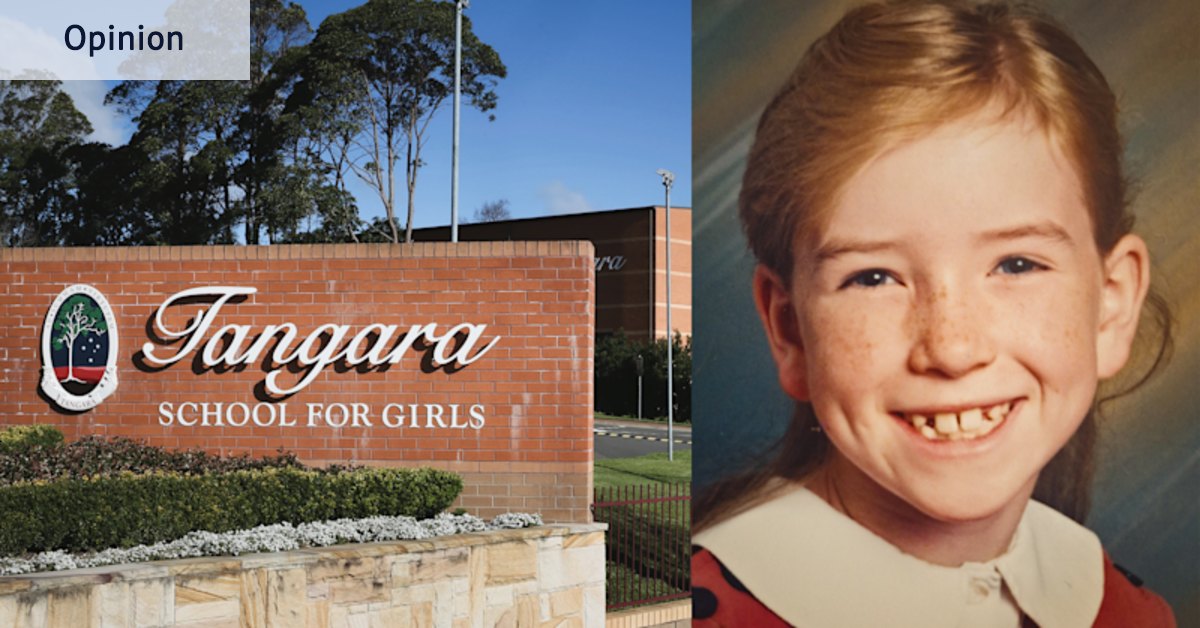
I can’t speak for Redfield College, but I attended its sister school, Tangara School for Girls, which is also affiliated with Opus Dei, an ultra-conservative part of the Catholic Church. I know what it’s like to sit in a classroom for 13 years and be taught a fundamentalist religious worldview. When people send their children to a private school like mine, one of the key reasons cited is traditional moral values. So what exactly are these values? In my experience, they can be found in subjects outside the mandated curriculum.
In our non-curriculum religion class, in which we also learnt non-curriculum history from a non-curriculum textbook called Christ the King, Lord of History, our teacher – the vice principal, and an Opus Dei numerary (or dedicated member) – wrote on the board “the end justifies the means”. She was teaching us about the Crusades, a subject on which we later had to write an essay answering the question, “Why were the Crusades a just and holy war?” This may go some way to explaining the modus operandi of the Reformers who have allegedly pushed their conservative agenda in the Liberal Party by all means necessary.
When we, former students of Tangara and Redfield, told our stories in a Four Corners investigation in 2023, a crucial issue was overlooked among the numerous allegations: how do private schools get away with teaching students whatever they want? It’s a question that the Redeemer Baptist School inquiry is now asking, with allegations that the school uses a fundamentalist Christian worldview to exercise coercive control over students.
The answer lies in an oversight gap in Australian private schools. Alongside the NSW curriculum, we were required to take an array of non-curriculum subjects aligned to a religious (in our case, Opus Dei) ideology: as well as non-curriculum religion classes, there was motto, philosophy and the study of Western culture. We learnt from non-curriculum textbooks. These classes were used to systematically undermine parts of the curriculum that the school did not agree with but was forced to teach us – nuisance topics such as evolution and human biology.
It was in our non-curriculum classes that we were taught that all means are justified in the name of advancing a Catholic agenda, a woman who has sex is like sticky tape that loses its stick, watching pornography causes holes in the brain and homosexuality is a mental illness. It was also in these classes that, as 10-year-olds, we were each given a prayer card to St Maria Goretti, a Catholic virgin martyr, so we could pray for the courage to choose being stabbed to death over being raped.
After the Four Corners episode aired, I led a delegation of former students to meet with staffers for federal Education Minister Jason Clare. The schools had already been referred to the NSW Educational Standards Authority (NESA) for investigation. One of the central concerns we raised was a lack of oversight regarding these non-curriculum subjects and textbooks. Clare’s office said it wasn’t within its remit and referred us back to NESA. NESA – who declined to speak to us at all – only regulates curriculum subjects, and so the investigation was closed.
This is how I discovered that schools like mine are given near-total freedom over what they teach outside the curriculum, with no government body responsible for checking that it is even accurate. It takes a journalistic investigation – both in the case of the Opus Dei-aligned schools and the Redeemer Baptist School – to uncover what’s being taught to students behind closed doors. I’m not suggesting this is happening in all private schools, but without any governance, there’s actually no way of knowing.
While this issue isn’t unique to religious schools, it’s notable that almost all private schools in Australia are religious: a staggering 94 per cent of them. In fact, Australia maintains one of the highest concentrations of religious schools of all OECD countries, and Catholic and independent schools account for 37 per cent of all student enrolments.
What’s more, in 2024, Catholic and independent schools received more than $20 billion in government funding. Yet despite this, the private education sector somehow avoids any scrutiny of non-curriculum subjects that make up a significant portion of students’ class time. Federal and state governments pour money into these schools and then say they have no power to regulate them the way they do public schools.
So, what of the values that parents hope their children will gain from a private school education? In my unregulated, non-curriculum classes, I learnt intolerance towards people of other faiths. I learnt bigotry and homophobia. I learnt that women are responsible for their own sexual assaults. I learnt repeatedly that I was going to hell.
When so much taxpayer money is going towards teaching children “values” in private schools, Australians have a right to know exactly what those values are. Public funding must come with public accountability. If NESA can regulate maths and science lessons, there’s no reason that non-curriculum subjects should be exempt from that same basic transparency. It’s beyond time to bring private schools into line.
Claire J. Harris is a former student of Tangara School for Girls.
Get a weekly wrap of views that will challenge, champion and inform your own. Sign up for our Opinion newsletter.
From our partners
Read the full article here
