

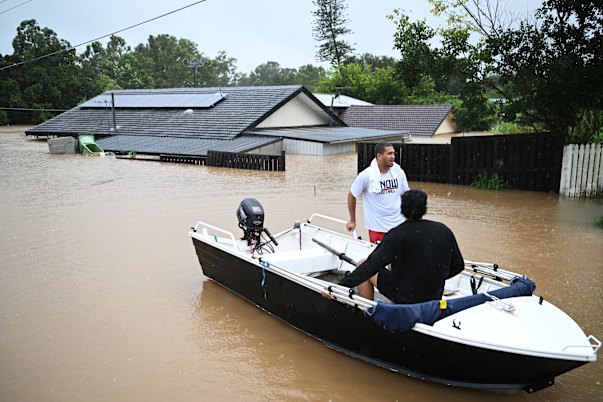
Queensland is considering scrapping environmental and hazard rules that dictate how councils approve developments, opening up the possibility of more houses being built in disaster-prone areas.
The state planning policy currently has five broad themes, each with a set of state interests that councils must consider in their own planning policies. But the policy is under review, with the Queensland government putting out feelers on how any changes would affect councils.
In May, the Department of State Development, Infrastructure and Planning briefed the Local Government Association of Queensland and councils, flagging it might cut both the “environmental and heritage” and the “safety and resilience to hazards” themes.
If those themes were to go, the state would no longer insist councils consider biodiversity, coastal environments, cultural heritage, water quality, emissions and hazardous activities, or natural hazards posed by flood, storm tide, erosion and bushfire when assessing developments.
Following that briefing, some in the sector believe the review is being shaped to deliver more housing as fast as possible.
In an email provided by a local government source to this masthead, one planning expert who attended the briefing laid out the risks they saw in potential policy change.
“The department has been directed to review the [state planning policy] with a primary focus on housing supply, economic growth and infrastructure,” the planner said.
“There is an inherent risk between the review’s focus on housing supply and the removal of risk-based safeguards. Without strong hazard policies, there is greater risk of housing being approved in flood, bushfire or coastal hazard-prone areas.”
The email was sent to local government officials around the state, urging them to express their opinions on the proposed changes.
“Its removal could result in increased subjectivity in decision-making, potentially leading to extended assessment timeframes or more appeals … and difficulty defending decisions at the Planning and Environment Court without the support of the state planning policy,” they wrote.
Associate Professor Stephanie Wyeth, a UQ urban planning expert, said the planning policy was one of the best ways to prepare for natural disasters, and stripping hazards from the list of state interests would be a significant step in the opposite direction.
“If the state takes away their interests, it means that local governments will be dealing with the risks associated with that,” she said.
“I would see it as cost shifting to local governments to deal with through the planning and environment court.”
Wyeth pointed to the Insurance Council of Australia’s finding that $1.5 billion was paid out for claims associated with ex-tropical cyclone Alfred in south-east Queensland as an example of the costs associated with natural disasters.
“We need to be thinking about planning not just for the next 10 years, but the next 50 and 100 years,” she said.
LGAQ chief executive Alison Smith would not answer questions about whether the peak body would support the proposed changes, but said they were regularly consulting their members on policy matters.
The deputy premier’s office did not respond before deadline, but has told this masthead previously the department was consulting councils for the review.
Start the day with a summary of the day’s most important and interesting stories, analysis and insights. Sign up for our Morning Edition newsletter.
From our partners
Read the full article here
