

A sweeping change to U.S. immigration policy is set to reshape how many people pursue permanent residency—potentially forcing thousands to leave the country to complete the process, with the impact likely to fall unevenly across nationalities.
The Trump administration announced on May 22 that most temporary visa holders must now leave the U.S. and apply abroad for green cards, aiming to tighten immigration rules.
The change affects an existing pipeline of applicants and arrives amid backlogs and uncertainty across the immigration system.
Students, temporary workers and visitors already in the U.S. will generally no longer be able to adjust status domestically and must use consular processing abroad.
Why It Matters
The U.S. has long allowed many applicants already in the country to apply for a green card without leaving, a process known as adjustment of status. The new policy sharply narrows that pathway, reframing it as an “extraordinary” exception rather than a routine option.
A Shift Away From Applying Inside the US
The new guidance from U.S. Citizenship and Immigration Services (USCIS) directs most applicants seeking permanent residency to leave the United States and complete the process through embassies or consulates abroad.
Officials say the move restores what they describe as the original intent of immigration law.
Under the new approach, people who entered on temporary visas—including students (F-1), skilled workers (H-1B), intra-company transferees (L-1), and tourists (B-1/B-2)—will generally not be able to transition to permanent residency without first leaving the country.
Adjustment of status, which previously allowed many applicants to stay in the U.S. during processing, is now framed as a discretionary and rare form of relief.
USCIS spokesman Zach Kahler said the shift would make the system “fairer and more efficient” by discouraging individuals from remaining in the U.S. after a denial. The Department of Homeland Security described the policy as ending “abuse” of the system.
How the Impact Varies by Country
The impact will not be felt evenly across countries.
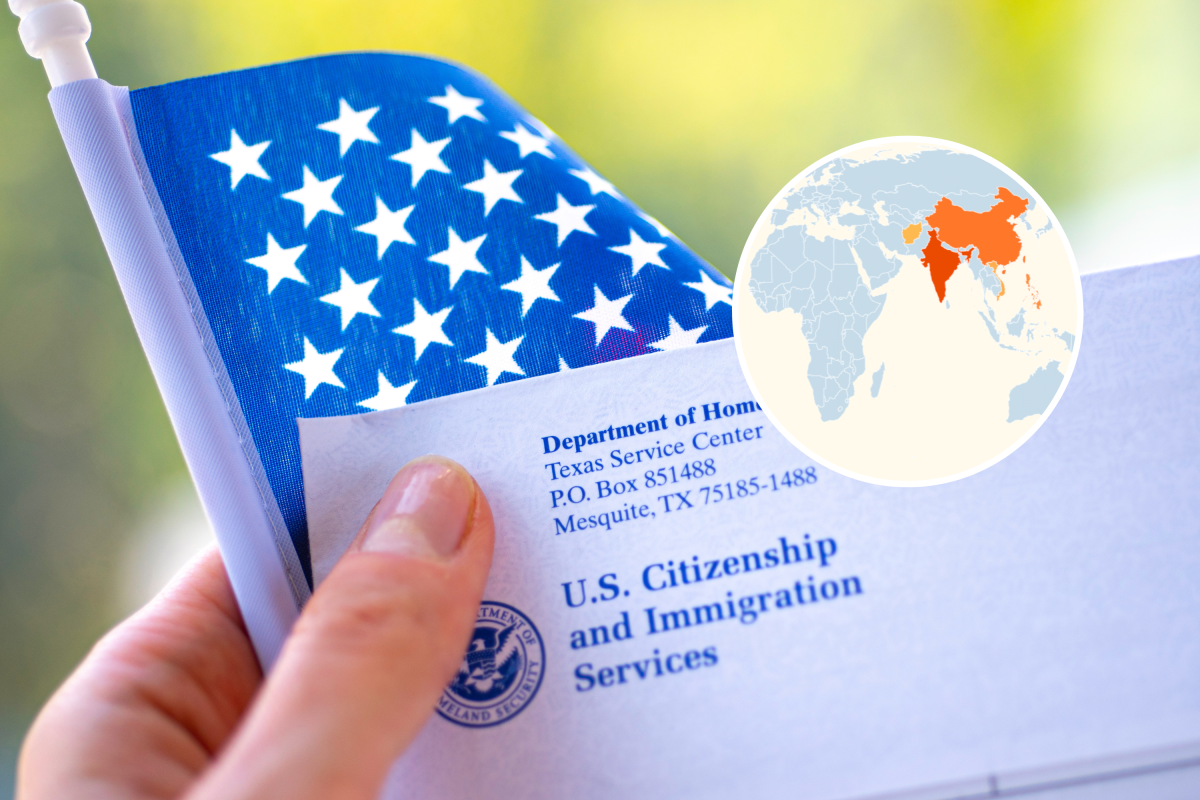
The effect of the rule change is likely to fall most heavily on countries that send the largest number of green card recipients, because more applicants from those nations rely on pathways that may involve adjustment of status.
The most recent publicly available data from the Office of Homeland Security Statistics shows that in fiscal year 2023, green cards were issued to people from at least 199 countries.
A relatively small group accounted for a large share of recipients.
The Top Countries of Birth for New Green Card Holders in 2023 Were:
- Mexico: about 180,500
- Cuba: roughly 81,600
- India: about 78,100
- Dominican Republic: approximately 68,900
- China: about 59,300
- Philippines: roughly 49,200
- Vietnam: approximately 36,000
- Afghanistan: about 30,300
- Brazil: roughly 28,900
- El Salvador: approximately 26,200
These countries are expected to be among the most affected under the new policy, as a larger number of applicants from these places move through the immigration system each year.
Regional patterns also show where pressure could build. In 2023, Asia and North America accounted for the largest shares of green card recipients, followed by South America, Europe and Africa.
Movement In The System Shows Pressure Points
What that looks like in practice can already be seen in how green card queues are moving.
The State Department’s June 2026 Visa Bulletin—the system that tracks when green cards can be approved—reveals timelines moving at very different speeds.
Chart: Movement for green card applicants between May and June 2026 Visa Bulletin
There is one clear area of progress. Spouses and children of green card holders saw wait times move forward by around five months across most countries, bringing thousands closer to approval.
On the employment side, the picture is more strained.
Indian applicants saw wait times move backward in two major categories—EB-1 and EB-2—meaning longer delays despite meeting eligibility requirements. Elsewhere, only limited gains appeared, including small steps forward for India and China in EB‑3.
The system is moving unevenly. Some family-based queues are advancing quickly, while key employment-based pipelines—especially for high-demand countries—are slowing or reversing.
That imbalance matters because the new USCIS policy is likely to push more applicants into these same constrained systems.
Those who once waited inside the U.S. may now have to rely entirely on the visa bulletin timelines shown above, where progress is far from uniform.
Critics Warn of Disruption
Immigration lawyers and former officials say the consequences could be significant.
Critics argue that the existing system helped keep families together and provided continuity for employers sponsoring workers.
For many applicants, leaving the U.S. introduces new risks, including visa delays, processing backlogs, and the possibility of being unable to return.
Michael Valverde, a former USCIS official, said the change could disrupt the plans of “hundreds of thousands” of families and businesses, while others warned it could increase uncertainty and costs.
There is also uncertainty over how the policy will apply to pending applications.
USCIS has indicated that some applicants deemed to provide economic or national interest benefits may still be allowed to proceed without leaving the U.S., but decisions will be made on a case-by-case basis.
A System Already Under Pressure
The policy comes as demand for green cards remains high.
More than one million legal immigrants are currently waiting for approval, with timelines ranging from months to several years depending on category and country.
Consular processing—now expected to handle more cases—also faces existing backlogs.
A Broader Tightening of Immigration Policy
The change is part of a wider push by the administration to restrict both legal and illegal immigration.
Recent measures have included visa pauses affecting dozens of countries and expanded restrictions on entry. Officials say these steps are designed to enforce compliance and reduce overstays.
Legal challenges are possible, particularly because the change was issued through agency guidance rather than formal rulemaking.
For now, the policy is already in effect, with immigration officers instructed to apply the stricter standard immediately—leaving applicants, families and employers to navigate a system that has become more restrictive virtually overnight.
Read the full article here
