

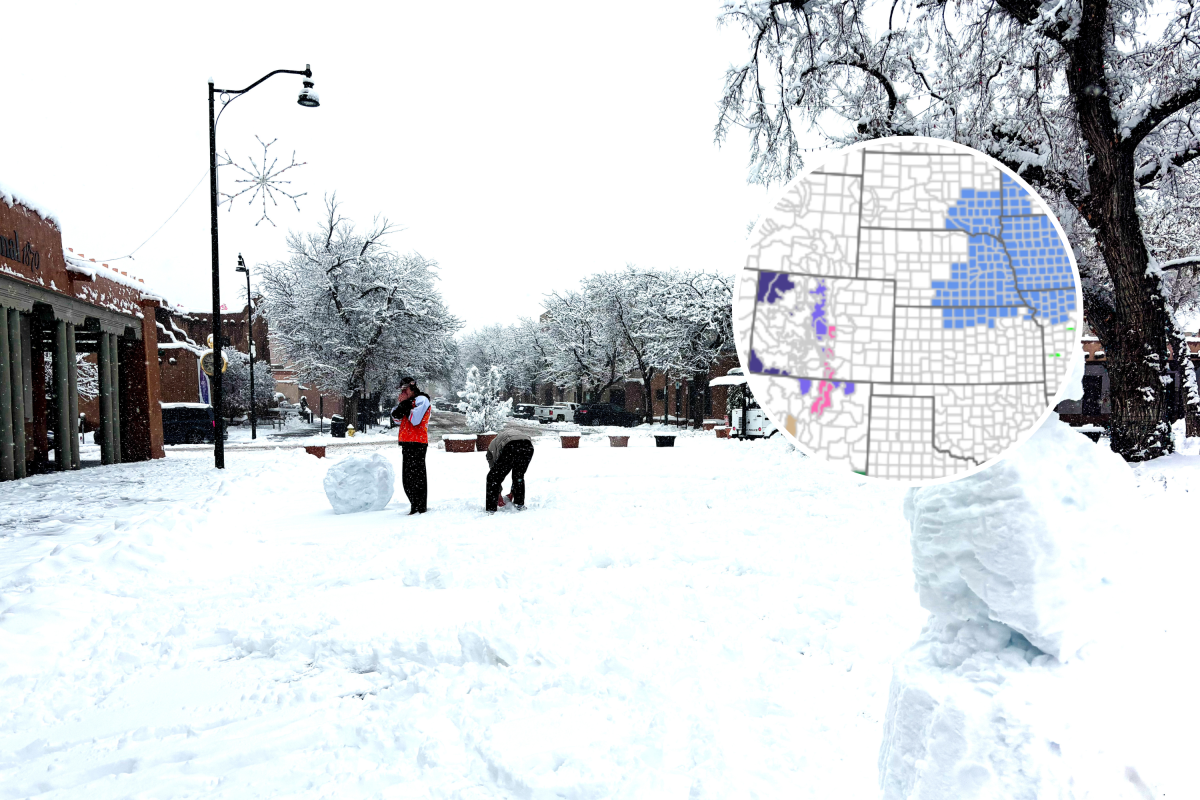
A late‑season winter system is bringing accumulating snow and hazardous travel conditions to parts of southern Colorado and northern New Mexico, with forecasters warning that mountain roads and higher elevations could become difficult to navigate through Friday night.
The National Weather Service (NWS) has issued multiple winter storm warnings across the Sangre de Cristo Mountains and nearby ranges, where snowfall totals of up to 6 inches are expected, alongside several winter weather advisories for surrounding mountain areas.
Colorado
The most significant impacts are expected across southern Colorado, where the NWS in Pueblo said snow would continue through Friday.
Winter storm warnings remain in effect for the Sangre de Cristo Mountains, the Wet Mountains, and the Pikes Peak region, including higher elevations of Teller County and the Rampart Range.
Forecasters said 3 to 6 inches of additional snow could accumulate, especially above 7,500 feet, with wet, slushy and snow‑packed roads likely over mountain passes.
Winds and falling snow may reduce visibility at times, making travel difficult, particularly in elevated areas.
“Travel could be difficult, with wet, slushy and snowpacked roads,” the NWS said. “Hazardous conditions could impact the Friday morning commute.”
New Mexico
In northern New Mexico, the NWS in Albuquerque issued a winter storm warning for the Sangre de Cristo Mountains, where snow is expected to persist through Friday night.
Snowfall totals of 2 to 6 inches above 7,500 feet are forecast, with higher elevations above 10,000 feet potentially seeing up to a foot of snow.
Officials warned that tire traction will be reduced, and travel could become very difficult, especially along winding mountain roads.
Residents and travelers were urged to increase following distance on roads, and allow extra time if travel is unavoidable.
Winter Weather Advisories Cover Additional Mountain Areas
Beyond the warning zones, winter weather advisories extend across other parts of central and southern Colorado and northern New Mexico, including the Wet Mountain Valley, the Mosquito Range, portions of South Park, and areas near Raton Pass and the Tusas Mountains.
Snow totals in advisory areas generally range from 2 to 8 inches, with the highest amounts near mountain passes.
Forecasters warned that while impacts may be less intense than in warning areas, roads could still become slick and snow‑covered, especially overnight and during early morning hours.
Freeze Warnings Add To Ongoing Cold Concerns
In addition to snow, freeze warnings remain in effect across large portions of the central and western United States, including parts of the Rocky Mountains, the Plains, the Upper Midwest and Appalachians.
Forecasters warned that overnight temperatures well below freezing could damage crops, kill sensitive vegetation and affect unprotected outdoor plumbing. In some areas, freezing conditions may occur for multiple consecutive nights, extending into the weekend.
Residents were urged to take steps to protect plants, irrigation systems and pipes as cold air lingers behind the storm.
What To Know Going Forward
While snowfall amounts are moderate overall, officials stressed that the combination of snow, elevation and springtime road conditions could still create dangerous travel, particularly in mountain terrain.
Drivers were encouraged to check local road conditions, slow down, and be prepared for winter‑like weather despite the early‑May calendar.
Read the full article here
