

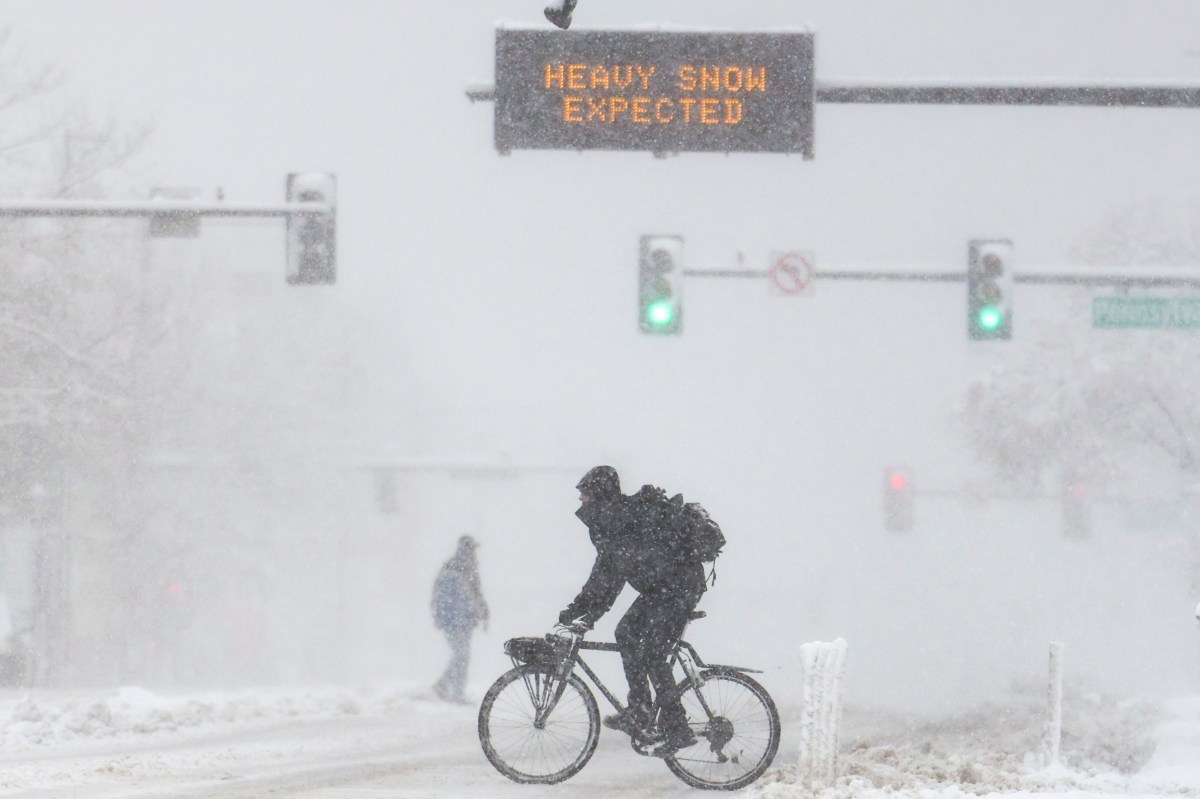
Heavy snow reaching up to 10 inches in some places is expected to fall across parts of Wyoming, Colorado and Montana from Monday, according to the National Weather Service (NWS).
The forecasted winter weather conditions are expected to make outdoor activities “dangerous” and roads—particularly across bridges and overpasses—slippery and “hazardous,” the NWS warns.
Areas Impacted by Heavy Snow
Parts of southern Wyoming, including the Sierra Madre and Snowy Ranges, have been told to expect between 6 and 10 inches of snow from Monday afternoon until Tuesday afternoon.
Between 5 and 10 inches of snow is expected to fall across the foothills and mountainous areas in north central and northeastern areas of Wyoming by midday on Monday.
The NWS says light snow is likely through Monday morning, then heavier showers during the afternoon, lasting through Tuesday.
Higher elevations across central Colorado could see up to 3 inches of snow by Monday morning, while north central parts—largely within the Central Rocky Mountains—could get up to 8 inches of snow and 40 mph winds, lasting until Monday morning.
Between 1 and 10 inches of snow and winds ranging between 30 and 35 mph are forecast for the higher elevations across parts of south‑central and south-eastern Montana. This includes the Pryor, northern and southern Bighorn, and the southern Rosebud Mountains, until around noon on Monday.
Travel Update: Roads Affected by Heavy Snow
Snow is expected to impact Highway 14 in the Bighorns, I‑90 from Lodge Grass to Sheridan, US‑212 over Lame Deer Divide, Powder River and Granite Passes, I‑25 and I‑90 near Buffalo, and Colorado mountain passes, including Fremont Pass, according to the NWS.
How To Prepare for Winter Weather
The NWS recommends that communities in affected areas monitor their local forecasts for updates and take any winter weather advisories or warnings seriously, as conditions can change quickly, especially in mountainous and higher‑elevation areas.
Drivers are urged to avoid unnecessary travel during periods of heavy snowfall. Those who have to travel should allow extra time, reduce speeds, and keep an emergency winter weather kit in their vehicles, which includes blankets, food, water, a flashlight, and a fully charged phone.
At home, residents should prepare for possible power outages, as heavy snow can sometimes bring down tree branches and power lines. Keeping enough food, water, medications, and other essentials on hand can also reduce the need to travel during particularly hazardous conditions.
Outlook for the Week Ahead: Is More Snow Coming?
In Wyoming, additional snowfall looks unlikely this week as warmer, drier weather moves in. Conditions in Montana should also turn warmer through the week, with rain rather than snow expected.
Colorado is expected to see on‑and‑off snow throughout the week, though snow accumulations should remain relatively light. The weather is forecast to turn drier and warmer heading into the weekend.
Read the full article here
