

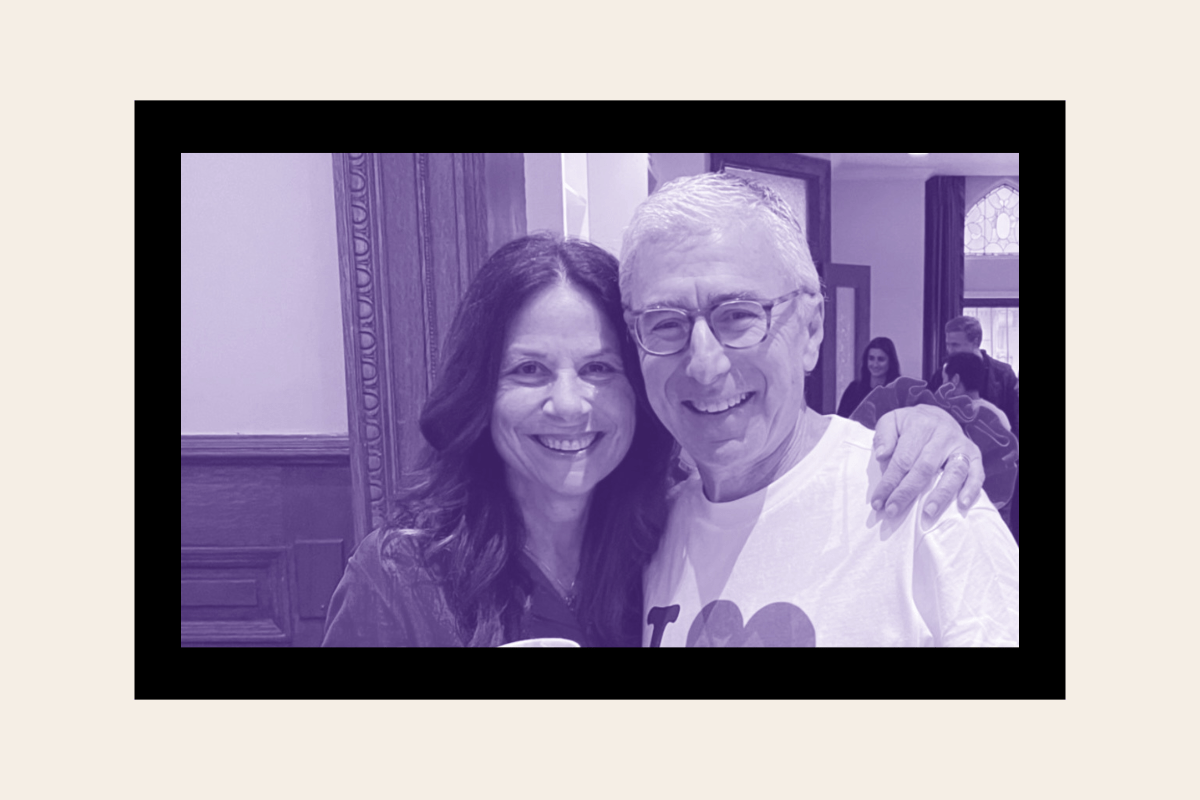
“I have lung cancer?” I whispered to my doctor in disbelief over the phone, as if it was a secret we could just keep between the two of us. “I am afraid so,” he said, definitively.
When I hung up, the room went still, like the moment before a tornado touches down. I ran into my husband’s home office, partly for cover, partly for clarity, not wanting to believe what was coming out of my mouth: “It’s cancer.”
My husband, Jimmy, grabbed me, pulled me close and said, “Helene, I am sorry to tell you, but you’re nothing special.”
I’d been married to this man for over 35 years. I knew he wasn’t dismissing me—he was trying to comfort me, albeit in his data-driven way. It wasn’t exactly what I wanted to hear at the moment, but as I listened, I realized there was a lot of truth to what he was saying.
Lung cancer is the second most common type of cancer; over 200,000 people are diagnosed with it every year, according to the American Cancer Society. Most lung cancers are found after the cancer has spread to other parts of the body, when survival is lowest. But when found early, doctors not only talk about survivorship but cures.
Four weeks before my diagnosis, I was criss-crossing New York’s Central Park en route to my annual checkup. I was walking in that way New Yorkers do—with zero intention of slowing down for anything beyond a bike messenger. I had just come from the gym where I was swinging 30-pound kettlebells, and as I rushed across town, I remember thinking how good I felt. I was 63 and the only thing my age stopped me from doing was buying low-rise jeans.
But because of my age, my checkup included a few extra tests, including a chest X-ray—something my doctor orders every five years for all his patients over 50. I was standing right next to him as he compared my previous films to the new one—there was a white shadow on my right lung that hadn’t previously been there.
He wasn’t worried, though. It could be scar tissue from a recent infection or just a cluster of harmless spots. Out of an abundance of caution, he wrote me a prescription for a CT scan to confirm that whatever he was seeing was indeed nothing to be concerned about. Other than the suspicious spot, my checkup was uneventful. I was in excellent health.
Well, not exactly.
The results of that CT scan led to a PET scan that led to a biopsy that led to that phone call from my doctor. No one ever forgets where they were, the color of the sky, what they were wearing the day they’re told, “You have cancer.”
The 14 days between diagnosis and surgery felt like 400. I barely told anyone and might have even kept it from my kids had they not known from our location-sharing app that I was spending my wedding anniversary at a hospital. In a teary phone call, they asked, “What are you doing there?” And then the dreaded question: “Are you OK?”
The only thing that brought me back from the edge in those moments were my husband’s words: “You’re nothing special.”
It was a relief to relinquish my specialness. Instead of wondering, “Why me?” I realized the more reality-based question was, “Why not me?” Almost 20 percent of women diagnosed with lung cancer in the U.S. are nonsmokers, according to research. I was just one of over 22,000. Nothing special.
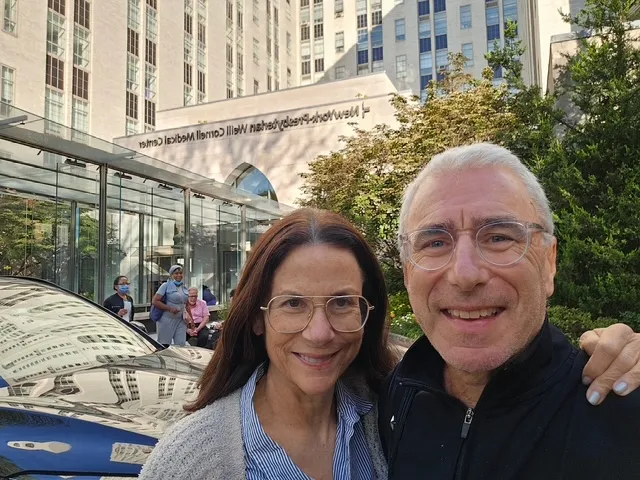
It was also a reckoning with being human. As miraculous as our bodies are—and mine was pretty incredible, having produced twin daughters 31 years earlier—they can also make mistakes. I looked inward, wondering what I had done wrong. But anyone with lungs can get lung cancer. The idea that I am in complete control of my health is a myth. I’m just not that special.
As I was being prepped for a lobectomy to remove one-fifth of my upper right lung, my surgeon checked in to see if I had any questions. It was early in the morning, and my husband half-jokingly asked if he was sufficiently caffeinated. My doctor laughed. He’d already completed one procedure earlier that day, and before that he had participated in a Zoom panel in South Korea to discuss the increase in lung cancer among nonsmoking women.
When he left, my husband looked at me and said, “See, I told you, you’re nothing special.” The two Irish nurses who were busy starting IV lines and drawing blood stopped what they were doing; one said under her breath, “Well he’s not too funny, is he?” I shrugged and said, “It’s a long story,” and for the first time in six weeks laughed aloud.
Two weeks later, at my post-op checkup, my doctor had good news for me. Because my cancer was found early, it had not spread. I didn’t need any follow-up treatment, like chemotherapy or radiation. With a big smile, he shooed me out of his office and said, “Go enjoy your life. I’ll see you in six months for a CT Scan.”
Today, eight months later, my life no longer feels like the ominous calm before the storm. And yet I still live by the mantra that saved me.
I use it every time I get a “no” at work. Instead of taking it personally and as a sign it’s time to quit, I acknowledge how competitive my job as a freelance writer is and keep going. Even a recent cough threatened to upend me until I reminded myself it was winter and I wasn’t that original—everyone was sick.
My mantra was really put to the test at my first six-month checkup. I was the opposite of calm as I waited in the examination room. As the nurses repeatedly popped their heads in to reassure me that the doctor would be by soon, I thought about the thousands diagnosed every year with lung cancer. My case was not a fluke but part of a growing trend—since 2019, the number of women diagnosed with lung cancer has increased 6%. Thanks to early detection and improved therapies, survivorship is fast becoming unremarkable.
I can live with that.
Helene Rosenthal lives in Miami and writes about families, friendships and all the other relationships in our lives that make us say things we regret. Her essays have appeared in The New York Times, The Guardian, Slate, Allrecipes and TODAY.
All views expressed in this article are the author’s own.
Do you have a personal essay you want to share with Newsweek? Send your story to [email protected].
Read the full article here
