

My husband looked horrified as I stuttered. My head jerked to the side of its own volition, my hands reached up into claws like a baby T. rex, and all I could focus on was the sweet potatoes in the oven. I was worried they would burn. The next moment I remember, I was being loaded up into an ambulance with my sock over my shoe—in my altered mental state, this made sense at the time—and my elderly neighbor (also known as the street gossip) was standing outside with his hands on his hips.
The next time I woke up, I was lying on a bed in an emergency room, and a nurse was asking me what her pen was and what her phone was. I giggled, wondering why someone was asking me such basic questions. My husband was holding my hand, staring at me intensely. A doctor came into the room with photos from a CT scan I had apparently had earlier. She told us they had found a large brain tumor, about the size of a peach.
I had suffered a grand mal seizure at home and a second one in that same room at the hospital. My husband later filled me in on the excruciating details. Once I started stuttering at home, I passed out, fell into his arms, and turned blue. He called an ambulance while the woman on the phone guided him through CPR, as bloody foam came out of my mouth. He thought I was dying.
At the hospital, I joked with doctors as they wheeled me up to the ICU. My husband looked worried, but he needed to go home to be with our 4-year-old daughter. I messaged a couple of friends to tell them what had happened, but otherwise, I was only worried about not being able to watch the Netherlands vs. USA soccer game that night. My husband promised to bring me nachos and a Coke when he returned later.
Usually, I’m the most anxious person in the world. I Google every minor cramp, and WebMD convinces me I’m dying. But now, with an actual tumor in my head, I was looking at celebrity gossip and worried about a soccer game. I’m not sure what triggered this indifference—it could have been the tumor affecting my emotions, or maybe I was just in shock, or denial.
The next day, I was taken in a wheelchair to an MRI machine for a scan. My daughter came to visit, and the nurses gave her Band-Aids, which she proudly wore like a badge of honor. A doctor, whom I couldn’t really take seriously due to his Converse sneakers, came by to chat, and another with a bunch of students came to stare at my eyes like I was a zoo animal. The days passed by while I colored in an adult coloring book and did Sudoku. At the end of day 3, the neurosurgeon returned to discuss the MRI results.
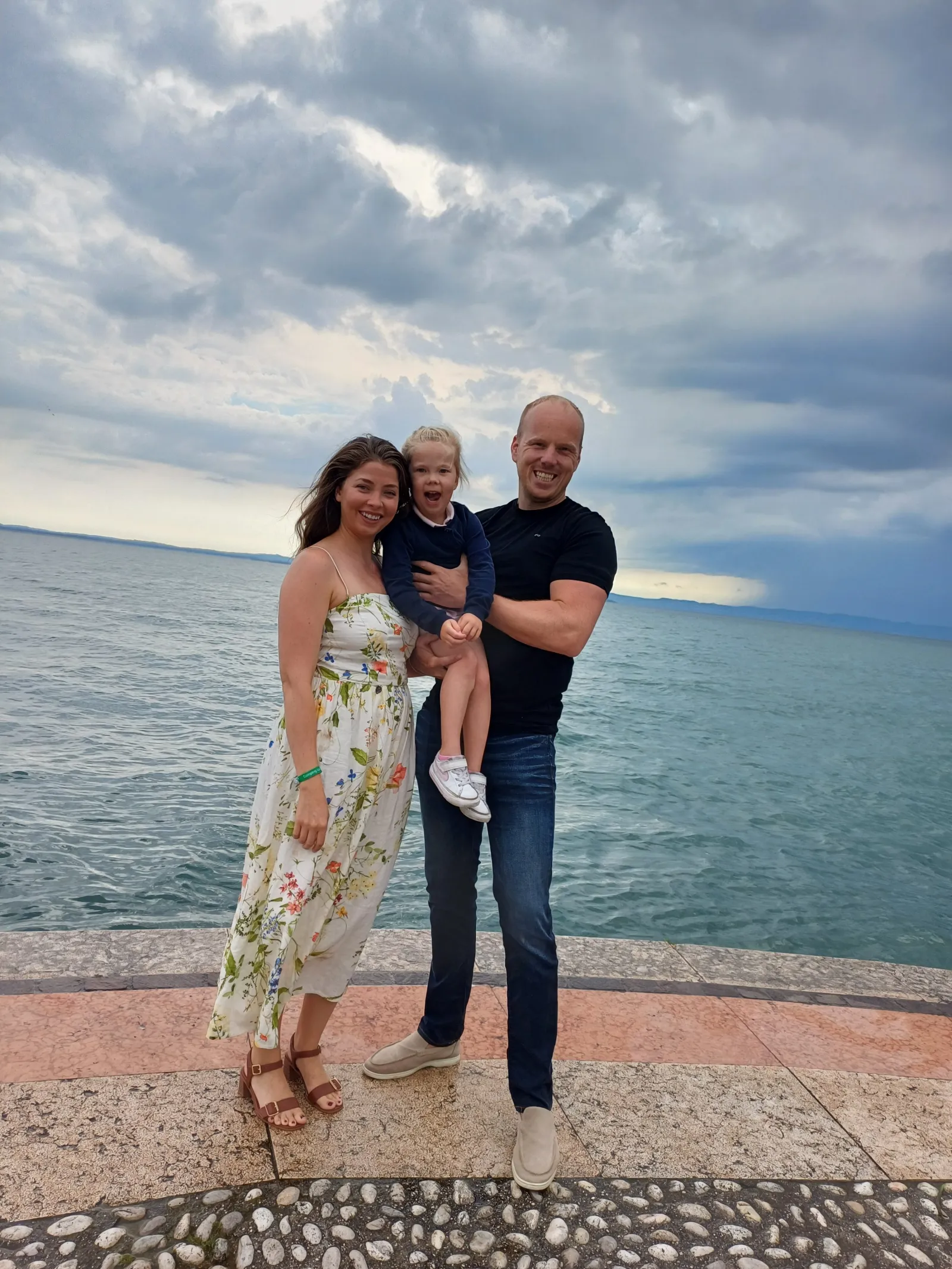
He suspected a rare brain tumor called an oligodendroglioma. He told me it was diffuse, meaning it was invading healthy brain tissue, and was in the part of my brain that affects speech. The irony that I’m a freelance writer and rely on my speech to make money is not lost on me. After three days, I went home from the hospital with a bottle full of anti-seizure medication, which I still take twice a day, even now, two years later. Over the next couple of months, I continued to have focal seizures—seizures that affect only one side of the brain and body—about once a day. While they’re less severe than grand mal seizures, they were still absolutely terrifying: I would be able to think, but couldn’t talk. This continued as I waited for my surgery date.
In August 2024, almost two months after my first seizure, doctors were able to remove about 90% of the tumor during an awake craniotomy, but the remaining tumor will continue to grow for the rest of my life. I started on a new medication to stave off that growth, and I get an MRI every 3 months. In a couple of years, my doctors have explained to me, my body will develop a resistance to the medication, and I’ll need chemotherapy and radiation.
Despite all this, the medical reality isn’t the hard part of dealing with this diagnosis. What’s hard is trying to be the “strong cancer patient.” The one who never lets it get me down, who runs marathons and does charity work to raise money, who is the shining star, full of strength. A picture-perfect example of the one who never gives up.
Instagram often recommends inspirational stories (I guess my algorithm knows I have cancer now, too) from people with all types of cancers. I see people dancing, telling their stories, emotionally ringing the bell that signifies the end of chemo treatment, while people praise them for being “so strong” in the comments.
In my own life, people have been shocked at how fast I “recovered,” though I have never felt recovered. A friend told me how “brave” I was one day as I did the school run, and that I looked “totally normal again,” whatever that’s supposed to mean. Yet, I didn’t feel normal. I will never feel normal again.
The world loves a redemption arc: the cancer patient who writes a bestselling memoir, starts a foundation, or turns her diagnosis into a motivational speaking career. We share these stories as if they’re proof that suffering brings purpose. And you know what I really hate? Any time someone dies of cancer, people say they “lost the battle” with their disease, despite the fact that they “fought so hard.” Cancer is not a “battle” to be won, and dying is not “losing a fight.” It’s just something that happens. When someone dies from a car accident, nobody ever says they “lost the battle” to a car, do they?
What would I have rather heard? Maybe, “I’m here for you. I’m never leaving. We’ll get through this together.” A challenge of having cancer is that it can feel so isolating, especially when you’re sitting in a hospital bed, alone and surrounded by cards, balloons and flowers, but no actual people. These days, people are so wrapped up in their own lives, and fair enough. We’ve all got jobs, kids and mortgages. But that’s why it meant so much when people dropped whatever they were doing and said to me, “You’re more important right now.”
The truth is, most of my days look nothing like a redemption arc, and I don’t feel brave. My days often look like any other mom’s day: making school lunches, building with MagnaTiles on the floor, folding laundry (with worries about seizures and MRI results sporadically thrown in). Sometimes I feel angry that this is my life now, especially when I have to forgo work to go to a hospital appointment, or get heart palpitations while I’m reading a story to my daughter after stumbling over a word.
I’m not a shining example of a cancer patient; I’m just an average person with a tumor in her head. And maybe that’s enough.
Sarah Veldman is a freelance writer living in the Netherlands with her husband and 6-year-old daughter.
All views expressed in this article are the author’s own.
Do you have a personal essay you want to share with Newsweek? Send your story to [email protected].
Read the full article here
