

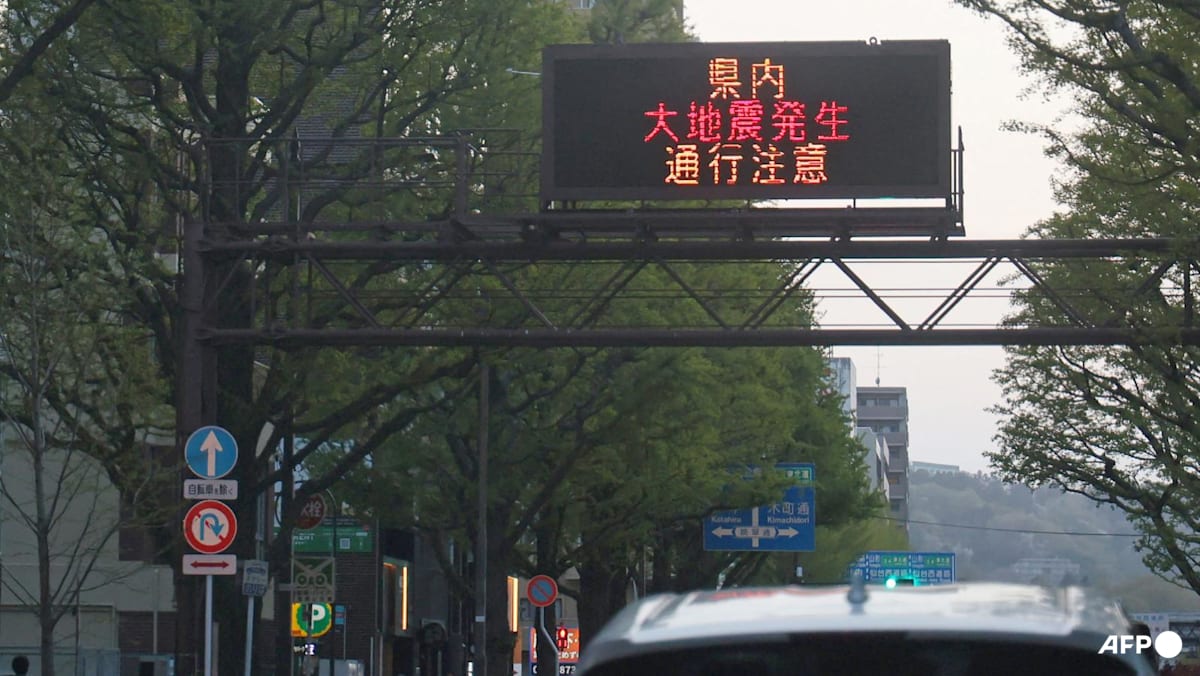
TOKYO: Japan lifted on Monday (Apr 27) a special advisory warning of an increased risk of major earthquakes after a powerful 7.7-magnitude tremor hit the country’s north and prompted a tsunami alert.
The advisory was issued a few hours after the Apr 20 quake struck in Pacific waters off northern Iwate prefecture. It was also felt in Tokyo, hundreds of kilometres away.
“As of 5pm today, the period during which the government issued a special warning … has ended,” Kota Iwamura, a Cabinet Office official in charge of disaster prevention, told reporters.
He cautioned, however, that “this does not mean the possibility of a major quake has disappeared”.
“There is a possibility that a major earthquake could occur suddenly without any preceding tremors.”
A 6.2-magnitude earthquake struck Hokkaido’s southern region in the early hours of Monday morning.
No tsunami alert was issued, the the Japanese Meteorological Agency said. The US Geological Survey predicted that damage to property and threat to life was minimal, given the limited population in the region, some 200km east of Sapporo.
Japan is one of the world’s most seismically active countries, sitting on top of four major tectonic plates along the western edge of the Pacific “Ring of Fire”.
The archipelago, home to around 125 million people, typically experiences around 1,500 jolts every year and accounts for about 18 per cent of the world’s earthquakes.
The vast majority are mild, although the damage they cause varies according to their location and the depth below the Earth’s surface at which they strike.
Last week’s earthquake injured at least 10 people, including two seriously, according to the Fire and Disaster Management Agency.
Japan is haunted by the memory of a massive 9.0-magnitude undersea quake in 2011, which triggered a tsunami that left around 18,500 people dead or missing, and caused a devastating meltdown at the Fukushima nuclear plant.
Read the full article here
