

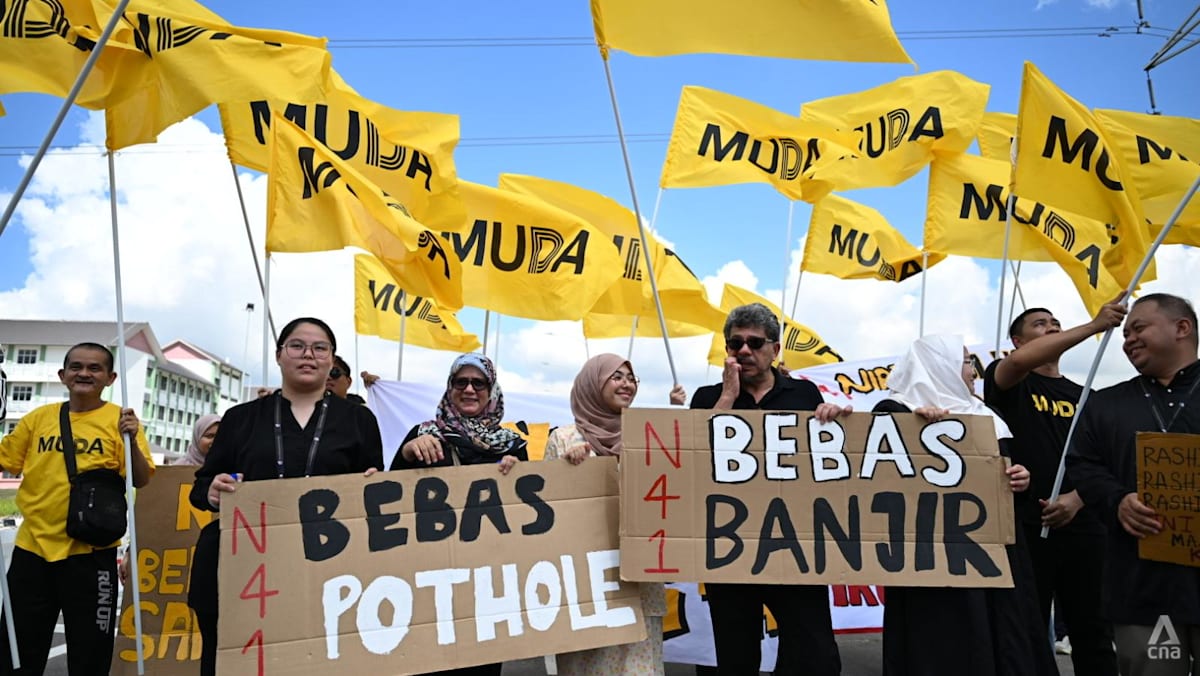
Awang Azman of UM said that for Bersama and MUDA, securing between 10 and 15 per cent of the vote share in several constituencies would indicate the “existence of a support base that can be expanded”.
On Bersama, he noted that the “minimum benchmark for success” is whether Rafizi and Nik Nazmi’s influence can attract a segment of PH supporters, young voters, the middle-class and voters “dissatisfied with the mainstream political parties”.
But James Chin, professor of Asian Studies at the University of Tasmania, cautioned that expectations for Bersama remained low.
“If they are lucky, they get three or more (seats). If they are unlucky, they may end up with zero but as long as they get back their deposit, that would be (considered) a major win (for them),” he told CNA.
Meanwhile, Syaza Shukri – a political scientist at the International Islamic University of Malaysia (IIUM) – stressed that Bersama’s performance should be judged by how much of PH’s traditional support base it could pull.
She identified urban and mixed constituencies such as Johor Jaya, Permas, Larkin, Stulang, Perling, Skudai, Kota Iskandar, Senai and Puteri Wangsa as key seats to watch.
“These are areas where disillusioned PH voters, younger voters and reform-minded voters may be more open to an alternative,” Syaza told CNA.
PH held 12 seats in the recently dissolved Johor state assembly, mostly in urban and suburban constituencies, making it the state’s opposition bloc. BN had 40 seats, while PN had three.
Read the full article here
