

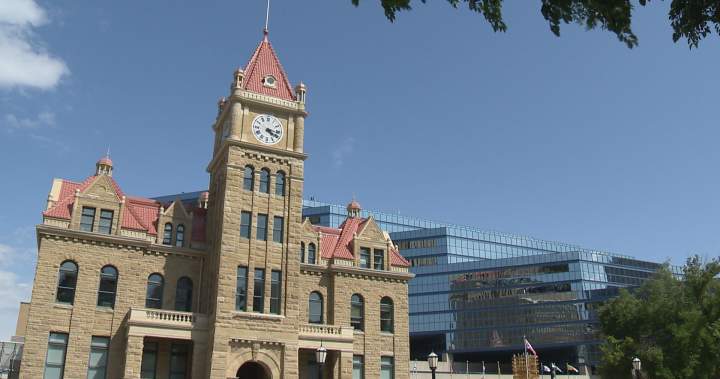
Calgary taxpayers were on the hook for more than $1 billion over the last decade in costs related to provincial downloading, according to a new city report.
The report, which will be presented to city councillors next week, said there’s been an adverse impact on the City of Calgary’s finances due to responsibilities being pushed down from other levels of government, but “typically” the provincial government.
According to city administration estimates, the province directly downloaded a total of approximately $1.05 billion in costs between 2016 and 2026, with the gap expected to be $145 million in next year’s budget.
“We need the provincial government to wake up and realize the changes they’re making results in a downloading of costs to the City of Calgary,” said Ward 4 Coun. DJ Kelly.
“While those costs may no longer be coming from oil royalties or income tax, they then show up on property tax bills that Calgarians have to pay.”
Kelly introduced the motion to bring back city reports into what’s called the municipal fiscal gap, which were delivered to the previous council in 2023 and 2024.
The report defines that gap due to downloading as a provincial responsibility for a service that is not funded properly in which the city “has to either pay extra to keep the service running or deal with the consequences.”

Get breaking National news
Get breaking Canada news delivered to your inbox as it happens so you won’t miss a trending story.
Although the report doesn’t include a list of services and costs behind administration’s estimate, it did include examples of downloaded costs such as $75 million in lost revenues to cover supports like the low-income transit pass, as well as a loss of $28 million in revenues due to changes in photo radar regulations.
“Since this analysis focuses only on direct and quantifiable costs, these estimates are conservative,” the report read. “Indirect impacts from downloading that are hard to quantify, such as increased demand for emergency services resulting from changes in photo radar usage, are not captured in these estimates.”
Population growth and inflation have also led to higher spending, which the report noted has outpaced revenues as “municipalities lack revenue tools.”
According to Calgary Mayor Jeromy Farkas, the $145-million gap in next year’s budget is comparable to a property tax increase of between five and 10 per cent.
“When it comes to us at the city level, we’re responsible for a lot of services. It’s challenging in the current funding environment,” Farkas told Global News. “It’s made even more challenging when we have a provincial government that’s continuing to download responsibilities and asking us to raise taxes on Calgarians to pay for it.”
In a statement, a spokesperson for Alberta’s Municipal Affairs ministry said they understand municipalities are facing mounting financial pressures, and the province remains committed to “working collaboratively with them on practical, long-term solutions.”
“The province faces the same fiscal pressures and has planned its finances accordingly,” the statement said. “Municipalities are responsible for their own financial planning, including the maintenance of their infrastructure and the delivery of core services within their budgets.”
The report also argued that provincial infrastructure funding hasn’t kept pace with population and inflation growth, with average per-capita funding for Calgary of $250 between 2007 and 2023, which dropped to around $155 between 2024 and 2026.
“At the end of the day, that means property tax payers either need to pay more, or they need to expect less services, or they need to continue to see their infrastructure continue to degrade,” said Alberta Municipalities president Dylan Bressey.
Bressey said the struggles outlined in the report aren’t just a Calgary issue. Municipalities across the province are feeling the pressures of higher costs and lower revenues.
According to Bressey, the use of property taxes an “1850s revenue system that isn’t keeping up to the challenges of 2026,” as municipalities run services that were never contemplated when the property tax regime was created.
“Despite owning over 65 per cent of public infrastructure and delivering the services that Albertans interact with the most, municipalities collect only about eight per cent of tax revenue,” he told Global News. “That means they just can’t keep up in a modern 2026 world.”
Read the full article here
