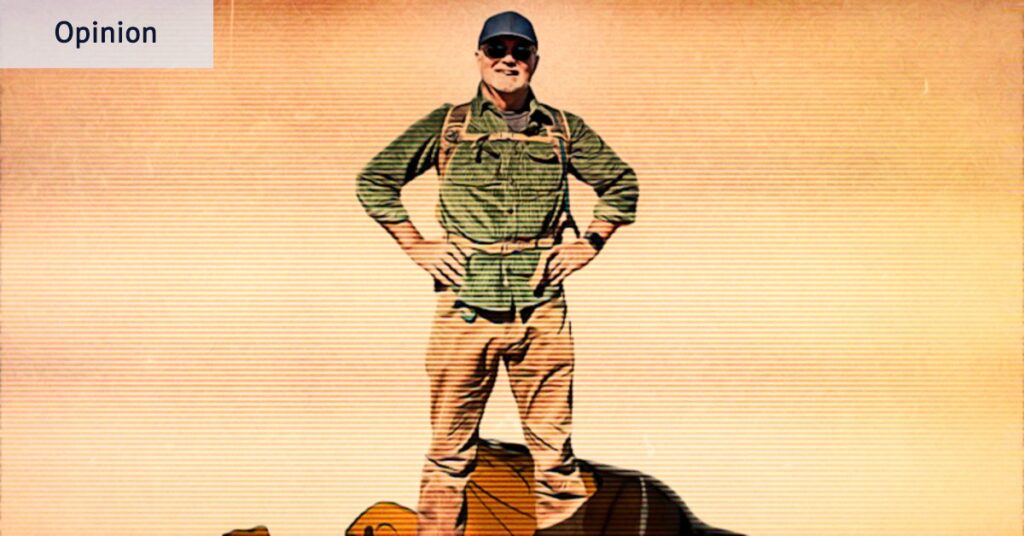
Recently, I turned 60. The centrepiece of celebrations that seemed to last forever was a Blue Mountains weekend with 40 friends and family.
There were dinners, bush walks, loads of wonderful conversations, countless laughs and a fiercely contested quiz. There was also, inevitably, a lot of booze. Maybe not quite as much as there would have been a couple of decades ago, but the grog flowed nonetheless.
Not for me, however. I didn’t drink. And, as of this month, I haven’t picked up a drink for a year.
Had you run the concept of a dry birthday by me a year or so ago, I’d have thought you were taking the piss. Or on the piss. Or both.
Not having a drink on your 60th? Not giving it a nudge, bending the elbow or smashing a few cheeky chardies on the one occasion you’re given a gold-plated licence to let loose? Impossible, and, frankly, un-Australian.
But for the whole weekend I was fuelled only by mineral water and ginger beer. I laughed until my belly ached, had animated chats, went trail running and spent the entire time surrounded by people I love.
I didn’t feel like I was on the outer or being forced to endure the occasion as a sober observer. I was entirely present and, afterwards, I could remember every minute. And, best of all, there were no hangovers.
That weekend crystallised something that had been slowly coming into focus ever since I stopped drinking.
For all my adult life, alcohol has been taking undeserved credit for a whole lot of feelings and experiences. The joy of that weekend came from connecting with wonderful people. It wasn’t something that could be uncorked.
What I’ve slowly understood is that alcohol’s hold over me was built on fear, which is why giving it away has always seemed so far out of reach. There was the fear that without it I’d be less funny, less confident and less connected; that celebrations would fall flat, and all colour would be drained from life. Life’s tough enough as it is – what’s the point if you can’t at least have a drink to take the edge off?
But that could not be less true. It’s one big, fat, boozy lie. And it’s taken me more than 40 years to see through it. Maybe I’m just a slow learner.
My drinking “career” kicked off when I was about 15. Growing up in South Yorkshire in the 1980s, pub culture was at the centre of just about everything. In our small town alone there were a dozen or more boozers, with their interiors hidden from the street behind curtains and frosted glass.
The riches beyond lay tantalisingly out of reach for those of us in our early teens. Inside there was fun, laughter, connection and, of course, girls.
I can recall getting a brief glimpse inside one of these forbidden palaces when an older brother smuggled me in at the age of 12 or 13. What a revelation! The maroon velvet seats, the polished wood and brass, the haze of cigarette smoke, and all those men – mostly – drinking huge glasses of beer, talking, laughing and playing darts and pool. It all seemed impossibly glamorous and grown-up. They were clearly living their best lives, and I wanted in as soon as possible.
In the end I didn’t have to wait too long. This was well before the era of ID checks at the door. As long as you behaved yourself, didn’t look too outrageously young and stood your round, you were welcome in most pubs. I well remember the landlady of my local insisting on buying me a pint to celebrate my 16th birthday – I’d already been a regular in the public bar for a year or so.

Looking back, what strikes me most is how inevitable it was. Nobody had to persuade me to drink; the culture had already done its job. I was desperate to get on the grog.
Veronica Valli, a psychotherapist, host of the popular Soberful podcast and author of Soberful: Uncover a Sustainable, Fulfilling Life Free of Alcohol (her book and podcast have been a big part in helping me get and stay sober), says that in countries such as Australia and Britain, the assumption remains deeply embedded that becoming an adult is synonymous with starting to drink.
“Unless you grow up in a particular religion, or perhaps with a serious health problem, it’s assumed you’re going to drink,” she says. “It’s assumed you’re going to get a driving licence, get a job and drink alcohol.
“When you’re a teenager it just seems like the key to adulthood. And the consequences are deliberately obscured. We grow up in a culture that tells us the story that alcohol is the best way to have fun, excitement, belonging and connection, and to relax and reward yourself. We don’t question that.”
I certainly didn’t. From those teenage years onwards, booze was a constant.
Celebrating? Drink. Relaxing? Drink. Feeling stressed? Drink. Going out? Drink. Staying in? Drink. Feeling sad? Drink. Feeling happy? Drink.
You get the idea – whatever the occasion, whatever the emotion, alcohol became the answer. Don’t get me wrong – I’m no wowser. It was a lot of fun. Until it wasn’t.
The point at which grog drifted from a being nice-to-have to a have-to-have is hard to pinpoint. But once that insidious shift happened, drinking rented more and more space in my head: planning when I would drink; drinking more than I intended; anxiously trying to recall what I said and did the previous night; wondering why there was a schooner in my hand at 5pm after waking up that morning with a mouth like the bottom of a budgie’s cage and swearing blind I’d take a few days off.
Then there was the endless thinking about whether I had a problem, and comparing my drinking with that of other “normal” drinkers. It was exhausting.
“People with an alcohol problem do four things,” says Valli. “They drink, they think about drinking, they think about not drinking and they recover from drinking. And the biggest one is the thinking about not drinking.”
She uses an illuminating – if quirky – analogy to drive home her point.
“People who don’t have a problem with alcohol think about alcohol in the same way that I think about sandwiches,” she says. “I might have a sandwich for lunch and enjoy it. And tomorrow I might have soup, and the next day I might have salad. And then I might be at a party at the weekend and a plate of sandwiches goes by, and I have a couple of those. And then it goes by again. I go, ‘No, I’m good’. That’s literally how much I think about sandwiches.”

I never got to the point of starting the day with a “sandwich”, but I’m convinced I would ultimately have ended up a sandwiches-for-breakfast kinda guy had I continued.
Stories of recovery are full of hair-curling “rock bottoms”. Of relationships destroyed, cars wrecked, jail time, health crises and worse. For me it was far less dramatic. My drinking had become compulsive, excessive and secretive and was only heading in one direction. I strung together a few dry days because of a serious health scare, then, out of the blue, on the day I walked out of Macquarie University Hospital feeling a million dollars after having a heart operation, I was struck by a laughably simple revelation: I didn’t have to drink.
I hadn’t realised it at the time, but on September 22, 2025, I had taken my last drink.
Deciding to quit was at once exhilarating and terrifying. Exhilaration at the possibilities of sobriety and terror at everything I was about to lose. My liver would no longer be adrift in a lake of Pinot Grigio, but would I ever enjoy life again?
Never one to do things by halves (see: “drinking”), I pitched myself headfirst into sobriety literature and sober-themed podcasts. There is something uniquely powerful about reading and listening to other people’s stories about struggling with alcohol. Every story is unique, yet at the same time every story is also the same.
Initially, I thought stopping drinking was just about, well, stopping drinking. And in those first testing days and weeks, it was. I had one job: don’t drink. And that was more than enough to cope with, especially as beer o’clock rolled around each day.
But as those weeks turned into months and I dived more deeply into the so-called “soberverse”, I began to appreciate that putting down the bottle was only the beginning.
After reaching the baseline of not drinking, I had to begin the hard work of considering why I drank in the first place, how to manage emotions without outsourcing that work to grog, and what to do with all the time I had been gifted now that drinking was no longer my No.1 occupation.
Getting sober left me facing myself with nowhere to hide. It’s a deeply confronting and uncomfortable place to stand.
And the biggest fear was how I could possibly socialise without a drink in hand.
There’s no denying alcohol is an enormously effective social lubricant. You need only witness the rising volume and change in body language at any gathering once the booze begins to hit to know that. And connecting with others is one of our most basic needs – the negative effects of loneliness on both mental and physical health have been well documented.
My first forays into sober socialising were terrifying. There was no easy way through, but gradually I got the hang of it, one sparkling water at a time. It was like reawakening a long dormant muscle, and I learnt new strategies: arrive early, leave when it starts getting messy, drive home and wake up fresh (and, maybe, just a little smug) the next morning.

And, trust me, no one ever notices you’ve slipped out the door.
Gradually, like the Russian doll I recall from my childhood on my aunt’s mantelpiece, the benefits of sobriety have unpacked themselves. Better sleep? Tick. Mental clarity? Tick. Anxiety tamed? Tick. A sense of peace and calm? Tick. Health benefits too many to list? Tick. Tick. Tick.
Will I ever go back? Hubris is one of the many enemies of sobriety. I would be a fool to say never. One of my favourite sobriety aphorisms (the soberverse loves a good saying) is that no matter how far you are down the road to recovery, you’re only the same distance from the ditch.
But I don’t want to drink again, and I have no intention of doing so. The only regret I have over this quite unexpected and delightful turn in my life is that it has come so late.
I mentioned this to Valli. “It’s never too late and you’re never too old,” she said.
And for the sober-curious, she had this advice: “If you’ve been thinking about it, give yourself a year to see what a sober life could be like. I’ve been sober 26 years and it just keeps getting better.”
A year ago I was terrified ditching the booze meant giving up practically everything I valued – fun, connection, spontaneity and even a lot of who I am.
It turns out I could not have been more wrong. I’ve given up one thing and got everything in return.
I’ll (not) drink to that.
Nick Galvin writes at: nickgalvin.net
Start the day with a summary of the day’s most important and interesting stories, analysis and insights. Sign up for our Morning Edition newsletter.
Read the full article here