

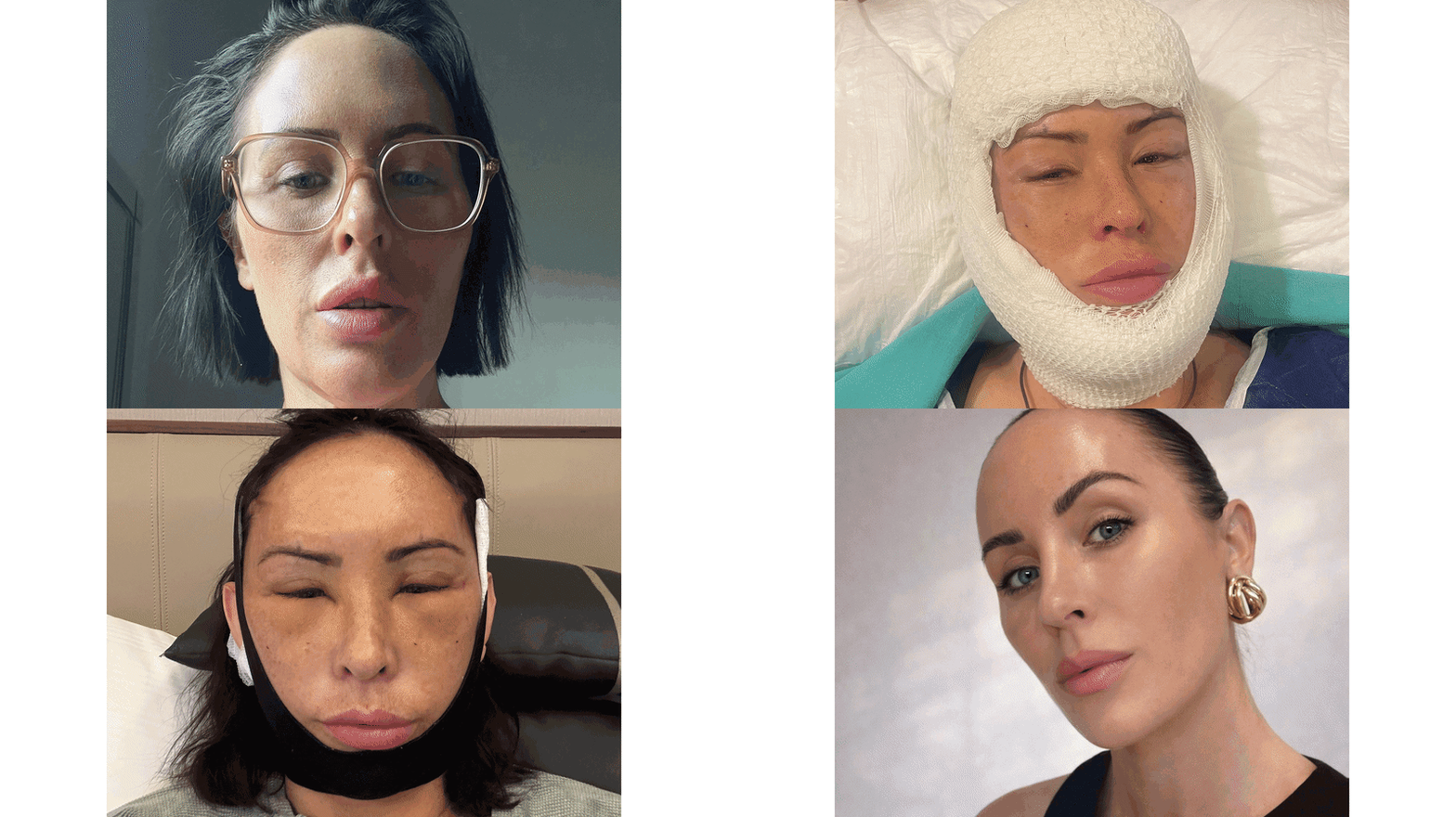
Joanne McGinnis always hated the excess skin on her neck.
At the hairdresser, she felt self-conscious when the salon cape was fastened snugly, gathering the loose skin underneath her chin.
“I hated looking in the mirror,” she said. “My biggest insecurity was my neck.”
In February this year, for her 45th birthday, McGinniss boarded a plane to Turkey.
The purpose of the trip? “Getting snatched,” she said.
She is far from alone. In the past 18 months, Australian plastic surgeons have observed a striking uptick in people travelling to Turkey for cheap, fast-tracked cosmetic procedures, including facelifts and hair transplants.
The surge in cosmetic tourism has spurred a troubling wave of post-surgical complications and an online trend where patients document their recovery process on Instagram and TikTok.
In the “recovery diary” videos, patients who have travelled to the cosmetic surgery hotspot of Istanbul document their swollen, bruised, bloodied, bandaged faces, gruesome complications and emotional ups and downs in daily instalments.
McGinniss said she shared her story online to provide insights on her recovery and tips on how to find a credible and safe surgeon.
She said she is not paid for her content, framing it as a free public service to support anyone considering or recovering from cosmetic surgery.
Her inbox is flooded with messages.
“I can’t keep up, it’s like a second job,” she said.
The Adelaide woman went from 600 followers to more than 18,500 almost overnight. Some of her videos now have more than three million views.
“The first few weeks were really quite difficult,” she said of her recovery. “I was like ‘holy shit! What have I done?’ Because you just don’t look like you and then every time you’re looking in the mirror, you’re questioning yourself.”
But Australian doctors say they are increasingly having to pick up the pieces when these overseas surgeries go wrong.
Australian Society for Plastic Surgeons president Dr Brigid Corrigan said in severe cases, doctors have treated permanently damaged nerves, dead skin, bleeding, wound infections, abnormal scarring and asymmetry that required revision surgery.
“We are really seeing the full spectrum of complications,” Corrigan said.
Concerned by this trend, the peak body has started to compile data on botched procedures and complications in a national database, which is also tracking hospital admissions.
They warn patients are being lured by cosmetic surgery packages that include five-star hotels and VIP airport transfers that allow them to squeeze in as many surgeries as possible within a short timeframe.
McGinniss estimates she saved about $80,000 getting her surgery abroad, spending more than a year carefully researching surgeons in Turkey before finally booking one in.
While McGinniss said many people supported the online documentation of her recovery, she was trolled by a small group of followers, who told her she looked older post-facelift and needed a “hair transplant”.
Then came the death threats.
“I got a message that was… saying like, ‘die you f—ing slut’. Just terrible stuff,” she said.
“You just think, ‘wow,’ but it says more about those people than it does about anyone else.”
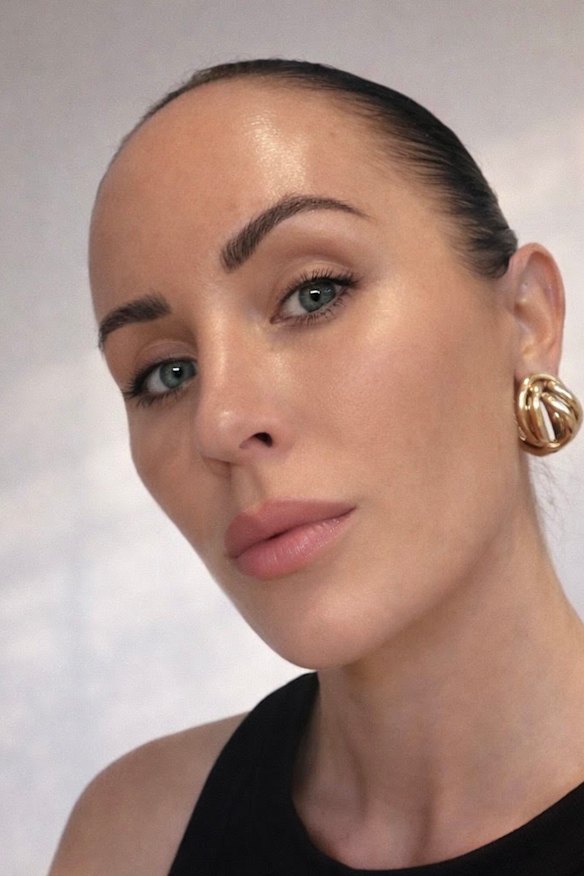
McGinniss is happy with the result of her surgery and said she’d had minimal complications.
But not all are so lucky.
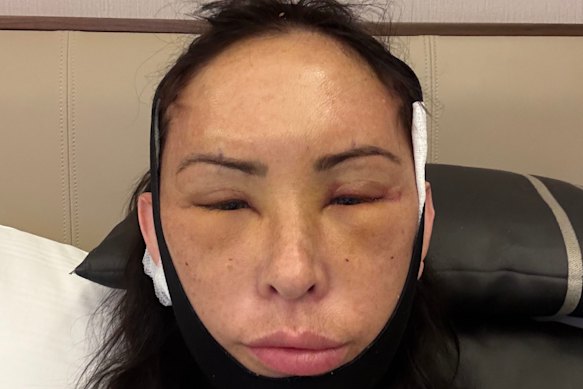
One Australian woman recently documented her physically gruelling recovery from a hotel room in Turkey after having a facelift, which left her skin puckered and her eyes cat-like, grotesque and asymmetrical.
“You just have to trust the process,” she told her tens of thousands of followers.
“Trust the process” is a common phrase used by those documenting their stories online, and positing videos of themselves at airports and waking up in hospital beds hooked up to plastic tubes.
Sometimes, they film content with their beaming surgeons beside them; a way to promote the cosmetic clinics and receive discounted procedures.
In another recovery series, a Brisbane woman travelled to Turkey to get a facelift for her birthday this year and documented her severe complications on Instagram.
At first, it was inflamed lips. Then, her left eye began to swell and fill with fluid in a condition known as Chemosis, leaving her unable to blink.
A video she posted showed her crying at an airport on her way back to Australia; her eye protruding, head wrapped in a black bandage, chest scattered with bruises, and medical tape stuck over wounds under her eyes and across her nose.
“I think I am going to have to go to emergency [department] when I get home,” she tearfully told her thousands of followers. “And that freaks me out.”
Her followers were quick to question why her surgeon had allowed her to fly home so quickly after such an invasive procedure. The woman has since received medical treatment in Australia.
Melbourne specialist plastic surgeon David Morgan said some patients required urgent medical care as soon as they stepped off the plane.
“A lot of these people present particularly acutely with horrible complications,” he said.
“Getting on a plane and travelling hours in an early post-operative period increases the risk of all sorts of things, not the least of which is a DVT [deep vein thrombosis] and pulmonary embolus.”
Those with post-surgical complications often require multi-day hospital stays and intravenous antibiotics, putting a strain on public resources. They may also have to fork out thousands of dollars for revision surgeries.
A recent study examining complications from “cosmetic tourism” at Sydney’s Westmead Hospital found the median hospital stay was three days and most patients arrived in emergency departments about 3.8 weeks after botched overseas procedures.
Previous studies have suggested about 15,000 Australians travel overseas for cosmetic procedures each year, but doctors believe the true number is far higher.
It is almost impossible to track because the travel is private and self-funded. It only comes to the attention of the Australian healthcare system when complications arise.
Morgan has also observed a worrying trend of increasingly younger women, in their 30s, requesting so-called “preventative facelifts”.
Many are complaining of “filler fatigue” (when overuse of dermal fillers stretches the face and causes laxity in the skin), while others who have used weight-loss drugs are unhappy with their sagging skin and hollowed face.
He advises young women against it, and tells them there’s no robust evidence supporting longer-term benefits of having a facelift at a younger age.
“I describe it like a long climb for a short slide. It just doesn’t make any sense,” he said.
President of the Australasian Society of Aesthetic Plastic Surgeons Dr Lily Vrtik has also heard about young women increasingly seeking preventative facelifts.
The procedure claims to maintain youthful contours and slow visible ageing and is geared towards patients in their late 20s through 40s.
“The question should not be, ‘how young can I start?’ It should be ‘is there a sound clinical reason for me to undergo this operation?’” Vrtik said.
Unlike Australia, where a crackdown on cosmetic industry has banned online customer testimonials, clinics in Turkey can advertise without restriction and aggressively market their results on social media using dramatic before-and-after photos and glowing patient reviews.
The British Association of Aesthetic Plastic Surgeons has reported a sharp rise in patients returning to the UK requiring emergency treatment and linked at least 28 deaths in recent years to cosmetic procedures in Turkey.
Morgan said it was not about surgeons in Australia “trying to feather their own nest.”
He is concerned Australians are flying overseas without receiving proper pre-operative screening or post-op care.
“We are warning you that the risks of complications occurring overseas are far greater than if you seek care locally,” he said.
Adelaide University’s Professor Gemma Sharp, an expert in body image and social media said research was limited on the emerging trend of preventative facelifts and recovery diaries.
“Recovery diaries are an interesting development because they can make cosmetic procedures appear more familiar, routine and achievable,” the senior clinical psychologist said.
Sharp said while many people share their experiences online to be “open and authentic”, repeated exposure to this content can normalise cosmetic surgery and downplay the risks or significance of these procedures.
Cosmetic surgery required extensive pre-operative assessment and psychological screening, and access to ongoing care if complications arose, Sharp said.
“When influencers document procedures it can blur the line between personal storytelling and promotion,” she said.
“Viewers often perceive this content as more trustworthy than traditional advertising because it feels like a genuine lived experience, even though it may still encourage interest in particular clinics or procedures.”
Start the day with a summary of the day’s most important and interesting stories, analysis and insights. Sign up for our Morning Edition newsletter.
Read the full article here
