

“Luck had not kissed Charlie Gander hello.
“On a mid-November afternoon in 2022, he was just visiting his friend, Tyson May, when police came knocking.
“In a panic, Mr May hurriedly foisted upon Mr Gander a shopping bag with a homemade gun inside it and told him to get rid of it, quick smart. However, moments later, police caught Mr Gander – red-handed – tossing the gun over the fence.
“But Mr Gander’s luck went from bad to worse… [and] he unwittingly set in train a series of events that led to his terrible demise.”
This is no “literary noir” novel of death and betrayal. Call it “judicial noir” – but it’s real life.
So begins Justice Michael Croucher’s sentencing for Kylie Stott and Dimitri D’Elio, two of three people who were convicted for various roles in the kidnapping, bashing, death and incineration of Charlie Gander in 2022.
Croucher has adopted a hard-boiled, poetic style that’s been attracting fans and (quiet) detractors in the po-faced and staid world of the law, where technocratic language is supposed to convey gravitas.
But Croucher is a Supreme Court judge and has the authority to do as he likes in his own court.
And after 13 years on the bench overseeing cases of murder and witnessing the routine destruction of lives, he’s doing it his own way.
Croucher weaves lyrical observations about life, justice and loss in among the recounting of a crime and the legal components that must be weighed to come up with a sentence.
“It was a grisly scene, and a horrible thing to do,” Croucher wrote about Gander’s body being set alight in a car.
“I wish to add this. The sentences to be imposed are not a reflection of the worth of Mr Gander’s life or an adequate measure of his family’s suffering. They cannot be.”
Both victim and accused can get the same verbal treatment.
“[Stott] has had grave misfortune with some of her menfolk,” he noted of one of the defendants. “Of aching concern to her, she had lost the care of her three younger children.”
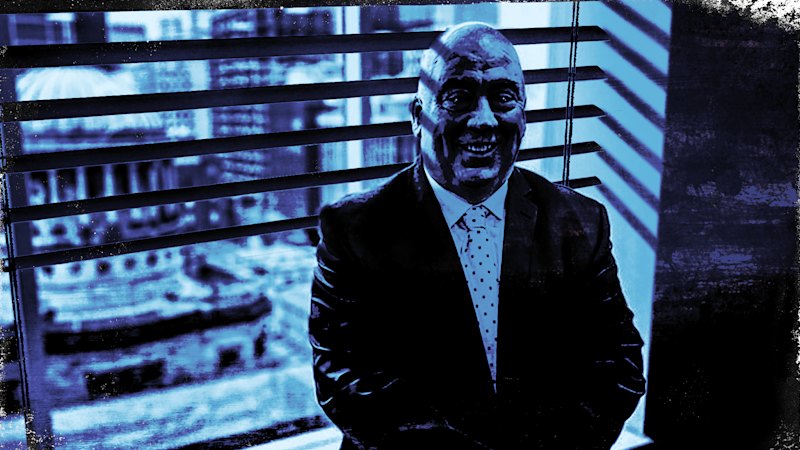
Croucher, KC, who has been sitting on the bench of the Supreme Court’s criminal division since 2013, had a notably unusual path to the law.
He dropped out of grade 10 to become a motocross racer and then a lumberjack. Aged 25, he went back to his old high school to complete year 12 before heading off to Monash University to study economics and law.
When he became a judge, he took writing lessons from the legendary Australian author and wordsmith Gideon Haigh.
And he has written some very memorable opinions.
Sometimes it’s phrased as a tantalising warning.
“This case is horrible – so horrible that those of fragile disposition might prefer not to read (or listen) any further,” he wrote of a man who bludgeoned his grandmother to death.
Other times, it’s a slow-burn scene-setter.
“It was just past midnight when Nicholas Cameron stepped out of his 20th‑floor apartment in Southbank with his little white terrier, Misty. They headed down to his red hire car, which was parked on the third level of the adjacent carpark. As they neared the car, Misty’s quizzical look and brief pause suggested she sensed a foreboding presence. She was right.”
There’s also the technique known in journalism circles as the “misery hang” – an opening line that invites the reader to keep going by teasing a woeful tale of a life cut tragically short in bizarre circumstances.
“In April 2023, Adam Winmar did something that will haunt him for the rest of his days. He attempted to hide his crudely homemade – and loaded – pipe‑gun from his young family.” The gun misfired after his partner found it and dropped it, killing her.
Croucher’s sentences are dotted with literary, film, music and philosophical references, quotes and lyrics ranging from Stephen King – “this story ended with a scene befitting a Stephen King novel” – to Ken Loach to Jimmy Stewart to Rose Elizabeth Kennedy to Nick Cave and Neil Young.
Even veteran criminal defence lawyers have high praise for Croucher’s method.
“[The Gander sentence was] beautifully written and reflective of a judge who thinks elegantly about issues,” said one legal source, requesting anonymity because it is not the done thing to publicly praise or criticise a judge’s work.
“I don’t think there has been a judge during my career who writes so beautifully and with such compassion for the complexity of human life.”
But why does Croucher do it?
Sitting judges don’t give comments to the news media (and he declined our request), but Croucher was interviewed on legal industry podcast William and Lonsdale: Lives in the Law speaking about his unusual style in 2023.
“I think you can see in most cases there’s usually a song that’s been written or a poem that’s been written that touches on the same sort of issues. They’re much better than I am at conveying in a few words what would take me many more words to convey and probably not nearly as well,” Croucher said in the podcast.
“It’s a way of getting across a simple idea about loss or joy or domestic violence and the impact it has, or whatever the issue might be.”
The style has certainly rubbed up wrong against some people, most notably Victoria Police, when they became the targets in an earlier ruling in the Charlie Gander case.
In May 2025, Croucher learned that defendants in the cells at the Shepparton courts were being woken every hour for “welfare checks”.
“It is idiotic. It is cruel. It is boneheaded. It just should not be happening. Sleep deprivation is a well-known form of torture,” Croucher wrote.
“Those who are responsible for making these policies (or for commanding others to enforce them) really need their heads read. They should think again.”
He ordered the trial moved from Shepparton to Melbourne, and delivered a parting shot.
“Victoria Police should hang their heads in shame … Well done, you, Victoria Police. Well done.”
Families have not always been satisfied with the sentences handed down by Croucher, with some deeming them too lenient, but it is not the style they have taken issue with.
In fact, Croucher has famously become known as the “weeping judge” for his tendency to cry when reading out emotive victim impact statements, which he quotes at length in his sentences.
“It was so shocking that it felt like a punch in the heart, leaving her gasping for breath … [Gander’s mother’s] nights are often sleepless, as she pictures her son begging for his life. She longs to hear his voice again, his laughter, to feel his hugs,” he wrote.
“[Gander’s father] said that people say that time heals, but he doesn’t believe that for a second, not when it comes to losing a child. Sadly, I think he is right,” Croucher wrote.
Even the footnotes in Croucher sentences are sometimes given over to his personal reflections on the experiences of victims and defendants filtered through song lyrics he heard at gigs during a case.
The power of emotion is a constant theme, and Croucher is overcome at times on the bench.
“Films make me cry. Songs make me cry, poems make me cry. These victim impact statements – I read them in chambers [and] I just feel so sad, particularly for the parents of people who’ve been killed. It brings a tear to my eye at times,” he told the podcast.
“Trying to cater to the view that perhaps judges shouldn’t be seen to be doing that, I practise reading them without crying or at least welling up, and sometimes I think I’m going to be okay.
“But then when it comes to reading my reasons, where I incorporate part of a summary of what’s been said by the deceased’s family or friends. It just gets a hold of me sometimes.”
John Silvester lifts the lid on Australia’s criminal underworld. Subscribers can sign up to receive his Naked City newsletter every Thursday.
From our partners
Read the full article here
