

Published on •Updated
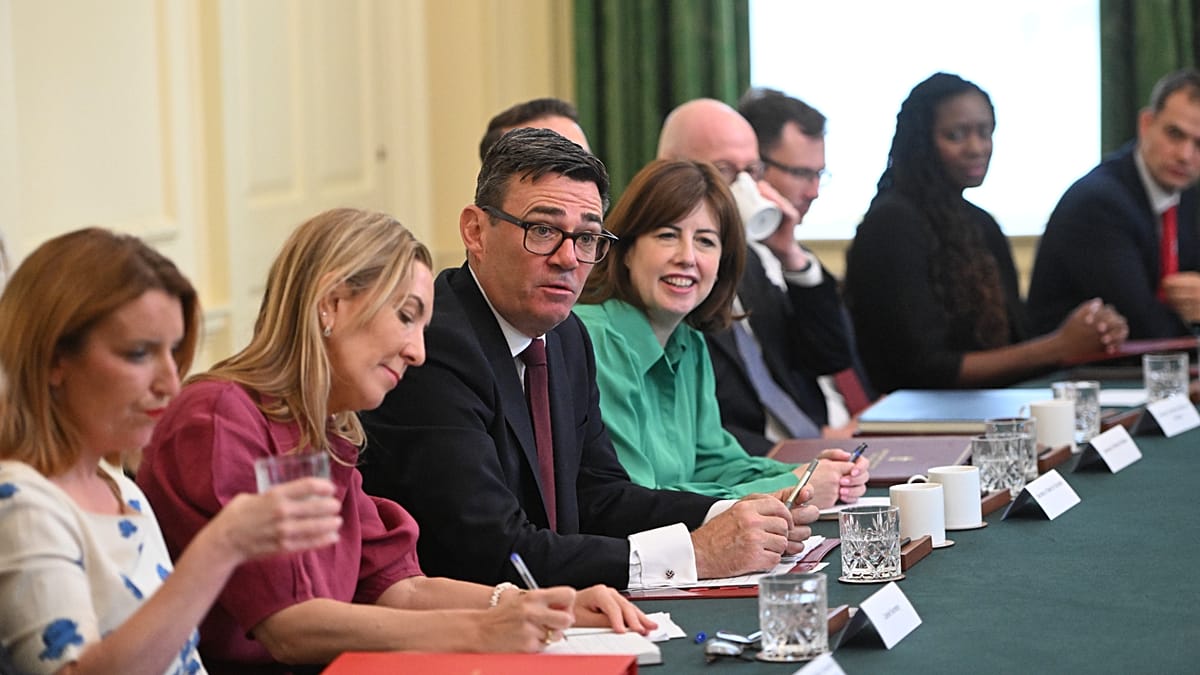
Andy Burnham has held his first cabinet meeting as UK prime minister, using his first full day in office to unveil an energy tax cut aimed at easing pressure on household finances while introducing a reshaped cabinet that signals a clear shift in Labour’s direction.
The new prime minister announced that value-added tax (VAT) on domestic electricity bills will be abolished from 1 October, saving the average household around £45 (€52.73) a year. The measure is expected to cost the government about £850 million (€996m) in the current financial year, according to AFP.
“We’re taking immediate action to cut taxes on energy bills, put more money in people’s pockets and bring back hope,” Burnham said.
The government said the tax cut would be funded by scrapping the previous administration’s proposed digital ID scheme, which it said would have cost taxpayers £1.8 billion.
However Darren Jones, a former advisor to Keir Starmer, disputed that claim, arguing the ID programme had been “unfunded” and called on ministers to explain how they would cover the loss in tax revenue at the autumn budget.
Cabinet reshuffle
Burnham gathered ministers for the first cabinet meeting at Downing Street after replacing Starmer on Monday, having been installed as leader following a revolt by some Labour MPs.
Although he pledged to end internal party divisions, one of his first acts was to remove a few of the ministers closely associated with Starmer and promote allies who share his political agenda.
Among the most notable appointments were two ministers who resigned under Starmer, including former defence secretary John Healey, who returned to government as finance minister, replacing the previous chancellor, Rachel Reeves. Former health minister Wes Streeting became defence secretary after abandoning his own leadership ambitions and backing Burnham, while former energy secretary Ed Miliband was appointed foreign secretary.
Shabana Mahmood retained the home secretary brief, where she has overseen the government’s approach to migration, while Angela Rayner returned to cabinet as housing minister after resigning when she breached the ministerial code by failing to pay the correct tax on a property purchase.
Burnham has pledged to tackle the cost-of-living crisis, explore rent controls and bus fare caps, and draw up a 10-year plan focused on reindustrialising Britain, expanding public housing and devolving more power from London to the regions.
The new prime minister also held calls with US President Donald Trump, Ukrainian President Volodymyr Zelenskyy and French President Emmanuel Macron, as he prepares to confront slowing economic growth, high borrowing costs and continued pressure over migration before the next general election, due by 2029.
Additional sources • AFP
Read the full article here
