

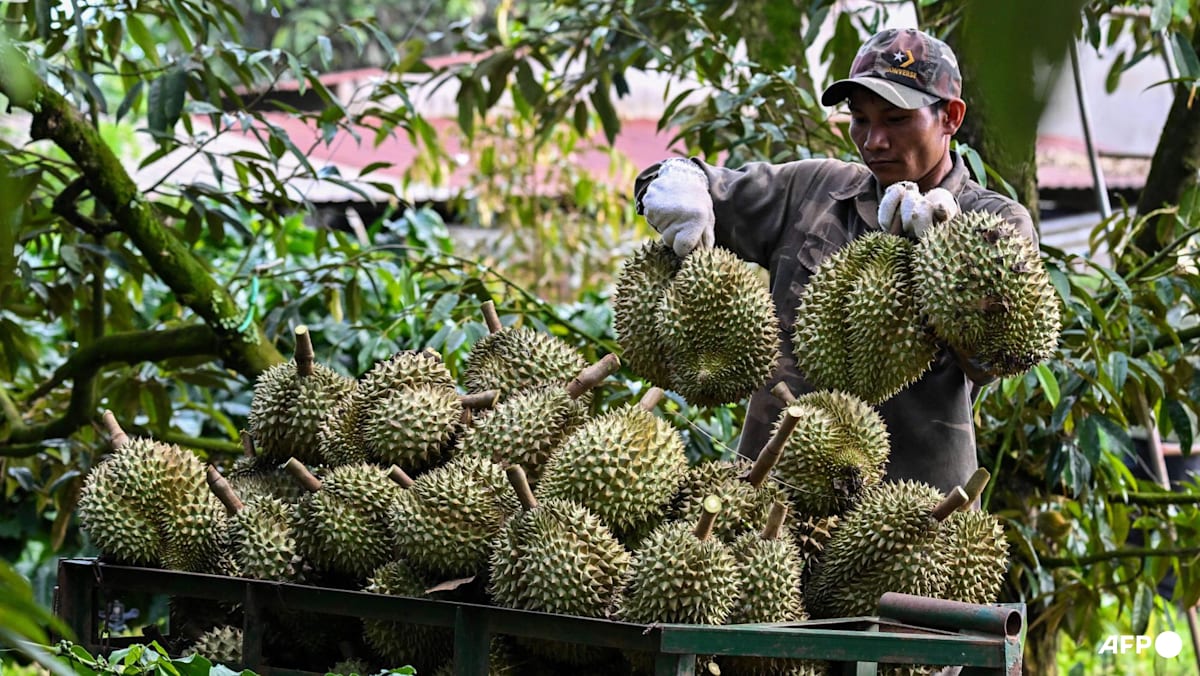
Once a luxury food, increased competition between Thailand and Vietnam and improved transport links have helped cut prices and make the fruit more affordable.
At a durian tasting event in Beijing last month, Ada Song told AFP that she had spent almost 1,000 yuan (US$150) on the fruit in recent weeks.
“I have tried nearly 20 different varieties,” Song said.
Durian “tastes just as sweet as cake, without the greasiness and heaviness”.
China imported almost US$7.5 billion worth of fresh durian last year, a near 12-fold rise from 2015.
Now Beijing is seeking to boost its homegrown produce, with more than 3,000 hectares of plantations on the southern island province of Hainan, which has a similar climate to northern Vietnam.
But “our Hainan durians will always be just a supplement to Southeast Asian durians”, acknowledged Feng Xuejie, a durian expert at the Hainan Academy of Agricultural Sciences.
“It’s not even a competition.”
IMPROVING QUALITY
Vietnam’s durian exports are expected to reach US$4 billion this year, up from US$180 million in 2021 – 90 per cent of them going to its northern neighbour.
But in the Central Highlands there are concerns about the reliance on China, as well as the risks of oversupply as more farmers join the rush.
Many anxiously eyed a recent price crash in Malaysia, blamed on an unusually bumper harvest.
Read the full article here
