

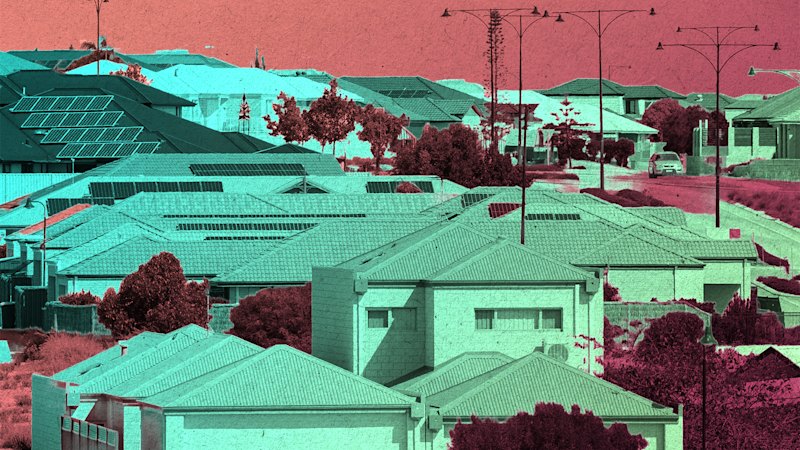
West Australian renters need a household income of nearly $130,000 a year to keep up with median rents and avoid housing stress, a new report has revealed.
Anglicare WA’s latest Rental Affordability Snapshot has painted a grim picture for the state’s rental market, with almost no properties affordable for low-income households.
People on income support are “completely locked out”.
“In WA, both state and federal 2025 elections focused attention on housing. These included record spending and election commitments to boost supply and affordability for first-home buyers,” the report states.
“However, these commitments have failed to reach those doing it tough, with little relief for people not in a position to buy and no action to address rising rents and the appropriateness of available dwellings.
“The rental crisis has become an economic crisis.”
Perth renter Nicolette Murphy is on a disability pension after being diagnosed with multiple sclerosis in 2010, and almost her entire pay cheque is used on rent.
She relies on her parents in the UK for help buying other necessities like groceries.
Murphy was paying $600 per week for her accommodation, but was recently told her lease would not be renewed.
“We’ve been asked to leave this property and between here and my last place I’ve been with the same agents for 12 years and they don’t want to help at all,” she said.
“No sympathy, no heart. It’s all very clinical.
“I told them I’m terrified that there won’t be anywhere to go and I will be homeless. They just said ‘we understand your situation’ – I just hope they can sleep at night.”
Murphy managed to find a new rental for slightly more per week, but said the process of finding a new home was even harder for those with a disability.
“Then you may get to the house, and it’s got steps and so it’s not accessible,” she said.
“I have to take someone with me to help me on my walk, or they can actually push me, so you have to plan it out.
“So many people are turning up and it’s so depressing, so stressful when you can’t get up the steps and you’re trying to get up the steps and people behind you, it’s a lot of people, they’re all in the same situation, or maybe a worse situation than mine.”
In another case, Rachele and her husband moved to Kununurra from Melbourne in 2018 with their four children.
Since then, they have lived in a series of what they describe as unstable and substandard rental arrangements, shaped by a chronically tight housing market in the East Kimberley.
It’s the price they have to pay to live in a home which costs $600 per week – considered cheap by local standards.
“Housing isn’t just a roof and walls, it’s often childhood memories for kids and a sense of ‘this is my home’ and should feel comfortable and safe,” Rachele said.
Across WA, there were 209 fewer private rentals available in the snapshot timeframe of March 14-15 compared to the same time last year.
The median rent is $747 a week – up 10 per cent from the previous year, 15 per cent from 2024 and 74 per cent from 2021.
The report found renters needed to earn more than $55,000 a year extra since 2021 to keep pace with median rent rises.
Looking regionally, the report found the state’s North West was the least-affordable area to live in, with median rents of $1025 a week, while outside the Perth metro area the next most-expensive regions to live in were the South West and Great Southern, where median rents were about $680 a week.
Just one rental nationwide was deemed affordable for a person on JobSeeker.
Everybody’s Home spokesperson Chantal Caruso said the federal budget needed to deliver tax reform and redirect those savings into homes people could afford.
“It’s staggering that there are virtually no affordable rentals in the private market for people on the lowest incomes. Even full-time workers on the minimum wage are being completely priced out,” Caruso said.
“The system is failing, but it can be fixed if the federal government steps up now with meaningful reform and investment.
“This budget presents a critical opportunity to … end unfair investor tax breaks that are making the housing crisis worse, and reinvesting those savings into building more public and community housing.”
Caruso said the nation also had a shortfall of 640,000 social homes and demand was growing.
“Building more homes that are actually affordable will not only support those in greatest need, but also ease pressure across the broader rental market,” she said.
“We need a housing system that is fair and affordable for everyone. Every Australian deserves a safe, secure and affordable home.”
 Holly Thompson is a journalist with WAtoday, specialising in education and the environment.Connect via X or email.
From our partners
Read the full article here
