

From the top of Western Australia to the heart of Perth, councils across the state have fallen into disarray, begging the question of how can something so “dysfunctional” be fixed.
Over the past year, councils far and wide have operated in a state of dysfunction, leading to mass resignations and the appointment of commissioners to stand in councillors’ place.
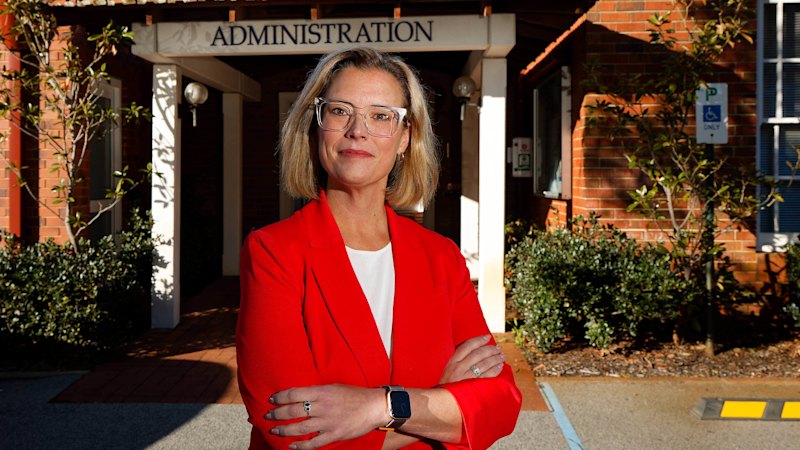
This dysfunction has caused such concern that Local Government Minister Hannah Beazley has put councils “on notice” telling them: “This poor behaviour needs to end.”
Over the past 12 months, commissioners were appointed to two councils: the Town of Port Hedland and the City of Nedlands. In April 2025, a commissioner was also appointed to the Shire of Derby/West Kimberley.
Then, earlier this month, it was revealed another commissioner was set to be appointed, this time to the Shire of Carnarvon, after six elected members – including the mayor – tendered their resignation over a span of three days.
The shire released a statement this week noting it was a “significant and unusual situation” that had left only father and son Dudley and Burke Maslen remaining on the Gascoyne council.
Last September, three commissioners were appointed to the Town of Port Hedland after four councillors and the mayor resigned from their positions.
Former mayor Peter Carter claimed his decision to leave was due to dysfunction within the council.
Beazley appointed commissioners Jessica Shaw, Martin Aldridge and Ron Yuryevich to oversee Hedland council’s operations until the local government election held in March this year.
In July, five councillors also resigned from their positions at the City of Nedlands as a result of “dysfunction”, which meant the local government overseeing one of Perth’s richest postcodes couldn’t reach a quorum.
The mass exodus meant all remaining elected members – including the mayor at the time Fiona Argyle – were let go of their roles and replaced by commissioners.
Beazley, who described the ordeal as an “embarrassing saga of dysfunction and disunity” appointed David Caddy, Bianca Sandri and Cath Hart as the three commissioners who would take over council responsibilities until the March election.
One of the key disputes which led to the bulk resignations was the council’s inability to agree on plans for WA’s first children’s hospice, which proposed using the neighbouring Allen Park A-Class reserve as recreational space for the children.
It was later revealed the city had also been under investigation by WorkSafe over alleged staff misconduct and inappropriate workplace behaviour, with more than 70 people quitting in 18 months.
In April 2025, five councillor resignations at the Shire of Derby/West Kimberley saw the appointment of Jeff Gooding as the commissioner for the local government.
In a statement, Gooding said his job would be to “act as the council” after the remaining four councillors were stood down from their positions.
“I understand issues have contributed to the resignations of the former Council members. However, my role is not to inquire into those specific matters. That does not mean that I can’t or won’t seek to understand the background of decisions made,” Gooding said.
“My strong focus, however, will be on the future of what needs to be done for the Shire of Derby West Kimberley Council.”
In August, Beazley announced the appointment of WA’s first local government inspector Anthony Brown.
Brown’s role as inspector allows him to investigate the state’s 139 local councils and comes with the power to intervene to ensure compliance with laws and codes of conduct.
The inspector can also issue infringements of up to $1000, and appoint monitors to assist local governments with conduct and compliance issues.
Monitors are put in place to work constructively with council members and staff to resolve issues before they escalate.
Less than two weeks into his role, a monitor was assigned to the City of Perth, with the City of South Perth and the Shire of Serpentine-Jarrahdale soon receiving monitors of their own.
The way forward
On Tuesday, Beazley announced further measures to ensure elected council members adhere to the code of conduct.
Three local government adjudicators were appointed in place of the local government standards panel to assess complaints against council members.
Appointed to the inaugural principal adjudicator position is Rob Lilley, a legal practitioner and former detective with WA police.
The two deputy adjudicators who will help make findings, order mediation and impose recently strengthened penalties are Conor Fahey and Lee McIntosh.
Beazley told this masthead she was extremely concerned about the “increased level of dysfunction and poor governance that has been evident across parts of the local government sector”.
“I have shown that I will not tolerate this level of dysfunction and poor governance, and have acted decisively, when required, in appointing commissioners,” she said.
“I have put local governments on notice that this poor behaviour needs to end. Those doing the wrong thing need to change and have a sole focus on what is in the best interests of their communities.”
Beazley said the combination of the local government inspector, monitors and adjudicators would help to improve “accountability, transparency and decision-making in local governments across the state”.
But former premier Colin Barnett isn’t convinced the new roles will be enough to put an end to the chaos among councils.
Having long championed the idea of local government amalgamations, Barnett said 139 councils across the state was “simply too many” to allow for good governance.
“I think, to reduce the number of councils in metro areas by amalgamating some of the smaller ones is worth doing,” he said.
“The councils that are operating effectively tend to be the large ones, Stirling, Cockburn, City of Perth, and they have professional staff and are a lot more capable.
“There’s no doubt that, not only are the numbers of councils far too big … the smaller ones, in particular, can’t keep up with the demands on local councils.”
Barnett said 100 councils across the state would be a good target to reach, as well as having a clearer definition of what the role of a council is.
“What I used to say to councillors is, ‘Unless you start to do this and have a plan to bring councils together and reduce the number to, say, 100 … you will simply die on the vine.’ And I think that’s what we’re seeing,” he said.
“And the councils, I think, have made this problem themselves by failing to act.
“Some people are saying, get rid of [local councils] … I don’t agree with it or want that, but I’d like to see them clearly defined and concentrate on their role and do it well.”
From our partners
Read the full article here
