



SILENT KILLERS AND WORKAROUNDS
After Santika, authorities ordered nationwide inspections of pubs, bars and nightclubs to check fire exits, occupancy, licensing and building safety. Hundreds of venues were inspected, with a number temporarily closed for violations.
Given that Sunday’s fire had repeated the same pattern as many times in the past, at the scene, Amorn Pimanmas, the president of the Thai Structural Engineers Association, called for “some kind of revolution” regarding fire safety procedures.
“It’s not like we don’t have the law. It’s a problem of how the law could be strictly enforced from now on,” he said. “The government should answer this question.”
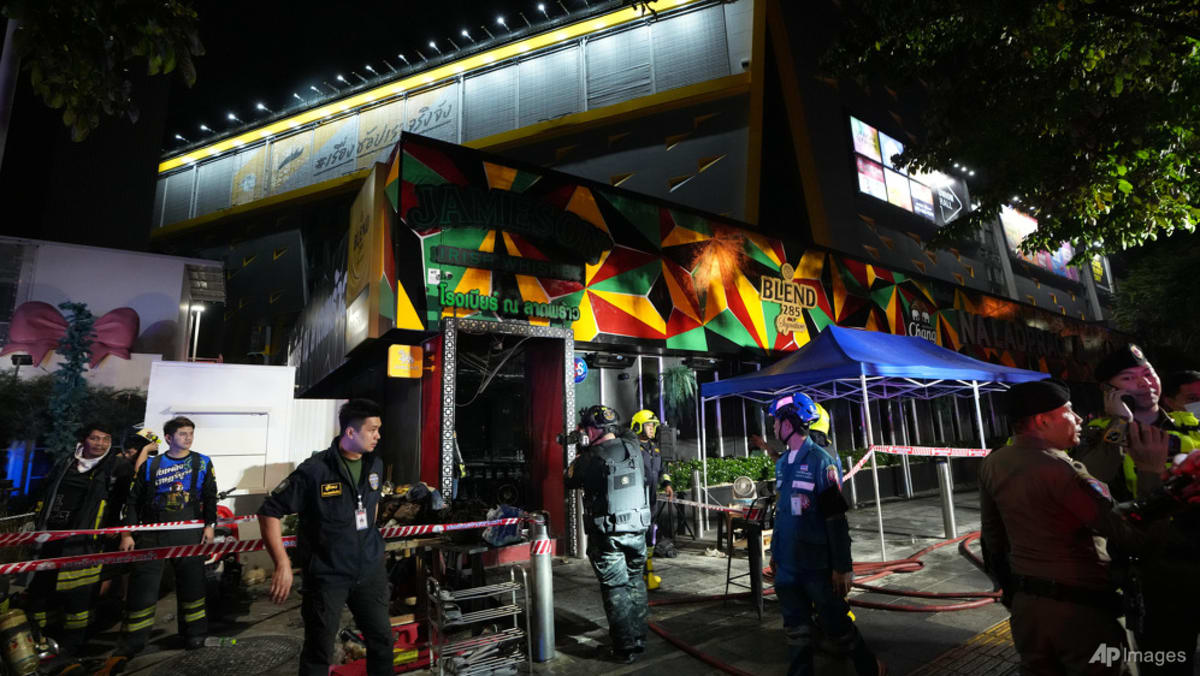
Investigators probing Sunday’s fire are examining reports that emergency exits were obstructed or locked, after many victims were found in bathrooms at the rear of the venue, suggesting they were unable to escape the thick smoke.
Sanga, the business association president, said these were issues “still lurking in the shadows” in many establishments, especially those converted from shophouses.
Other dangerous practices like padlocking emergency exits to stop people from sneaking in and out still continue, he said.
“This is a silent killer that operators often overlook due to temporary convenience or sheer negligence.”
Zoning and business classification laws should also be reviewed, according to Punchada Sirivunnabood, the dean of the Faculty of Social Sciences and Humanities at Mahidol University.
“Right now, it’s very messy in Thailand. Sometimes a venue is registered as a restaurant but turns into a nightclub. When the law is not up to date, it allows people to find loopholes,” she said.
Officials said the Rong Beer Na Lat Phrao bar was licensed as a restaurant with a live music venue rather than an entertainment venue because it was located outside the designated zoning for such businesses.
That would exclude it from the stricter fire safety requirements for entertainment venues, according to Amorn, who spoke to reporters at the scene of the blaze.
Santika too had been licensed as a restaurant rather than a nightclub and had allegedly been operating illegally for years despite dozens of previous police cases.
In recent years during the COVID-19 pandemic, many nightlife businesses converted to restaurant licences so they could reopen under public health rules.
Critics say some venues later continued operating primarily as bars or clubs while remaining licensed as restaurants, creating grey areas around regulation and safety oversight.
Read the full article here


