



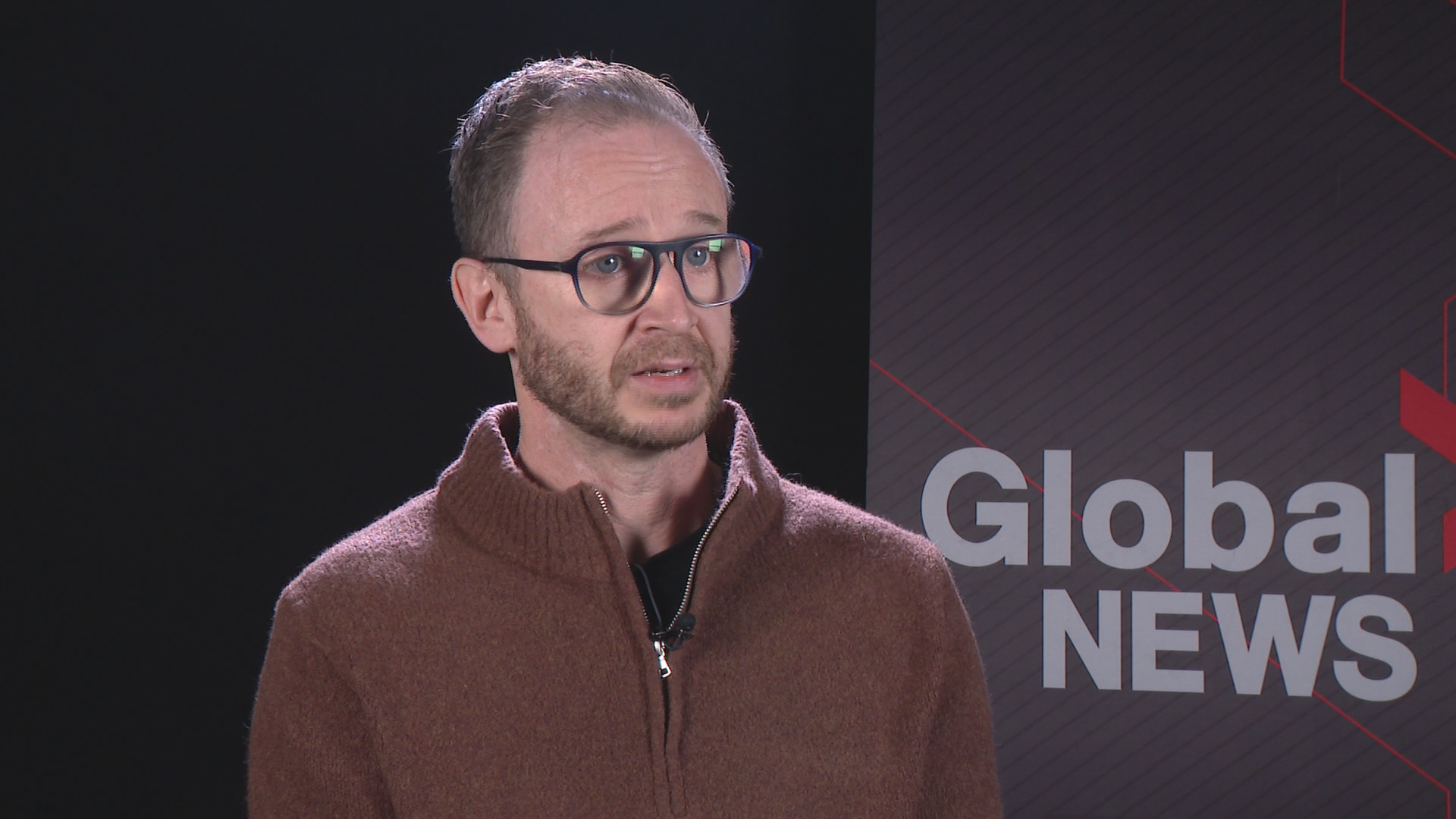
For podcaster and addictions advocate Daniel Hearn, the closure of Prairie Harm Reduction earlier this month hits close to home.
“Recovery can look like a million different things, and I believe Prairie Harm really embodied that,” Hearn told Global News in an interview.
Hearn’s partner, Donna, turned to the organization, which provided wraparound harm-reduction services in Saskatoon, several years ago when she was pregnant and looking to recover from addiction.
“Prairie Harm played a pinnacle role in helping her navigate services, helping her re-establish connection with family, with myself, with our son and they were there for all of it,” he said.
Prairie Harm Reduction closed its doors on April 9 following a financial shortfall of hundreds of thousands of dollars, according to its board of directors.
The non-profit organization previously shut down only its supervised consumption services in March before its family support services and youth houses shuttered.
“I pray that a lot of the programming that Prairie Harm conducted outside this safe consumption site finds a way to continue,” Hearn said. “They had transitional housing, they had youth housing, education, they were providing naloxone to half the city, and that just stopped, and I don’t think that’s right.”
While Hearn and his partner never accessed the site’s drop-in or supervised consumption services, he says other programs, like the intense family outreach, were critical for his family’s recovery.


Get breaking National news
Get breaking Canada news delivered to your inbox as it happens so you won’t miss a trending story.
“When the intense family outreach came to Donna, they offered her a lot of support, a lot of comfort, and just someone even to talk to, if nothing else.”
Hearn and his partner now host a popular podcast on addictions and recovery called Hard Knox Talks, where they speak with and share the stories of others who have lived experiences of addiction. Through this, Hearn hears first-hand how much Prairie Harm Reduction helped others, along with the effects of its closure.
Hearn said he is concerned that without the operation of Prairie Harm Reduction or a similar replacement, there could be dire consequences for community members previously reliant on its services.
“When an organization works that hard and falls that hard in the public eye, I wonder why more support was not offered. Surely they were saving our province money by having a paramedic on site addressing overdoses,” Hearn said.
“If there’s no hand reaching into the fire to pull people out the way Prairie Harm could, I don’t know that that’s going to be a good thing for a lot of families in our community.”
Emergency services and community organizations are reporting increased strain since Prairie Harm shuttered its doors.
Last week, the president of Saskatoon’s firefighters’ union raised concerns that members are noticing an unprecedented increase in calls for service over the past few weeks, putting more pressure on crews and resources and potentially increasing response times in the future.
Just one week after Prairie Harm closed, community-based organizations in Saskatoon reported seeing an uptick in people accessing their services.
Minister of Social Services Terry Jenson did not speak to the increased strain on community organizations when asked by Global News on Monday, instead saying the province had a plan in place to help youth and families transition to new services.
“We had seven youth housed through Prairie Harm. Those seven youth were accounted for and transitioned seamlessly without any interruption,” he told reporters at an unrelated press conference.
It is still unclear which community-based organizations the government partnered with.
In a statement to Global News, the Ministry of Social Services says it is not providing the names of the service providers “in interest of protecting the privacy of children and youth in our care.”
The provincial government previously provided funding for Prairie Harm Reduction’s social services, but not its supervised consumption site. Saskatchewan’s health and addictions minister previously said funding would be re-allocated to other organizations in Saskatoon.
Read the full article here


