



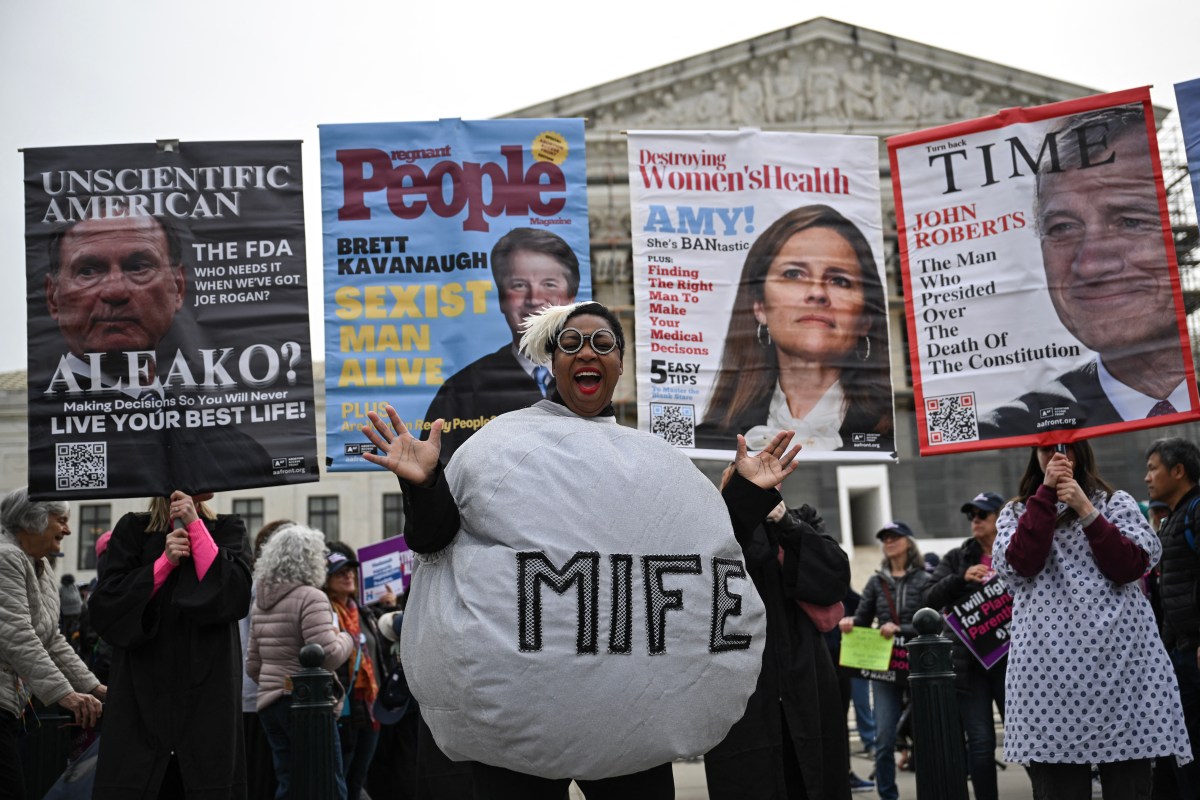
Pro-choice advocates told Newsweek that a decision in a New Orleans appeals court that blocked the distribution of mifepristone through the mail is “one step closer to a national abortion ban.”
Mini Timmaraju, president and CEO of Reproductive Freedom for All, in an email comment wrote: “It is now much more difficult for people to access abortion care. Anti-abortion politicians know their policies are unpopular, so they are using every lever of government they can.
“Louisiana built this case on debunked, junk science,” Timmaraju wrote. “The safety of mifepristone has never actually been in question. As this case moves towards the U.S. Supreme Court, we will fight until every person has access to the care they need.”
Louisiana Appeals Court Blocks Mifepristone by Mail: What to Know
A three-judge panel in New Orleans on Friday blocked a federal rule allowing the distribution of the abortion drug mifepristone through the mail, according to Reuters.
“The agency’s progressive relaxation of mifepristone’s guardrails likely lacked a basis in data and scientific literature,” Circuit Judge Stuart Kyle Duncan, a Trump appointee, wrote for the court, agreeing that the FDA has failed to justify eliminating the in-person requirement for dispensing it.
The state of Louisiana brought a challenge against a 2023 law allowing its distribution in a move that many argue aims to limit abortion access overall. The decision—a temporary measure—remains in effect while the court considers the challenge, which could take months to resolve.
The Food and Drug Administration (FDA) has been reviewing the medication’s safety as it decides whether to repeal the regulation.
District Judge David Joseph, on April 7, paused the lawsuit pending FDA review, which some have reported will not be completed until after the November midterm elections. The Biden administration determined that the drug is safe and effective, citing studies showing that major adverse effects occurred in fewer than 1 percent of patients.
What Pro-Choice Advocates Said About Ruling
Pro-choice advocates found the court’s decision alarming, in some cases describing it as a step towards broader policies that would encroach more on reproductive rights.
The National Women’s Law Center (NWLC) in a statement labeled the decision as “reinstating outdated, medically unnecessary restrictions” on the drug’s use. The NWLC called mifepristone “one of the most accessible, safe, and effective forms” of abortion care.
Goss Graves, CEO and president of the NWLC, said that the decision will make it “impossible to access … the only way for [patients] to obtain health care.”
“The decision is also deeply out of step with both the public and fact-based science,” Graves said, adding, “This ruling is just the latest attack in a coordinated, nationwide campaign to eliminate abortion access for everyone in this country, one court case at a time.”
Similarly, Planned Parenthood President and CEO Alexis McGill Johnson, in a statement, said the ruling was “another attack on abortion,” noting that it restricts access for many who have few options to obtain mifepristone or similar products.
“Last month, the district court paused the case while the FDA conducts a politically-motivated ‘review’ of mifepristone safety,” Johnson said. “The 5th Circuit’s ruling blocks the 2023 changes to mifepristone’s distribution while the court considers Louisiana’s appeal of that decision. This means that mifepristone can no longer be provided via telehealth.”
Nancy Northup, president and CEO of the Center for Reproductive Rights, in a statement, lamented that “telehealth has been the last bridge to care for many seeking abortion, which is precisely why Louisiana officials want it banned.”
“This isn’t about science—it’s about making abortion as difficult, expensive, and unreachable as possible. Telehealth has transformed healthcare. Selectively stripping that away from abortion patients is a political blockade,” Northup said.
Trump Administration’s Position on Abortion Pills
Mifepristone was first approved in 2000 and has been gradually made more accessible. The FDA authorized the first generic version, manufactured by GenBioPro, in 2019.
Two years later, under Democratic President Joe Biden, the agency permitted telehealth prescribing and mail-order delivery of the drug, a policy shift that dramatically expanded access. Abortion opponents have been challenging that decision in court ever since.
In a letter to Republican attorneys general last year, Health Secretary Robert F. Kennedy Jr. and FDA Commissioner Dr. Marty Makary pledged to conduct a full review of mifepristone, which was approved 25 years ago and has repeatedly been deemed safe and effective by FDA scientists.
Federal regulators in October 2025 then approved a second generic version of mifepristone, a routine step that quickly drew backlash from anti-abortion groups and some Republican lawmakers.
Drugmaker Evita Solutions announced on its website that the Food and Drug Administration had cleared its low-cost version of the pill, which is approved to end pregnancies up to 10 weeks.
Read the full article here


