



Africa’s cities will drive the next era of global growth.
This year, the continent will overtake Asia as the world’s fastest-growing region—a shift unlikely to reverse as demographic momentum slows elsewhere. The instinct of investors, policymakers and multinational firms is to ask which countries will lead that rise. Yet it risks posing the wrong question: It will be cities that power Africa’s economic transformation.
There is nothing novel in this. Across history, great cities have stood at the center of national and continental prosperity. Manchester powered industrial Britain. New York anchored global finance. Shenzhen manufactured China’s rise.
In Africa, however, this dynamic will unfold in an altogether different order. The continent is already urbanizing on a scale and at a speed unmatched in history. By the middle of this century, it will also be the only region with a growing working-age population. Few forces will shape the 21st-century global economy more profoundly.
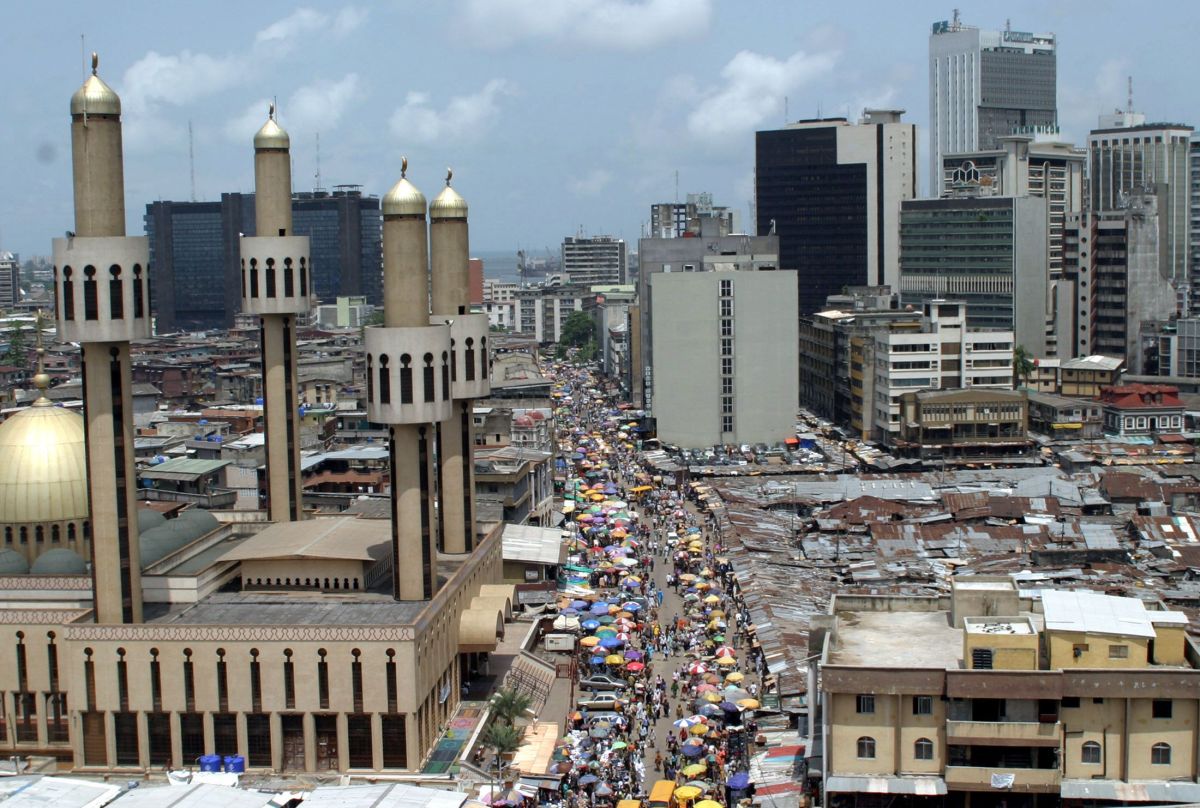
Yet not long ago, the African megacity was viewed with apprehension rather than optimism—places where swelling populations overwhelmed weak institutions and strained social order, omens of a wider disorder to come. My city of Lagos was often held up as the archetype. In a 1994 article, the writer Robert Kaplan notoriously described it as “cliche par excellence of Third World urban dysfunction.”
History did not unfold as predicted. Military rule had let dysfunction pile upon dysfunction. Yet when fatigues gave way to the ballot box in 1999, committed reformers, incentivized by democracy and sustained through its endorsement, began the long work of wresting order from the accumulated neglect.
Today, Lagos is Africa’s largest city. Were it a sovereign economy, it would rank as the continent’s fifth largest—ahead of Kenya. Dealroom recently ranked Lagos as the world’s top emerging tech hub. It is home to roughly two-thirds of the continent’s unicorns. The city remains restless and occasionally chaotic. Yet in many ways, this is inseparable from the unique energy that powers economic dynamism and capacity for reinvention—qualities that have long defined the world’s great commercial cities.
It is in cities like Lagos where Africa’s demographic dividend must be captured.
The same phenomenon—when workers vastly outnumber children and the elderly—transformed Asia. Yet a demographic tide rises only once in the life of a nation. Once it recedes, the challenges familiar across much of the developed world—aging populations, rising dependency and slower growth—inevitably follow. History will not be forgiving of those who let it pass.
Scale alone does not beget prosperity. If not matched by opportunity, demographic advantage risks curdling into frustration. Africa cannot afford a future in which youthful energy is met by economic exclusion.
Yet governments, national and metropolitan alike, do not create jobs; businesses do. Instead, their task is to focus on what gives urban scale economic force: connectivity—talent linked to opportunity, ideas to capital and firms to suppliers and markets. In practice, that means transport networks that cut congestion, planning for density rather than sprawl. Hence, firms and workers cluster productively, and digital and physical infrastructure that reduces the friction of doing business. This is where cities become engines of productivity and prosperity.
The task is pressing. By 2050, African cities will absorb around 900 million additional people—adding the combined urban populations of Europe and North America within little more than a generation. If urbanization outpaces governance, it risks reviving the anxieties that once defined perceptions of the African megacity.
Yet the opportunity is growing as quickly as the challenge. The African Continental Free Trade Agreement—bringing together 54 countries into the world’s largest free trade area by population—will only expand the economic horizons of its cities. No longer limited by domestic demand, they will increasingly serve regional and continental markets—supporting deeper specialization, stronger supply chains and more sophisticated service economies.
The next phase of Africa’s growth will not simply be national. It will be metropolitan. The question is no longer which countries will rise, but which cities will organize themselves most effectively to lead it.
Babajide Sanwo-Olu is Governor of Lagos State and host of Invest Lagos 3.0 on June 8 to June 9.
The views expressed in this article are the writer’s own.
Read the full article here


