



In Dale Carnegie’s management bible, How to Win Friends and Influence People, the author advises readers that if they are wrong, they should admit it quickly and emphatically.
Former University of Wollongong chief governance officer Alyssa White might have flicked through the 1936 bestseller before taking the witness stand at a corruption hearing this week.
The Independent Commission Against Corruption inquiry has spent almost three weeks probing alleged cronyism, conflicts of interest and how consulting firms won work at the institution. At the centre of much of that is White, who arrived at the university at the end of 2023 to its governance division. She quit days before the corruption hearing began.
Some witnesses appearing at the inquiry have relied heavily on a trinity of phrases: “I can’t recall”, “I don’t know” and “I can’t remember”.
White, in contrast, is often quick to admit she had not done the right thing.
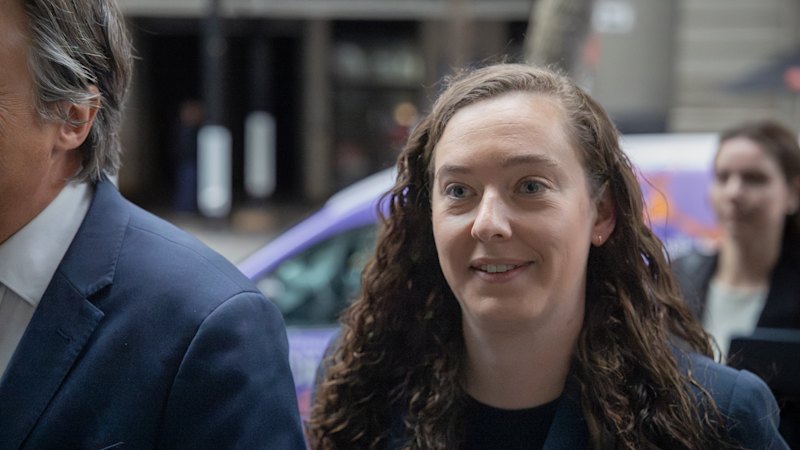
On Thursday, she smiled regularly and nodded encouragingly at Emma Bathurst, counsel assisting the inquiry, as texts, emails and memories of the past three years flashed up on a screen. They were all accompanied by Bathurst’s questions, all aimed at ultimately proving allegations that White engaged in serious corrupt conduct.
When one chapter of her alleged misconduct was discussed, Bathurst probed White’s role in helping her friend, Doctor Stacy Oon, secure a job which paid $200,000. Did White help review her resume? She did. Did she collaborate with Oon to design the pre-interview exercise? She did. Did she use her Gmail account to send her the interview questions in advance? She did.
Later in the day, asked about an external review of the governance division’s culture, which probed White’s behaviour, White said she did not realise she was the centre of that inquiry.
“I didn’t understand I was the issue,” White said.
Around the same time, the university’s serious wrongdoing committee was doing its own investigation into White.
The committee wrote to White in April 2024, alleging she had failed to declare personal relationships with four job candidates ultimately recruited to the university. One example noted how Lucinda Wright and White travelled to work together and discussed how White had attended Wright’s wedding.
White wrote a letter in response, denying having close personal relationships with the applicants and had “not ever had a close personal relationship with Lucinda”.
At the inquiry on Tuesday, White said she had “grossly underestimated the misconduct notification”. “But I believed at the time that I did not have a close personal relationship, as defined in the policy, with those staff,” White said.
Around the same time the serious misconduct investigation was afoot, White was in discussions with Lachlan Wood, the husband of White’s long-time friend Nick Bourne, about work at the university. Lachlan Wood is not accused of any wrongdoing.
The inquiry was shown emails dating back to 2019 where Wood sent his resume to White for review. The subject line was “My big dumb resumeeee” and heard how White attended Wood’s wedding.
Bathurst suggested amid the investigations into conflicts of interests, White knew she had to take herself off the recruitment panel for a job Wood was applying for. Bathurst alleged nevertheless she had “injected” herself into the process “to achieve the end you wanted, which was a job for Mr Wood” by using her friend, Dr Stacy Oon, to chair the recruitment panel. White said: “I don’t believe that I influenced Stacey’s decision-making, but I definitely compromised the process.”
Bathurst went on to suggest White and Wood were “close friends” but White disagreed.
“I would suggest that Mr Wood communicates as quite a flamboyant gay man in that manner with people that are acquaintances right up to close friends,” White said.
Bathurst asked if – in light of the cascade of allegations and investigations – had that changed her attitude?
Specifically, Bathurst put to her: “Surely, when you knew there’d been an investigation, and you got through your probation, you thought, ‘I better act within the university’s rules and procedures to preserve my job’?”
White cited the difficulty in getting staff to stay in roles at a regional university. She said the “conditions at the University of Wollongong overwhelmed my ability to think clearly about what I was really doing in these processes.”
So Bathurst asked the next logical question: “If it was difficult to hire people, then surely, the process, they would have got the job if they deserved it without this assistance that you gave them?”
So why did she do it?
“I think I did it because people are nervous. I did it because I wanted to ensure that the process ended with people that wanted the job and could work there.”
Bathurst corrected her. “People that wanted the job and people you wanted for the job, correct?”
White, again, was happy to agree she was wrong.
Start the day with a summary of the day’s most important and interesting stories, analysis and insights. Sign up for our Morning Edition newsletter.
From our partners
Read the full article here


