



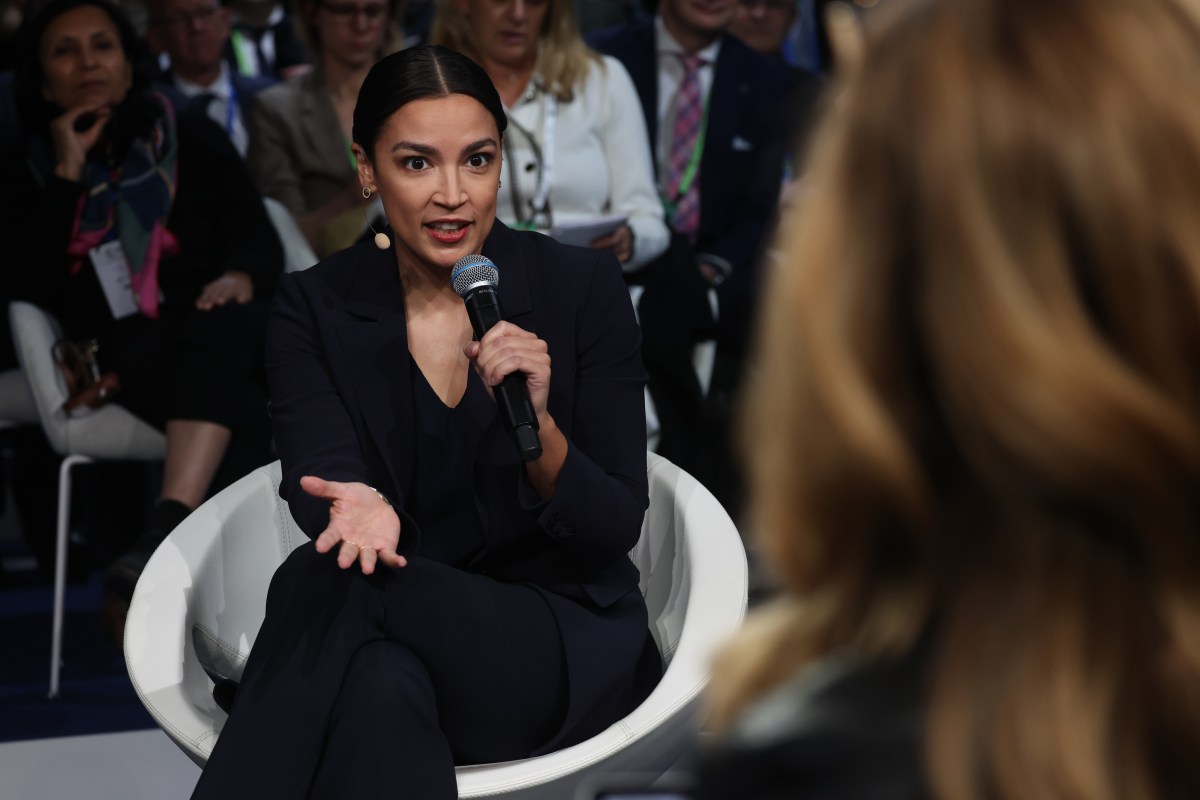
New York Democratic U.S. Representative Alexandria Ocasio‑Cortez said new insider trading restrictions announced by Kalshi and Polymarket fall short, calling the measures insufficient and a political deflection—prompting a direct rebuttal from Kalshi’s CEO as Congress moves toward broader regulation of the fast-growing prediction market industry.
Newsweek also reached to Polymarket via email on Monday for comment.
Why It Matters
The controversy cuts to the heart of whether prediction markets—platforms that allow users to bet on real-world outcomes—can self-regulate or whether federal intervention is necessary. The stakes are high: Both Kalshi and Polymarket have faced scrutiny after users appeared to profit from advance knowledge of U.S. military actions in Iran and Venezuela this year, raising alarms about national security leaks and market manipulation.
Adding to the conflict-of-interest concerns, President Donald Trump’s eldest son, Donald Trump Jr., has invested in Polymarket through his venture capital firm and serves as strategic adviser for Kalshi. Any favorable regulatory decisions from the Trump-controlled Commodity Futures Trading Commission could financially benefit the president’s family.
What To Know
Kalshi and Polymarket announced new industry guardrails Monday after U.S. Senators Adam Schiff, California Democrat, and John Curtis, Utah Republican, introduced the “Prediction Markets are Gambling Act,” legislation that would ban prediction markets from offering contracts related to sports—a move that could devastate both companies’ business models.
Under Kalshi’s new rules, political candidates are barred from trading on their own campaigns, and anyone involved in college or professional sports is preemptively blocked from trading contracts tied to their sport. Polymarket rewrote its terms to explicitly prohibit users from trading on contracts where they possess confidential information or could influence an event’s outcome—extending to athletes, company officials and policymakers.
Kalshi CEO Tarek Mansour pushed back directly on Ocasio-Cortez’s criticism on X, arguing the platform already bans, monitors and enforces rules against the groups she cited—and that Monday’s update goes further by adding pre-trade screens to block flagged individuals from participating at all, a safeguard he said does not exist in traditional stock markets.
The bipartisan legislation signals growing skepticism of prediction markets across party lines. Several states, including Utah, have already moved to ban both platforms, classifying them as de facto sports betting operations. Utah Governor Spencer Cox recently signed a law expanding the state’s definition of gambling to include so-called “prop bets.” Kalshi has attempted to sue to gain access in some states, with little success. Shares of the parent company of FanDuel and DraftKings rose sharply Monday—a sign Wall Street sees traditional sports betting operators as potential beneficiaries of tighter regulation.
What People Are Saying
Ocasio-Cortez, via X: “This is absolutely not enough. Just on the policy piece alone, there are SO many individuals — staff, advisors, consultants, cabinet secretaries, spouses, and more — that can trade on insider information. This is just a fig leaf to deflect from criticism. We need to do more.”
Mansour, responding to Ocasio-Cortez, on X: “The headline is not quite accurate. Like traditional markets, Kalshi already bans, monitors, and enforces against all the groups you mentioned. Today’s release adds pre-trade screens to block people from participating at all — even the stock market doesn’t do this yet.”
Adam Cochran, professor and policy consultant, posing a question to Mansour on X: “A lot of arguments I see is people claiming you don’t want to be regulated. If AOC wanted to sit down with you, understand the protections you currently have, and work with you guys on legislation that addressed reasonable gaps, to improve consumer protection, would you do it?”
Mansour, in response: “100%”
Neal Kumar, Polymarket chief legal officer, in a statement to the Associated Press: “These rule enhancements make our expectations abundantly clear for every participant across both platforms.”
What Happens Next
The “Prediction Markets are Gambling Act” now heads to committee review. If enacted, it would significantly curtail both Kalshi and Polymarket’s prospects, as much of their recent growth has been driven by sports contracts underpinned by formal deals with teams and leagues.
Reporting from the Associated Press contributed to this article.
Read the full article here


