

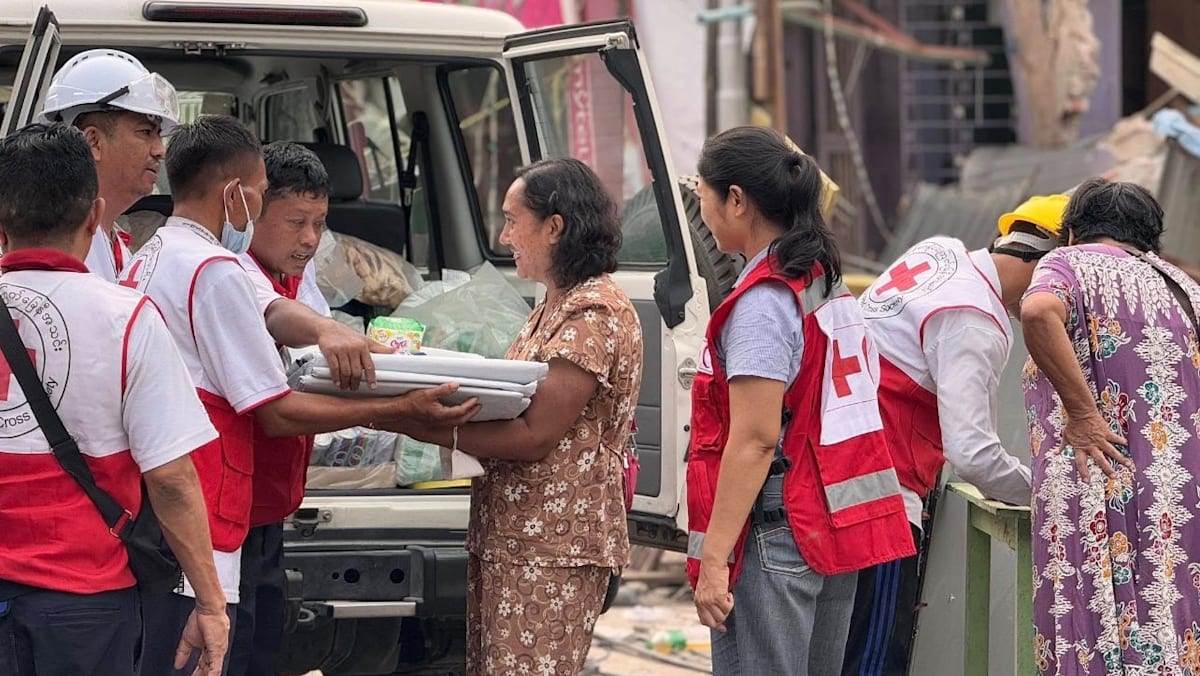
The effects are also being felt in Cox’s Bazar in Bangladesh, home to the world’s largest refugee camp and a population heavily dependent on humanitarian assistance. Matheou said cuts have affected food rations, medical care and other basic services, including children’s education.
The mega camp houses about a million Rohingya refugees from Myanmar, a country also reliant on humanitarian aid as a result of the ongoing civil war and widespread displacement.
INVESTING BEFORE DISASTER STRIKES
Beyond the immediate funding crunch, Matheou said another longstanding challenge is convincing donors and policymakers to invest in disaster prevention and preparedness before emergencies happen.
“When a crisis strikes and the images are in the newspapers, that’s when the solidarity surges. But in anticipation of a risk that may or may not happen … it’s very hard to motivate donors to commit money before a crisis,” he said.
There are signs of progress across Asia Pacific, however, with some governments investing significant amounts of resources in measures aimed at reducing the impact of disasters.
Matheou pointed to China’s investments in dams and flood basins, cyclone shelters in Bangladesh and Japan’s initiatives to withstand earthquakes.
“But Asia is also full of coastal areas and cities that haven’t made adequate investment in preparedness, and they are at risk of multiple climate threats,” he warned.
Extreme heat is adding another dimension to those risks, he said, with communities increasingly having to adapt to more severe weather conditions associated with a warming climate.
The changing humanitarian landscape could ultimately require Asia to broaden its traditional forms of solidarity.
Matheou said support in the region has often been rooted in neighbourly, religious or regional ties. The challenge is extending that commitment to crises further afield and sustaining it for years or even decades – from supporting refugee camps to health systems damaged by conflict or disasters.
“We need to have these conversations with governments, schools, and the public and private sectors about the ways (we can act so that) we are not helpless in the face of global crises,” he said.
“We can’t always solve them, but we can protect life and dignity, and we should all contribute to that. It’s a responsibility for all humanity, not just one geographical area.”
Read the full article here
