![‘NCIS’ Season 23 Finale Brings [Spoiler] Back From the Dead Before Potentially Killing Off Another](https://justokworld.com/wp-content/uploads/2026/05/NCIS-Season-23-Finale-Brings-Spoiler-Back-From-the-Dead-Before-Potentially-Killing-Off-Another-31741-300x158.jpeg "‘NCIS’ Season 23 Finale Brings [Spoiler] Back From the Dead Before Potentially Killing Off Another")


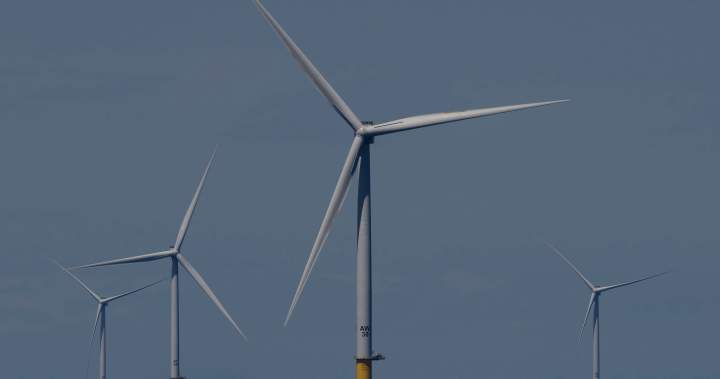
A new report says offshore wind developers in Atlantic Canada should commit to early collaboration with Indigenous businesses to ensure the industry contributes to “economic reconciliation.”
The report, to be released today by the Atlantic Policy Congress of First Nations Chiefs, says Indigenous communities have an important role to play in the new industry, noting they are already involved in onshore energy projects across the region.
“Early engagement and consultation … is key to identifying partners and building long-term commercial relationships based on mutual trust and respect for Indigenous treaty rights,” the congress said in a statement.
The report, drafted by the independent Atlantic Economic Council, says Indigenous businesses are well-positioned to collaborate through equity partnerships, community-based workforce training and supply chain agreements.
The chiefs, who represent 33 First Nations in Atlantic Canada, Quebec and Maine, say that kind of collaboration will create economic growth and job opportunities while helping the industry meet its labour requirements.
As well, the report calls on offshore developers to encourage Indigenous participation by offering smaller contracts and joint ventures.


Get breaking National news
Get breaking Canada news delivered to your inbox as it happens so you won’t miss a trending story.
Governments and developers, meanwhile, should draft benefit and revenue agreements that support reinvestment in Indigenous communities, the report recommends.
“We’ve seen a lot of positive momentum in advancing economic reconciliation in renewable energy projects as well as other sectors,” congress co-chair Bob Gloade, chief of the Millbrook First Nation in Nova Scotia, said in a statement.
“However, there is a lot of work left to be done. There needs to be committed focus on integration between Indigenous and non-Indigenous businesses in the offshore wind energy sector.”
The release of the report comes as Nova Scotia leads the country in developing offshore wind farms.
Premier Tim Houston has proposed a $60-billion project called Wind West, which he says could generate up to five gigawatts of electricity by 2033 in its first phase, and more than 40 gigawatts by 2050. In October, the Canada-Nova Scotia Offshore Energy Regulator launched the province’s first call-for-bids process to license offshore wind energy.
The report notes that provincial offshore assessments for Nova Scotia and Newfoundland and Labrador already emphasize the inclusion of Indigenous perspectives, which aligns with recommendations from the Truth and Reconciliation Commission in 2015.
The commission issued 94 calls to action, including for the corporate sector to adopt the United Nations Declaration on the Rights of Indigenous Peoples, which emphasizes Indigenous economic self-sufficiency and meaningful participation in decisions affecting natural resources.
The report points to examples of Indigenous engagement in other countries, including the United States, where the Mashpee Wampanoag Tribe in Massachusetts signed a tribal benefit agreement with offshore wind developer Vineyard Offshore to collaborate on the Vineyard Wind 2 project in March 2024.
On another front, the report says several onshore energy projects in the Atlantic region have already offered shared equity with Indigenous communities, including the EverWind Fuels clean energy project at Point Tupper in Cape Breton. That project is being developed in partnership with the Paqtnkek, Potlotek and Membertou First Nations.
“These partnerships include shared equity and benefits agreements that support Indigenous ownership, training, employment and procurement,” the report says.
As for provincial financing, the report says Quebec, Manitoba, Saskatchewan and British Columbia have each established Indigenous loan guarantee programs to support equity participation in major projects. And Ontario and Alberta have programs offering up to $3 billion each to support Indigenous equity participation in major projects.
“No equivalent programs currently exist in the Atlantic region, highlighting a gap in financing tools for offshore wind development and other large-scale investments,” the report says.
Read the full article here