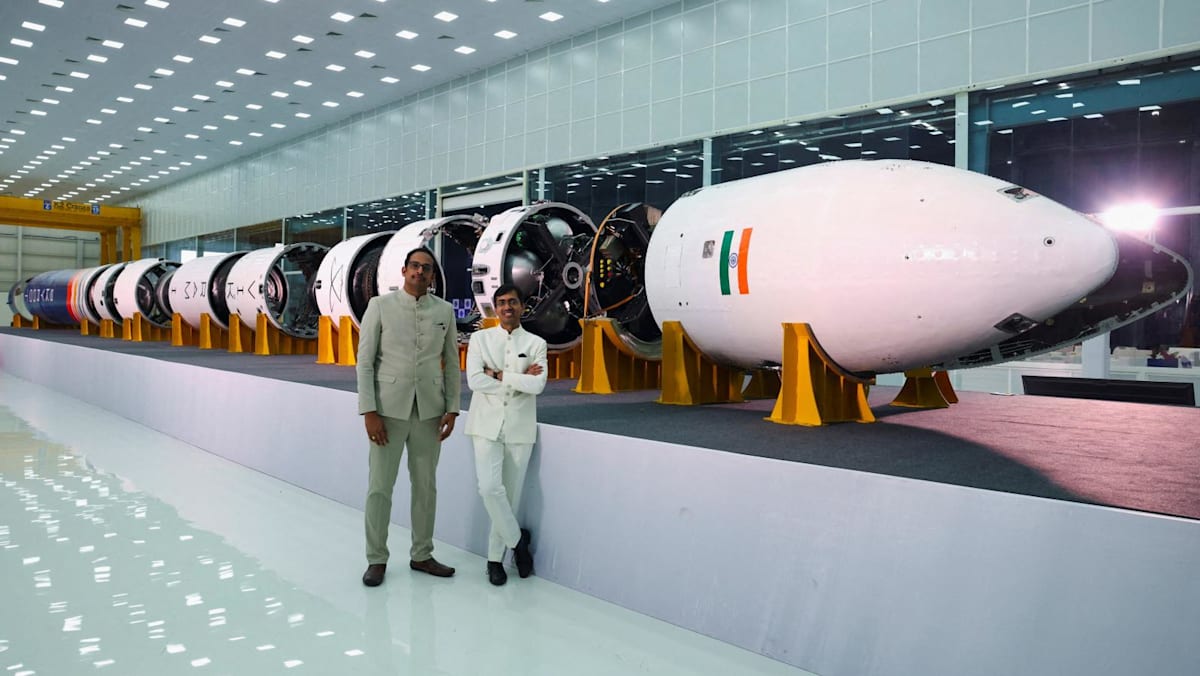
Sanjay Nekkanti, founder and CEO of Dhruva Space, a space engineering solution provider, said the industry’s reliance on former ISRO expertise is a natural consequence of how India’s strategic sectors have evolved.
“For decades, much of this expertise resided within ISRO, DRDO (Defence Research and Development Organisation), defence laboratories and public sector enterprises because these were the institutions entrusted with developing India’s strategic technologies,” he told CNA.
He added that retired ISRO scientists continue to mentor engineering teams and contribute to product development at Dhruva Space, alongside experts who have worked at NASA and the European Space Agency.
While there are no comprehensive figures tracking the movement of scientists from ISRO to private companies, Raju said startups have become increasingly attractive destinations for experienced talent. They offer not only competitive salaries, but also leadership roles, employee stock options and the opportunity to build technologies at a faster pace.
An Economic Times report in Mar 2025 said Indian spacetech startups were recruiting former ISRO scientists to strengthen leadership, commercialisation and global expansion.
“They’ll probably do more work in one year than what they would have done in five or seven years,” Raju said.
CAN TIGHTER EXIT RULES RETAIN TOP TALENT?
The tighter exit rules reflect growing concern over the loss of experienced scientists, but industry leaders argue that making it harder to leave will not, on its own, solve the problem.
Raju said the government’s concerns are understandable.
“The government has invested in creating this talent pool,” he said, noting that scientists working on flagship missions represent decades of specialised knowledge and experience.
Read the full article here