

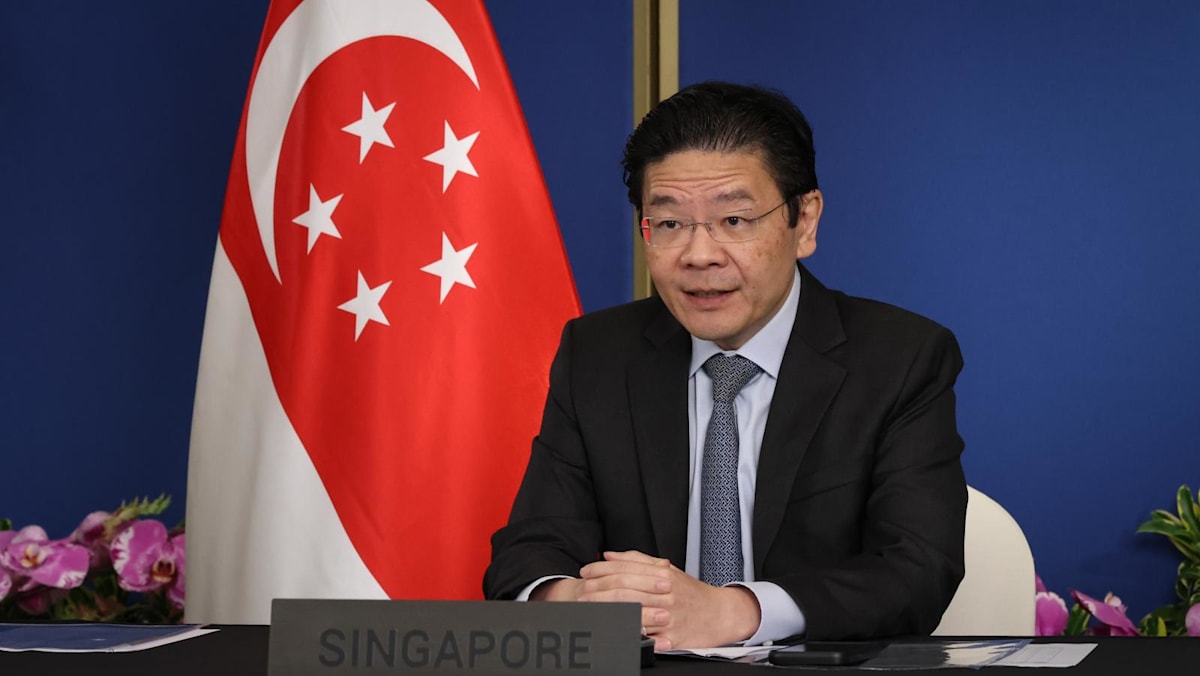
SINGAPORE: Countries must work together to strengthen energy resilience as disruptions from the Middle East conflict and the closure of the Strait of Hormuz threaten supply chains, Singapore Prime Minister Lawrence Wong said on Wednesday (Apr 15).
Speaking at the Asia Zero Emission Community (AZEC) Plus online summit, chaired by Japan, Mr Wong noted that Asia is “particularly exposed” to energy shocks due to its heavy reliance on imported energy.
Singapore will do its part to strengthen resilience, he said.
“As a trading nation, we will facilitate the continued flow of essential goods through Singapore, by keeping our ports and trading links open, just as we did during the COVID-19 pandemic,” Mr Wong said.
The country will also continue to uphold navigational rights and freedoms under international law to ensure global trade flows through key sea lanes.
“As an oil trading and refinery export hub, we will do whatever we can to secure alternative upstream feedstock, so that our industry can continue to supply refined fuel products to markets around the world,” the prime minister added.
However, no country can secure its energy needs alone, Mr Wong said, noting the need for cooperation among regional partners.
“Resilience must be built collectively,” Mr Wong said, adding that Singapore values the support from partners such as Japan, Australia and ASEAN member states.
JAPAN’S US$10 BILLION SUPPORT
Leaders of the Philippines, Malaysia, Thailand and Vietnam were among those who attended the meeting, where Japanese Prime Minister Sanae Takaichi launched a US$10 billion assistance package to help Asian countries procure energy resources and bolster their stockpiles.
The support, aimed at preventing knock-on effects on Japan’s own supply chains, would be channelled mainly through state-backed financial institutions such as Japan Bank for International Cooperation and Nippon Export and Investment Insurance.
Announcing the plan, Ms Takaichi said the support would be equivalent to as much as 1.2 billion barrels of oil, or about one year’s worth of crude oil imports by ASEAN.
The initiative includes credit provision for local companies to procure alternative resources such as US crude oil, as well as financing and loans for companies and governments that are part of Japan’s supply chain.
Mr Wong welcomed the assistance package, saying it would provide “timely and practical support” for Asian countries to strengthen their energy supply chains.
Read the full article here
