



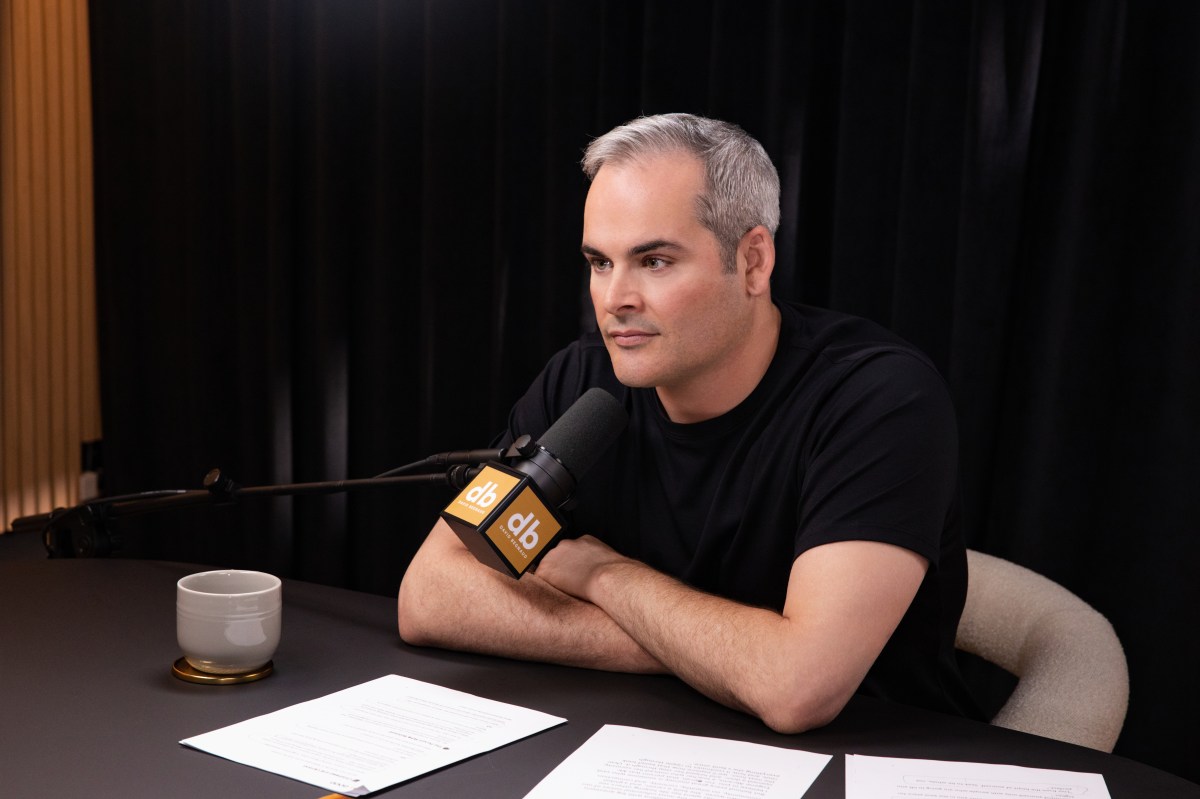
David Begnaud has spent years as one of CBS News’ most recognizable faces, but now he’s doing something entirely his own. The journalist and storyteller has launched Do Good Crew, a new media company built around his podcast, The Person Who Believed in Me, along with a newsletter and live events. And if the guest list is any indication, people are paying attention.
“It was a favor, and I’m under no illusions as to it being anything other,” Begnaud told Newsweek’s Parting Shot Podcast when asked about landing Oprah Winfrey as his debut guest. The story behind it is pure Begnaud: years of quietly doing the work, a dinner at Winfrey’s house, a conversation about Barry Diller, and a moment where Winfrey put her fork down and simply said yes. “This was years of work that this little Cajun boy from Louisiana with a big dream put in to proving himself worthy of asking Oprah Winfrey to be a guest on his podcast.”
Begnaud grew up gay in the South, closeted, finding an unlikely sanctuary in the Oprah Winfrey Show. He credits that show, and television more broadly, with giving him something he didn’t have elsewhere: a reason to be seen. He navigated a childhood complicated by Tourette’s, but that didn’t stop him from getting in front of a camera at 18 years old. “If I wrote a memoir, the best title would be How Television Saved Me From Myself,” he said.
That personal history threads through everything about The Person Who Believed in Me. The podcast’s premise, built around the mentors and turning points that shape people’s lives, gives Begnaud room to go somewhere most celebrity interviews don’t. His conversation with billionaire businessman Barry Diller, for instance, went well beyond his guest’s business acumen. Begnaud spent weeks preparing, listened to seven other Diller interviews, read the biography cover to cover, and then let go of all of it. “Barry talks about how he never let data drive what he did,” Begnaud said. “He always goes on instinct.” His conversation with filmmaker Ava DuVernay, a former publicist who knows better than most how to control an interview, became something far more personal, which Begnaud credits to an existing relationship built on mutual respect.
When I asked how he balances the journalist’s instinct to stay neutral with the emotional pull of these conversations, his answer was immediate. “I don’t think about either, because I do what is human.” He traces that philosophy back to his Puerto Rico hurricane coverage in 2017, when people questioned whether his reporting crossed into advocacy. His response then, as now: he will never apologize for doing what is human.
What he’s landing on, episode by episode, is something closer to a philosophy than a format. “I have years in short, soulful questions,” he said. “To listen is one of the greatest ways to ask a question.” His recent conversation with musician Charlie Puth put that in full relief. Begnaud described it as one of the most raw and open interviews he’s ever conducted.
As for who’s next on the bucket list, he’s thinking big. Pope Leo is on the list. So is Celine Dion.
Begnaud’s intention is clear. He isn’t trying to replicate what he built at CBS. He’s trying to do something that feels more like the conversation we had: honest, personal and worth the time of everyone in the room.
The full conversation is available now on the Parting Shot Podcast.
Subscribe to the Parting Shot Podcast with H. Alan Scott and the For the Culture newsletter for the latest in entertainment and pop culture and follow @HAlanScott everywhere.
Read the full article here


