



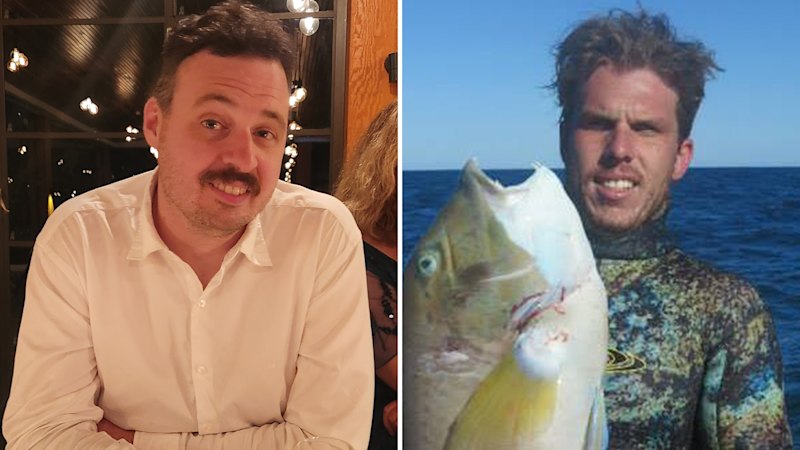
Both men had been spearfishing when they were attacked, with Mattaboni taking part in a pelagic pairs competition at the reef.
WA Nationals fisheries spokeswoman Kirrilee Warr urged a review of the state’s shark mitigation strategy in the wake of the tragedies.
“Are current approaches being tested, and is there a clear and credible response from government?” she said.
“At a minimum, the government should immediately release the advice it is relying on and explain whether it has identified any changes in risk or whether its current mitigation measures are actually working.
“The Cook Labor government cannot simply point to existing measures and move on. It must demonstrate what is working, what is failing, and what additional action is being considered.”
However, Fisheries Minister Jackie Jarvis accused the Nationals of politicising the tragedy in Albany, and defended the state’s shark mitigation strategy as one of the best in the world.
Jarvis also said there was no evidence shark culling would reduce the risk for oceangoers.
A controversial catch-and-kill policy targeting large sharks near popular WA beaches under the former Barnett Liberal government was dumped in 2014 after public outcry.
Under that policy, baited drumlines would have been set up about a kilometre offshore at dozens of beaches across the state’s south-west, and any shark larger than three metres that was caught would be shot.
At the time, the government admitted it had no scientific evidence to back up the efficacy of the program.
Meanwhile, a $200 rebate scheme for ocean users to buy personal shark deterrent devices had been available to West Australians, but the scheme collapsed when the state’s only approved provider of the device closed down in 2024.
Two years later, no suitable alternative has been approved.
On Sunday, Jarvis said there was “certainly no data” to suggest there had been an increase in shark activity compared to recent years.
“My understanding is we’ve had around 10 reported interactions with sharks this year to date. We had 19 last year,” she said.
“Interactions” can range from a fisherman getting a bite from a small shark to a person being fatally attacked, Jarvis said.
However, Dr Daryl McPhee, a shark researcher at the Gold Coast’s Bond University, told 9News Perth fatal attacks were rising across Australia.
McPhee said there were fewer than two attacks per year on average between 2000 and 2019, but that number more than doubled between 2020 and 2025.
There have been four people killed by sharks in Australia so far this year – three of whom were spearfishing.
“We do need to think about what we can do better for the spearfishing community,” McPhee said.
Albany Mayor Greg Stocks told ABC Perth on Monday that Turpin’s family had been in the community for decades, were well-known and highly respected.
“So it’s very difficult, hard to find the right words to put out your condolences in these situations, so I’m sure the Albany community will wrap their arms around the family and the wider community as well,” he said.
Stocks urged compassion as the debate turned to shark mitigation.
It’s not the first time the Albany community has experienced a fatal attack in the regional city’s waters.
In 2014, another Albany local – 17-year-old Jay Muscat – died after he was bitten by what was believed to have been a 4-5 metre white shark at Cheynes Beach, 65 kilometres east of the regional town.
Like Mattaboni and Turpin, Muscat was spearfishing when he was attacked.
“That took a long time for the community to get over, and … obviously [is] now to the forefront of people’s minds again,” Stocks told the ABC.
“So it’s not a regular occurrence, obviously, but when it does [happen] it’s a devastating shock to the families and to the community.”
Also speaking to the ABC on Monday, Jarvis said there were 221 white sharks tagged off WA’s coast, but there had been no evidence of increasing shark numbers in the state’s waters.
“Obviously, people see more sharks, whether that’s [during] whale migration, or when there’s a salmon run, people see more sharks.
“But the data shows us that there’s probably about 1500 white sharks in the southern western region, which is basically from Shark Bay all the way across to Victoria.
“And because of our satellite tagging, we know as well that sharks don’t have a set migratory pattern.
“These white sharks, they will travel from Geraldton to South Australia over a matter of weeks.
“We know that we have had sharks enter our waters that have come from South Africa because we share tagging data.
“So one of the challenges with white shark is it’s not like a whale, where you know you have your set migration patterns, and that’s why we urge people to be vigilant.”
From our partners
Read the full article here


