



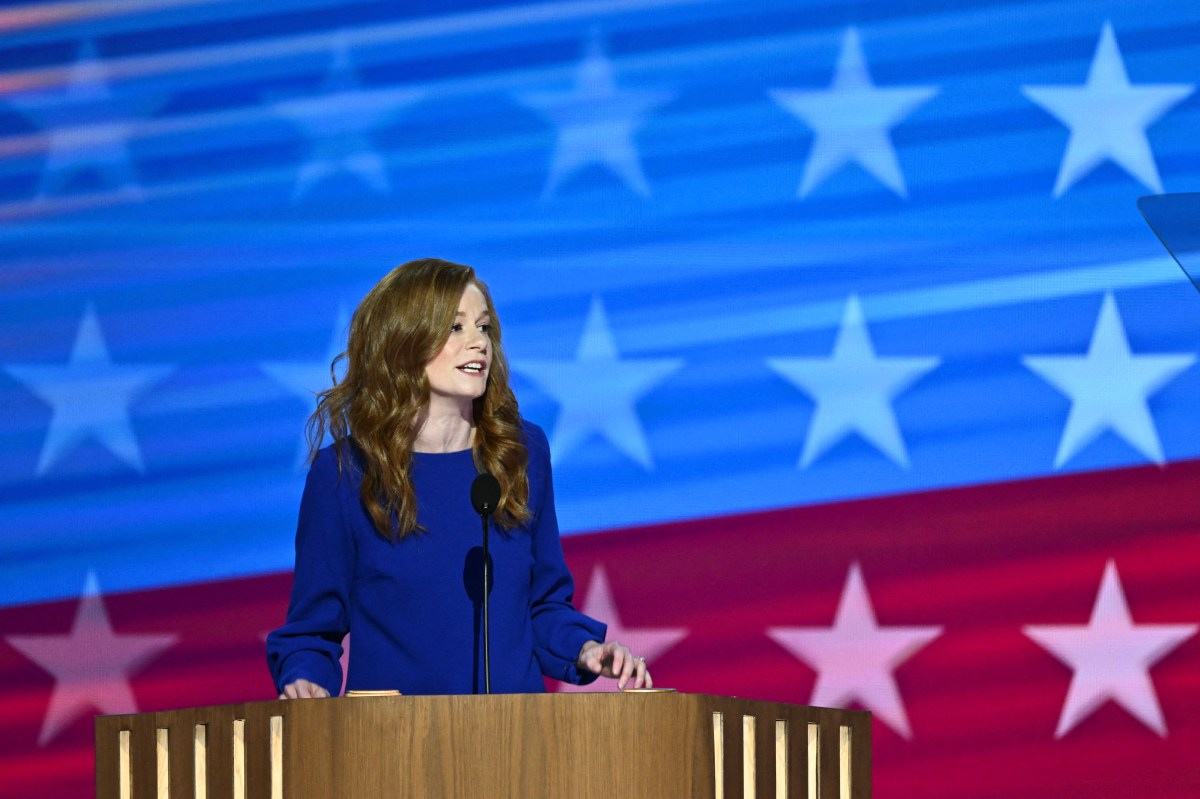
A Michigan state senator and Democratic U.S. Senate candidate deleted thousands of tweets that included posts saying she voted in California after she wrote that she had relocated to Michigan “permanently,” according to a review by CNN.
Mallory McMorrow’s posts from a decade ago and writings from her autobiography drew scrutiny in recent days, but her campaign told Newsweek that the candidate’s record reflected the typical millennial tendency to move around the country and share their lives online.
The deleted posts and the apparent voting timeline, in which she voted in California two years after saying she had moved to the Midwest, raised residency and eligibility questions in a closely watched 2026 Michigan Senate race that could help decide control of the chamber, with the primary scheduled for August.
Mallory McMorrow’s Voting Record: What To Know
McMorrow’s 2025 autobiography stated she “relocated permanently” to Michigan in 2014, yet CNN’s KFILE investigation team reported that she described herself online as a California resident into mid-2016 and stated she voted in California’s June 2016 Democratic primary.
Under California law, only state residents are eligible to vote, with residency defined as a voter’s established domicile and intent to remain. The campaign said her move was a “process” completed by mid-2016 and that she remained registered in California until then, with McMorrow and her partner juggling careers.
CNN said archived snapshots on the Internet Archive’s Wayback Machine showed McMorrow’s now-deleted tweets in which she referred to herself as a California resident as late as July 2016, referenced voting in California’s June 2016 Democratic primary, and described herself in November 2014 as voting in person in the Los Angeles area, while public records showed she registered to vote in Michigan in August 2016.
McMorrow’s campaign told Newsweek that she had fallen in love with Michigan while on a 1,000-mile road rally and decided to move there with her boyfriend in 2014. Their existing careers in other places meant the move was a process, the campaign said, and they finalized their move in 2016.
Candidates Delete Old Social Media Posts
CNN reported that McMorrow deleted roughly 6,000 posts spanning topics from progressive causes to criticism of “Middle America.” These included a December 2016 post about a dream in which the coasts and parts of Michigan and Texas formed “The Ring” separate from “Middle America,” which her campaign later clarified was an actual dream after publication.
Other posts saw her comment on Michigan’s weather, saying it “s*** ice” at times.
Her campaign told Newsweek that the posts also reflected a “normal person” who was a Michigander by choice and who would not hold any disdain for the people she now represented in the state legislature.
“These are normal tweets by a normal person. Normal people complain about the weather. The Michigan sky does in fact sometimes s*** ice. She stands by that,” Hannah Lindow, McMorrow’s spokesperson, told Newsweek.
“As Michigan’s Senate Majority Whip, Mallory has spent the past eight years fighting and delivering to make people’s lives better: higher wages, universal pre-K, no kid going hungry in schools, comprehensive gun violence prevention laws, and more. And she’s tweeted about that too,” Lindow said.
McMorrow is up against Representative Haley Stevens and former Detroit public health official Abdul El-Sayed in a tight race that has drawn national interest. Separate reporting last year also showed that El-Sayed deleted thousands of social media posts, including messages supporting “defund the police.”
As more millennials are elected to prominent positions, they are more likely to have a social media history than their older colleagues and predecessors, exposing their views to scrutiny from years, even decades earlier.
In New York City, Mayor Zohran Mamdani’s older posts and views were a core focus of his opponents during the 2025 campaign, while his wife’s social media history has drawn criticism in the months since he took office.
What Happens Next
The Michigan Democratic primary is seen as a dead heat among McMorrow, Stevens, and El-Sayed, with voters heading to the polls on August 4.
Read the full article here


