



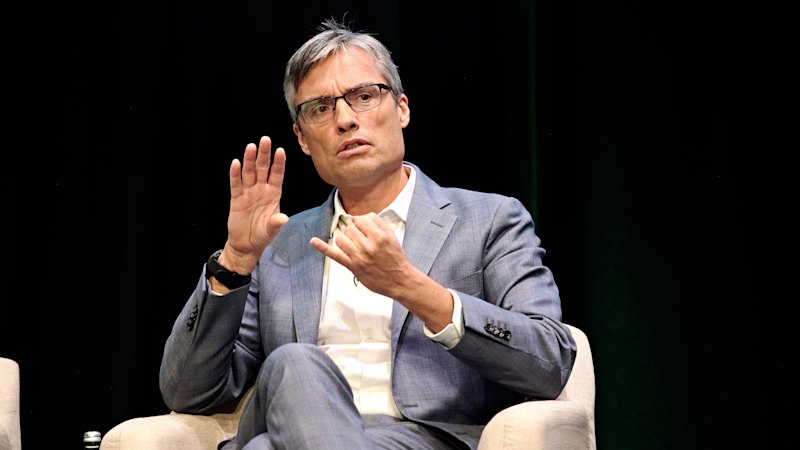
One of Australia’s top former medical advisers has called for tobacco tax cuts, labelling the emergence of a multibillion-dollar black market controlled by organised crime a “whole-of-government policy failure”.
Dr Nick Coatsworth, who was deputy chief medical officer during the COVID-19 pandemic, will advocate the controversial change at a Senate inquiry into the tobacco crisis on Monday.
“Tobacco control in Australia has become too narrow, too doctrinaire and too unwilling to admit policy failure,” Coatsworth will say, according to a copy of his speech provided to this masthead.
“At what point does excise stop reducing smoking and start creating criminal profit? “At what point does a pyrrhic public health victory become a wider social defeat?”
Australia is now one of the world’s most lucrative markets for illicit tobacco. Up to 60 per cent of all cigarettes sold here come from black market sources.
Turf wars for control of the multibillion-dollar industry have led to more than 200 firebombings, a score of shootings and murders, the death of an innocent woman and a terror attack.
Coatsworth has called past efforts to suppress smoking rates “a genuine public health success”, but says recent surveys have shown smoking is on the rise again, the market is under the control of organised crime, and it is clear tobacco control policy has “lost its way”.
“Australia should remain committed to reducing smoking. But before that, it must remain committed to the rule of law, fiscal responsibility, public trust and policy realism,” he is expected to say.
“Senators, the illegal tobacco crisis is what happens when public health becomes detached from reality.”
The position of the respiratory medicine and infectious diseases specialist is expected to draw significant criticism from other public health experts, who have been urging the federal government to keep its decades-old policy of steep increases to tobacco excise rates.
Coatsworth will claim that the government and the public health sector are repeating one of the cardinal mistakes of the responses to the pandemic by focusing on a single objective while ignoring or minimising the wider consequences.
“Health advice is not public policy. It is one input into public policy.”
While public health experts may understand disease and addiction, “that does not mean they understand organised crime, border enforcement, taxation elasticity, retail displacement, youth black markets, civil liberties or institutional trust”, he will say.
Coatsworth eventually became one of the most high-profile critics of the federal government’s pandemic response when it came to the severity and length of lockdowns and border closures. He is a medical expert for the Nine Network, which owns this masthead.
The Albanese government has repeatedly stated it will not drop excise rates, with Health Minister Mark Butler equating doing so to raising the white flag to organised crime.
Coatsworth will advocate dropping the excise rate to 2019 levels, which would reduce the tax on an individual cigarette from $1.51 to $0.80. That would reduce the price of a packet of legally bought cigarettes from more than $50 to about $30.
Budget forecasts released last week revealed the government expects the total value from tobacco excise to drop to $4.1 billion in 2025-26, down $1.3 billion in just five months. It is forecast to slump to $2.1 billion by 2030.
Tobacco taxes delivered $16 billion in 2020, the vast majority of which has since been lost by the deep infiltration of organised crime into the market.
Coatsworth is advocating that any revenue from an increased tax take should be allocated to law enforcement, smoking cessation campaigns and supporting a national lung cancer screening program.
The position is opposed by most public health groups, including the Public Health Association of Australia, Australian Medical Association, National Heart Foundation of Australia and the Cancer Council.
The government’s lead anti-tobacco enforcement agency, the Illicit Tobacco and E-cigarette Commissioner, has said there is no evidence an excise cut would halt organised crime’s grip on the market.
The Australian Border Force has called for “demand reduction measures” but has stopped short of openly calling for a reduction in the excise, which would run counter to government policy.
Meanwhile, the Police Federation of Australia – a lobby group representing law enforcement professionals – said in its submission to the inquiry that the government should consider a temporary reduction to cut demand in the black market while authorities tackle the illicit supply chain.
In the first round of hearings earlier this month, tobacco company Philip Morris International argued excise rates had reached a “tipping point” in 2019-2020, pushing smokers away from legal retailers and towards the illicit tobacco trade.
“Unless the price gap is narrowed, it is very credible that it will no longer be possible to have legal supply by 2030 at the current trajectory,” said a company spokesperson, who was allowed to testify during a closed session. The transcript from the hearing was published later, but with the witness’s name redacted.
Public health leaders accused the tobacco giant of using the Senate inquiry to prosecute a long-running campaign for cheaper cigarettes, warning any cut to the excise would amount to a multibillion-dollar windfall for multinational tobacco firms.
Public Health Association figures estimate a 50 per cent cut to tobacco customs duties would hand multinational tobacco companies a windfall worth about $2.3 billion annually.
Association chief executive Terry Slevin said that with 66 Australians dying every day from tobacco-related disease, a reduction in the tobacco excise would “represent a perverse and unacceptable giveaway”.
“It’s important for governments to recognise that arguments for a tax cut are part of an orchestrated campaign being driven by the tobacco industry and associated organisations with a focus on self-interest and profits, not concern for public health and safety,” Slevin said.
“The only real winner from a tobacco tax cut would be the tobacco industry itself.”
Start the day with a summary of the day’s most important and interesting stories, analysis and insights. Sign up for our Morning Edition newsletter.
From our partners
Read the full article here


